
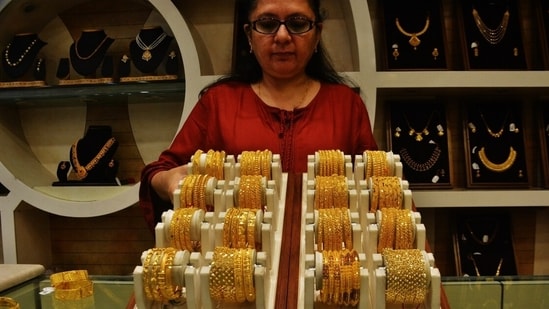
24K gold at ₹1.55 lakh in Delhi, ₹1.57 lakh in Chennai; check MCX prices| India News
Gold and Silver’s Steady Ascent What’s Driving Precious Metal Prices
The world of precious metals often serves as a barometer for economic sentiment, and recent movements in gold and silver prices are certainly making headlines across local financial discussions. Over the past week, the luster of 24-carat gold has shone brighter, recording a notable rise of 3.14 percent. Looking back a full month, its ascent continues, albeit more modestly, with a 0.67 percent increase. Silver, often seen as gold’s industrial cousin, is also reflecting this upward trend, with its price standing at ₹2,52,707 per kilogram, marking a significant jump of ₹1,808 recently. This steady appreciation in value naturally sparks questions among investors and the general public alike: what factors are fueling this renewed interest in these age-old stores of value? Omni 360 News delves into the dynamics behind these movements.
Gold’s Enduring Appeal
Gold has long been considered a safe haven asset, a reliable port in times of economic or geopolitical storms. Its recent climb, particularly the weekly surge, points to a confluence of underlying factors that local market watchers are discussing. One significant driver is the persistent concern over global economic stability. When major economies face uncertainties, or inflation looms large, investors tend to shift their capital from more volatile assets like stocks into gold, which is perceived as a more stable store of wealth.
Imagine you have a ₹100 note. If inflation is high, that ₹100 might buy you less next year than it does today. People worry about their money losing its buying power. Gold, on the other hand, tends to hold its value or even increase when currencies weaken due to inflation. This makes it an attractive “hedge” against rising prices. Recent reports from independent economic forums suggest that inflationary pressures, particularly in global supply chains, are not fully abating, prompting this renewed interest in the yellow metal.
Furthermore, the monetary policies of central banks play a crucial role. If interest rates are kept low, holding cash in a bank account doesn’t offer much return. In such scenarios, non-yielding assets like gold become more appealing. While specific rate hike expectations might fluctuate, the overall sentiment concerning future rate trajectories and global liquidity often nudges gold prices. Local financial advisors in Mumbai and Delhi have noted increased inquiries from clients looking to diversify their portfolios with gold, signaling a broad-based, cautious approach to investing.
Geopolitical tensions also consistently underpin gold’s demand. Any flare-up in international relations or regional conflicts often leads to a quick spike in gold prices as investors seek safety. While no single major event might be pinpointed this past week, an underlying current of global unease often creates a supportive environment for precious metals.
Silver’s Dual Dynamics
Silver’s recent upward trajectory, breaking above ₹2.5 lakh per kilogram and marking a substantial ₹1,808 increase, showcases its unique position in the commodities market. Unlike gold, which is primarily an investment and jewelry metal, silver holds a dual identity. It is both a precious metal for investment and adornment, and a vital industrial metal used in a vast array of applications, from solar panels and electronics to medical devices.
The industrial demand for silver is a significant price driver. As the world pushes towards green energy and technological advancements, the demand for silver in solar cells, electric vehicles, and 5G technology continues to grow. When economic activity picks up, or future industrial growth is anticipated, demand for silver as a raw material increases, pushing its price higher. This means silver often reacts not only to the same safe-haven sentiments as gold but also to the health of the global manufacturing sector.
Reports from local manufacturers in regions like Coimbatore and Jaipur, which have significant industrial and jewelry sectors, often highlight a balanced demand for silver. When industrial orders are strong, coupled with sustained investment interest, silver’s price can see vigorous movements. Therefore, silver’s current rise could be a signal of improving industrial outlooks alongside the general cautious investment climate.
Understanding the Economic Undercurrents for a 12th Grader
Think of it this way: when you’re deciding what to do with your pocket money, you might save it, spend it on something fun, or invest it in something you think will be valuable later. Gold and silver are a bit like that “something valuable later” for grown-ups and big companies.
Imagine everyone is worried that the value of their normal money (like rupees) might drop because prices of everything are going up very fast (this is called inflation). When people worry about this, they often buy gold or silver because these metals have historically kept their value better than regular money during such times. So, they act like a “shield” for your wealth.
Another factor is interest rates. If banks offer very low interest on your savings, there’s less incentive to keep your money there. In such cases, buying gold or silver, even though they don’t pay interest, becomes more attractive because your money isn’t just sitting there losing potential value.
Then there are big global events – like wars, political instability, or even major health crises. These create a lot of uncertainty. When people are unsure about the future, they rush to buy assets that are considered “safe,” like gold, because it’s universally accepted and has always been seen as a safe place to put money during uncertain times.
Finally, demand and supply also play a part. If there’s a lot of demand for gold and silver (maybe for weddings, festivals, or industrial uses like making electronics), but not enough new supply coming from mines, then prices naturally go up.
Key Takeaways from Omni 360 News:
* Gold’s Steady Rise: 24-carat gold is up 3.14% weekly and 0.67% monthly, driven by safe-haven demand, inflation concerns, and geopolitical factors.
* Silver’s Ascent: Silver has climbed to ₹2,52,707 per kg, an increase of ₹1,808, influenced by both investment demand and growing industrial applications.
* Economic Drivers: Inflation hedging, low-interest rate environments, and global uncertainties are primary catalysts for precious metal price appreciation.
* Dual Nature of Silver: Its role in green technology and electronics significantly impacts its price alongside its traditional investment appeal.
* Market Sentiment: A cautious approach to global economics and a desire for wealth preservation appear to be guiding investor decisions.
Looking ahead, the trajectory of gold and silver will likely continue to be shaped by these intertwined global and local economic narratives. For those monitoring their investments or planning future purchases, understanding these fundamental drivers, as observed by Omni 360 News, remains paramount in navigating the dynamic world of precious metals. The current upward trend signals a broader market sentiment where stability and intrinsic value are increasingly prized amidst an evolving global landscape.