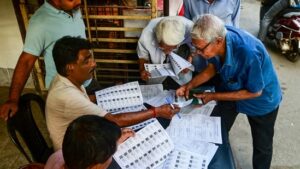
35–40% of 3.2 million names adjudicated not in West Bengal SIR list| India News
Civic Registry Update Unpacks Latest One Million Name Addition
Key Takeaways:
* Approximately one million names recently added to the initial supplementary civic list.
* This figure, while significant, points to a slower pace of updates than some anticipated.
* Authorities emphasize that this is merely the first phase of an ongoing civic data refinement process.
* Public awareness and participation remain crucial for comprehensive record keeping.
In a recent update that has drawn attention from civic bodies and local administrators, a senior official confirmed that around one million names were incorporated into the first supplementary list. This crucial civic document, published late on Monday night, represents a segment of the continuous effort to update national or regional registers. The modest figure has prompted discussions regarding the efficiency of the update process and the public’s engagement.
For many citizens, understanding what a “supplementary list” entails is the first step. Picture the official records that define a community, like a complete roster of eligible voters or registered residents. These lists are not static; they need constant updating to reflect births, deaths, changes of address, or new eligible individuals reaching the age of participation. A supplementary list, therefore, acts as an addendum, detailing new inclusions, deletions, or modifications since the last comprehensive publication. It ensures that critical democratic and administrative processes, such as elections or public service allocations, are based on the most current data.
Local reports from various districts, meticulously tracked by Omni 360 News, indicate that community leaders and local government bodies had been preparing for a potentially larger influx of registered names. The senior official, who spoke on condition of anonymity due to the ongoing nature of the process, acknowledged the initial count of approximately one million names. While not explicitly stating whether this number fell below expectations, the official underscored that this is merely the beginning of a multi-phase operation. “This first list captures those validated entries from a specific period,” the official explained, “and more updates will follow as further verification and data assimilation stages are completed.”
The uploading of one million names, though seemingly a large figure, gains context when juxtaposed against the vast populations often involved in such civic registries. In regions with millions or even hundreds of millions of eligible individuals, a single million addition in a primary update might suggest several possibilities. It could indicate a lower-than-anticipated rate of new registrations or eligibility changes, perhaps due to less public awareness campaigns or administrative hurdles. Alternatively, it might reflect a stringent verification process, ensuring only thoroughly vetted names make it onto the initial digital compilation.
Civic engagement groups have often highlighted the importance of robust and timely updates to these foundational lists. For instance, in an election context, an accurate voter roll is paramount for a fair and representative democratic exercise. If eligible citizens are not included, or deceased individuals remain on the list, it can introduce inefficiencies or potential irregularities. Local news outlets have previously reported on efforts by various volunteer groups to assist citizens with registration, emphasizing the ground-level work required to expand the civic database. The current numbers serve as a reminder that these efforts need sustained momentum.
The digital nature of the upload, as indicated by the term “uploaded,” points to an increasingly modernized approach to record-keeping. This digital shift aims to improve accessibility, reduce manual errors, and streamline verification. However, it also introduces its own set of challenges, from ensuring data security to bridging the digital divide in areas with limited internet access or digital literacy. The efficacy of these digital systems is often tested during large-scale updates, and the present numbers offer an early indicator of their performance.
Looking ahead, officials are expected to provide further clarity on the subsequent phases of the supplementary list updates. Citizens, particularly those who have recently become eligible to participate in civic processes or have changed their residential details, are encouraged to verify their status and ensure their inclusion in these vital registries. Local administration offices and designated public information centers typically offer assistance for verification and registration queries.
The unfolding story of this supplementary list update underscores the intricate relationship between technology, administration, and public participation in maintaining accurate civic records. As Omni 360 News continues to follow these developments, the focus remains on ensuring that every eligible voice is counted and represented in the official annals of the community. This initial one million names is a baseline, setting the stage for subsequent updates that will paint a fuller picture of civic registration progress.