
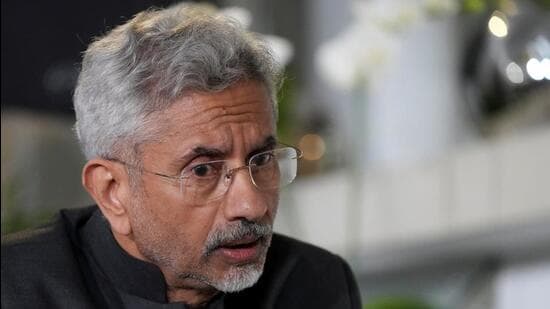
External affairs minister Jaishankar discusses Iran-US conflict with Russia, EU, France| India News
India’s Diplomatic Push for Calm in a Turbulent West Asia
In the complex and often volatile landscape of West Asian geopolitics, India has emerged as a crucial voice for de-escalation and stability. External Affairs Minister S. Jaishankar recently engaged in a series of high-stakes discussions with counterparts from Russia, the European Union, and France, underscoring India’s proactive approach to navigating the fraught Iran-US conflict. These coordinated diplomatic efforts highlight India’s strategic interest in regional peace and its role as a responsible global stakeholder.
The escalating tensions between Iran and the United States cast a long shadow over an already fragile region. For many, understanding the core of this long-standing friction is essential. Simply put, it stems from deep-seated disagreements over Iran’s nuclear program, its regional influence, and historical grievances. The US has imposed stringent sanctions on Iran, aiming to curb its activities, while Iran views these actions as an infringement on its sovereignty and a threat to its economy. This standoff is not merely a bilateral issue; its ripples affect global energy markets, international trade routes, and the security of millions. When two major players are locked in such a dispute, the risk of miscalculation leading to broader conflict is always present, creating anxiety far beyond their borders.
For India, a nation deeply intertwined with West Asia, this conflict carries profound implications. First and foremost is energy security. India is a significant importer of oil and gas, with a substantial portion sourced from the Gulf region. Any disruption to supply chains, particularly through vital chokepoints like the Strait of Hormuz, could severely impact India’s economy and its citizens. A spike in global oil prices directly translates to higher costs for transport and goods at home.
Beyond energy, the region is home to millions of Indian expatriates. These hardworking individuals contribute significantly to both the economies of West Asia and India through remittances. Their safety and well-being are paramount, and any conflict puts them at direct risk, potentially necessitating large-scale evacuations—a logistical and humanitarian challenge India is keen to avoid. Furthermore, India’s economic ties extend to substantial trade volumes with countries across West Asia. The Chabahar Port in Iran, a key Indian investment, offers a vital trade corridor connecting India to Afghanistan and Central Asia, bypassing Pakistan. Stability in Iran is therefore crucial for the viability and expansion of this strategic gateway.
Recognizing these multifaceted stakes, New Delhi has consistently advocated for dialogue and diplomacy over confrontation. Minister Jaishankar’s recent engagements reflect this principled stance, aiming to synchronize India’s message and actions with other major global powers.
The discussions with Russia are particularly significant. Russia shares a common interest with India in regional stability and possesses considerable influence in West Asia. Both nations are wary of unilateral actions and believe in multilateral solutions to complex geopolitical challenges. Coordinating with Moscow allows India to leverage Russia’s diplomatic weight and explore avenues for joint de-escalation efforts, particularly within the framework of the United Nations Security Council, where both are key players. This collaboration seeks to ensure that any international response to the Iran-US situation is considered and avoids exacerbating tensions.
Engaging with the European Union and France individually provides another layer of diplomatic outreach. The EU, as a major economic and political bloc, has consistently championed the Iran nuclear deal, also known as the JCPOA (Joint Comprehensive Plan of Action), and remains committed to its preservation despite US withdrawal. India’s talks with EU officials sought common ground on upholding international agreements and finding pathways for renewed dialogue. France, a powerful voice within the EU and a permanent member of the UN Security Council, maintains an independent foreign policy approach and strong diplomatic channels. Discussions with France aimed at understanding and aligning strategies for urging restraint and fostering a climate conducive to negotiations, leveraging Paris’s influence to encourage all parties towards peaceful resolution.
These interactions are not about taking sides but about fostering an environment where a diplomatic resolution can be found. India’s approach, as consistently highlighted by Omni 360 News, is characterized by non-partisanship and a steadfast commitment to peaceful conflict resolution. It demonstrates India’s growing confidence in its role as a global bridge-builder, advocating for a pragmatic approach that prioritizes stability, economic interests, and human welfare. The goal is to ensure that the delicate balance in West Asia is not upset by further escalation, which would have devastating consequences for the region and the wider world.
Key Takeaways:
* India’s diplomatic outreach, led by EAM Jaishankar, aims to coordinate global efforts to de-escalate the Iran-US conflict.
* India’s vital interests in West Asia include energy security, the safety of its diaspora, and safeguarding crucial trade routes.
* Engagements with Russia, the EU, and France underscore a multilateral approach, seeking common ground for dialogue and stability.
* New Delhi advocates for diplomatic solutions over confrontation, positioning India as a responsible global actor committed to peace.
* The discussions are crucial for mitigating risks to India’s economy and its strategic regional partnerships.
In a world increasingly prone to geopolitical flashpoints, India’s measured yet firm diplomatic posture offers a beacon of hope for calm. The pursuit of coordinated international action, through respectful dialogue with key global players, reflects India’s dedication to ensuring that the fires of conflict in West Asia do not consume the prospects for peace and prosperity. The stakes are immense, and India’s continued efforts remain critical to securing a stable future for the region.





