
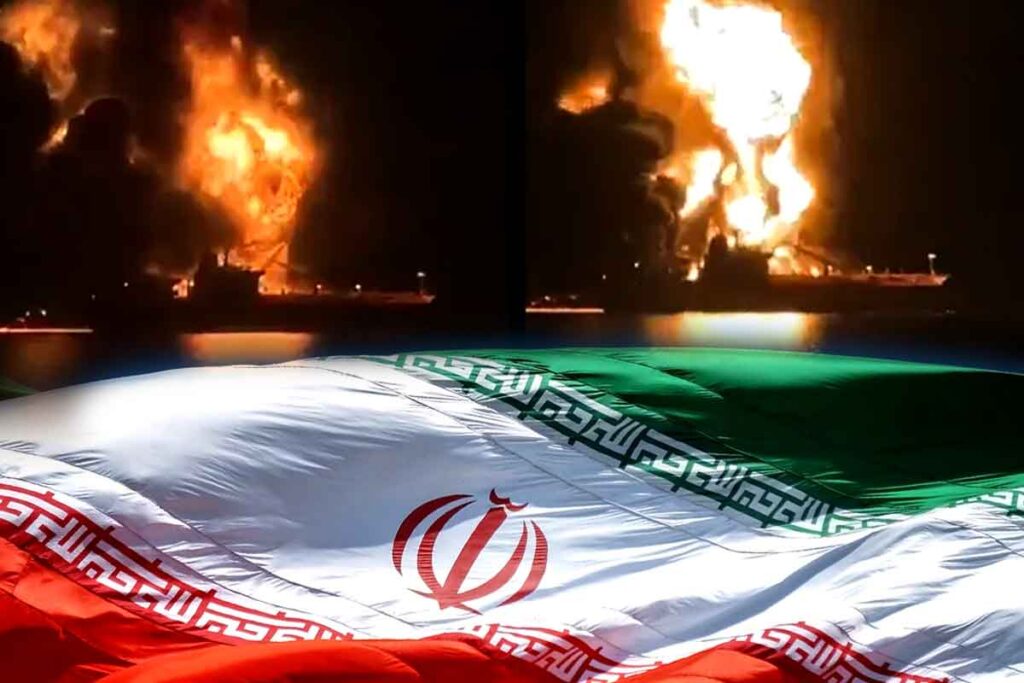
Iraq's Oil tankers hit by Iran and Tehran sets 3 conditions for peace
Iran’s Firm Stand Ignites Hormuz Strait Crisis Global Oil Fears Mount
The Middle East remains a crucible of escalating tensions as Iran steadfastly refuses to cede ground despite sustained military pressure from America and Israel. Tehran’s robust counterattacks are now reshaping regional stability and significantly impacting global energy pathways.
Recent reports, gathered by Omni 360 News from various regional outlets, confirm Iran’s aggressive retaliatory stance. An oil tanker, reportedly associated with an American company, was targeted at Iraq’s Al-Faw commercial port, resulting in one fatality. Further incidents include attacks on multiple vessels traversing the critical Strait of Hormuz. Saudi Arabia also confirmed one of its oil tankers caught fire following an Iranian assault. Nations like Kuwait, Qatar, the UAE, and Saudi Arabia have publicly stated they repelled drone and missile attacks from Tehran, underscoring the widespread nature of the current conflict.
Experts suggest Iran’s strategy centers on potentially blockading the Strait of Hormuz. This pivotal waterway, often dubbed the world’s energy lifeline, is essential for a significant portion of global oil supply. Such a move serves as a strategic lever to exert immense pressure on the United States and Israel for a ceasefire.
The humanitarian cost is also rising. India’s Ministry of External Affairs confirmed the deaths of two Indian citizens and the disappearance of another following an attack on the Thai-flagged cargo ship ‘Mayuri Nari’ in the Strait of Hormuz. The vessel was carrying vital goods destined for the Gujarat coast. While the perpetrator remains unconfirmed, Iran’s earlier deployment of mine-laden naval vessels in the strait raises serious questions.
This two-week-long conflict has severely disrupted global oil markets, leading to an acute oil shortage. Iran’s Islamic Revolutionary Guard Corps (IRGC) has issued a stark warning: “Not a single liter of oil will leave West Asia via Hormuz.” In response, America has threatened severe repercussions should Iran attempt to close the strait.
Amidst this escalating conflict, Iranian President Masoud Pezeshkian has put forward three clear conditions for peace. These include:
- Recognition of Tehran’s rights as a sovereign nation.
- Provision of compensation for war damages incurred.
- An international guarantee against future aggression.
The world watches closely as these demands are weighed against the backdrop of intensifying hostilities and the looming threat to global energy security.
Key Takeaways
- Iran is actively engaging in retaliatory strikes against US and Israeli interests and regional allies.
- The Strait of Hormuz is a central flashpoint, with Iran threatening to disrupt global oil supplies.
- The conflict has led to casualties, including Indian citizens, and is exacerbating a worldwide oil crisis.
- Iranian President Pezeshkian has outlined three clear conditions for de-escalation and peace.





