
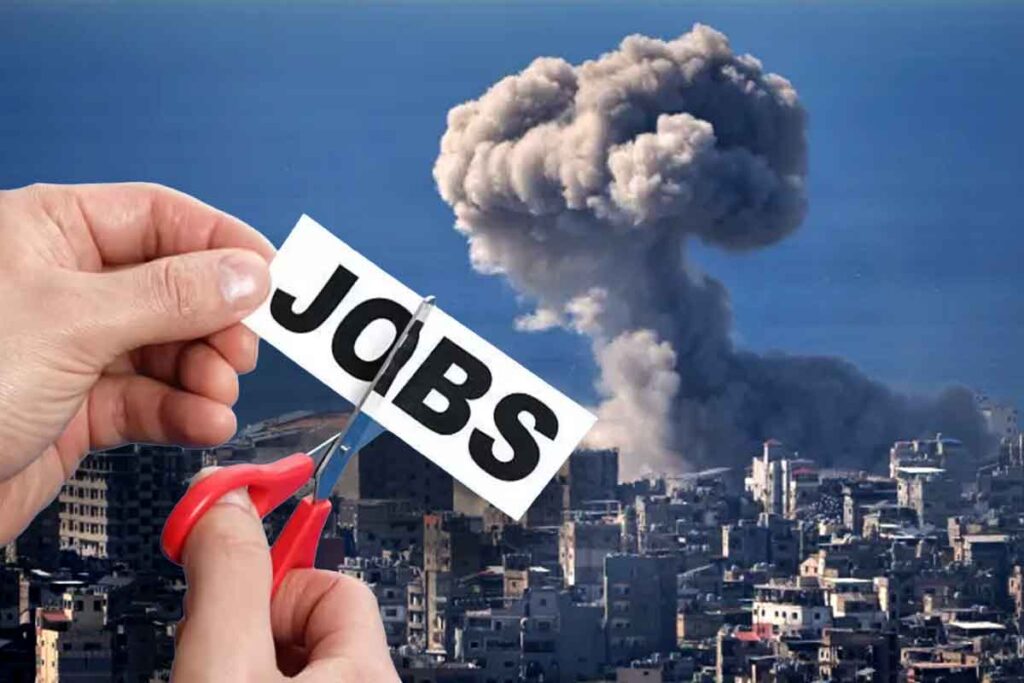
Fears of job losses like during Covid due to petrol and gas cylinder crisis
India Faces Economic Headwinds Fuel Shortage Worries Grip Businesses and Families
A quiet anxiety is spreading across India, particularly within its bustling economic hubs. Despite the daily rhythms of life appearing largely undisturbed, a deeper concern is taking root: the potential for a severe economic downturn, silently triggered by global geopolitical tremors. This looming crisis, distinct from a pandemic lockdown, threatens to grind vital sectors to a halt, putting countless livelihoods at risk. Omni 360 News investigates how this complex web of international events could lead to a domestic economic paralysis.
At the heart of this brewing storm lies a critical vulnerability: India’s heavy reliance on imported fossil fuels. With almost three percent of the nation’s Gross Domestic Product (GDP) spent on bringing in crude oil and natural gas, any disruption to global supply chains sends immediate ripples. Reports suggest that geopolitical tensions, particularly those impacting crucial shipping lanes like the Strait of Hormuz—a narrow waterway vital for a significant portion of the world’s oil supply—could drastically reduce crude oil availability. This scarcity would inevitably push fuel prices sky-high, potentially causing India’s trade deficit to balloon to unprecedented levels. Such a scenario would not merely be an inconvenience; it could become a chokehold on the nation’s economic arteries, impacting everything from heavy industry to the smallest street vendor.
The first signs of distress are already visible across multiple sectors, suggesting an economy that is “on” but effectively “off.”
Transportation Sector Faces Stuttering Wheels
The movement of goods and people, the very lifeline of commerce, stands on precarious ground. While not explicitly grounded by government order, a potential shortage of aviation fuel could disrupt air travel. More immediately impactful for the common citizen is the rising cost and potential scarcity of diesel and petrol. Auto rickshaws, the ubiquitous mode of short-distance transport in cities, are already becoming fewer on the streets. Drivers, struggling with fuel prices, find their daily earnings dwindling, pushing many towards unemployment. Even the vital waterways, often used for freight, could face disarray if fuel for barges and ships becomes scarce or prohibitively expensive, leaving goods stranded and supply chains tangled.
Small and Medium Enterprises Under Immense Pressure
The backbone of the Indian economy, the Small and Medium Enterprises (SMEs), are particularly vulnerable. Many small factories, dependent on consistent and affordable fuel for their operations, are already scaling back or contemplating temporary closures. In industrial zones like Howrah’s Jalan Industrial Complex, business owners admit to cutting back on production. Similarly, a factory in Siliguri has reportedly been forced to halt its output entirely. When these small and medium units falter, the ripple effect is immediate and widespread, affecting thousands of workers and their families. Their products, meant for markets far and wide, remain stuck, unable to reach consumers, thereby disrupting trade and revenue flow.
Heavy Industry Feels the Heat
Even the behemoths of industry are not immune. Regions like Asansol-Durgapur, Purulia, and Borjora, known for their heavy industries such as steel and cement, rely heavily on diesel to power their furnaces and machinery. A consistent supply of diesel is not just preferred; it is essential for the very process of production. Industrial leaders are adopting a “go slow” policy, unsure how long the current diesel reserves will last. This cautious approach often translates into reduced output and, critically, a reduction in the workforce. Such an environment creates immense uncertainty for the lakhs of workers employed in these sectors, raising the specter of widespread job cuts.
Hospitality and Food Services on the Brink
The vibrant hospitality sector, a significant employer, is facing an existential crisis. Restaurants and hotels, especially those that rely on commercial gas for cooking and heating, are sounding alarm bells. Sudesh Poddar, President of the Hotel and Restaurant Association of Eastern India (HRAEI), voiced profound concern, stating, “Due to the fuel crisis, several hotels and restaurants have already closed down. If this continues, lakhs of people in the state will lose their jobs.” There are already reports of renowned clubs in South Kolkata cutting down on their food menus, and several prominent restaurants in metropolitan areas shutting their doors. The sweet industry, a cultural cornerstone, is also feeling the pinch. While large manufacturers might use boilers, smaller and medium-sized sweet shops are critically dependent on gas. Dhiman Das, a prominent sweet manufacturer, acknowledges the increasing difficulty, noting the government’s removal of gas subsidies coupled with reduced supply. This double blow could jeopardize the livelihoods of millions working in this sector and its related supply chains.
Gig Workers Face Double Whammy
The digital economy, powered by platforms like Swiggy, Zomato, Blinkit, Rapido, and Uber, provides flexible employment to countless gig workers. These individuals, who typically earn between 12,000 to 30,000 rupees a month based on their work, are now experiencing a sharp decline in their assignments. The reduction in restaurant operations means fewer food deliveries, directly impacting their income. Furthermore, many of these workers rely on two-wheelers for deliveries, creating a dual threat: fewer orders and the potential unavailability or unaffordability of fuel for their vehicles. The same anxiety grips app-based bike and car drivers, who face the grim prospect of their primary income source drying up.
Expert Voices Echo Concern
Industry leaders are not mincing words about the severity of the situation. Biswanath Bhattacharya, State President of FOSMI (Federation of Small & Medium Industries), shared with Omni 360 News, “The situation is alarming from all aspects. If this instability becomes long-term, overcoming it will be extremely difficult.” The collective worry points to a scenario where despite visible activity, a deeper, unseen economic engine is stalling. This situation draws parallels to the COVID-19 lockdown, but with a stark difference: this time, everything appears open, yet an invisible force threatens to bring the economy to a standstill, creating widespread job insecurity.
The coming days and weeks will be critical. The endurance of this “barricade of gunpowder” in the Middle East will dictate the depth and duration of this silent economic threat. For many Indians, the simple act of daily living is poised to become a struggle, facing a long and bitter economic winter without the direct involvement in any conflict. The hope remains that international stability can be restored swiftly, preventing a full-blown domestic crisis that could unravel years of economic progress and plunge millions into hardship.
Key Takeaways
* Geopolitical tensions affecting global oil and gas supply routes, particularly the Strait of Hormuz, pose a severe threat to India’s economy.
* India’s high dependence on fossil fuel imports makes it vulnerable to price hikes and scarcity, risking a massive trade deficit.
* The transportation sector (air, road, water) faces disruptions and job losses due to fuel shortages and rising costs.
* Small and medium enterprises (SMEs) are already cutting production and facing potential closures, impacting local economies and employment.
* Heavy industries like steel and cement are reducing output due to diesel scarcity, threatening widespread layoffs.
* The hospitality sector, including restaurants, hotels, and even the sweet industry, is in crisis due to commercial gas shortages, leading to business closures and significant job losses for lakhs of people.
* Gig workers from platforms like Swiggy, Zomato, and Uber are experiencing reduced income and face the dual challenge of fewer orders and expensive or unavailable fuel for their vehicles.
* Industry leaders express deep concern, warning of a potential long-term “silent economic recession” that could lead to millions losing their jobs.
* The situation highlights a paradox: the economy appears functional, but an underlying fuel crisis threatens to bring it to a grinding halt, impacting daily life for countless individuals.





