
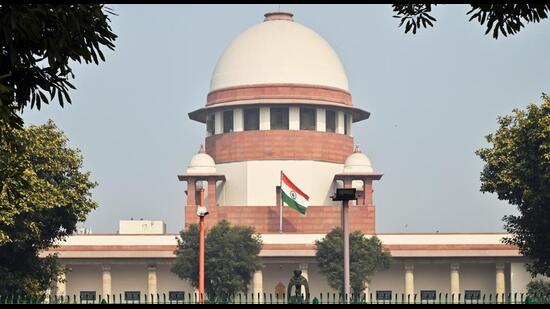
Income can’t be sole criterion to determine OBC creamy layer: Supreme Court| India News
Court Upholds Fairness Within Backward Classes Key Takeaways
A recent pronouncement from the nation’s judiciary has once again underscored a fundamental tenet of justice: the principle of treating equals equally. The court articulated that interpreting policies in a way that disadvantages a segment of the same backward class, without a robust and clear justification, would inherently amount to treating “equals as unequals.” This significant observation casts a spotlight on the intricate balance required in implementing affirmative action policies, aiming to ensure that the very mechanisms designed for upliftment do not inadvertently create new disparities.
For decades, the framework of reservations has sought to address historical injustices and promote representation for communities traditionally marginalized. The “backward classes” designation encompasses a diverse group, and the intent behind affirmative action is to level the playing field. However, the practical application of these policies often runs into complex challenges, particularly when considering internal dynamics within these large categories. This is where the court’s latest statement finds its critical relevance.
Understanding the “Equals as Unequals” Principle
Imagine a group of students, all from the same designated backward class, preparing for a competitive exam. If, without any strong, logical reason, a rule is suddenly introduced that makes it harder for some of these students to qualify, even though they belong to the same category and face similar broad challenges, that would be an instance of treating “equals as unequals.” The court’s assertion highlights that within the broad umbrella of ‘backward classes,’ all members are fundamentally treated as equals for the purpose of the reservation policy unless there is a specific, demonstrable, and rational reason to differentiate between them.
This isn’t about challenging the reservation policy itself, but rather ensuring its equitable application. It emphasizes that while the state has the power to classify and provide differential treatment to achieve social justice, such differentiation must always be founded on a clear, intelligible rationale. Arbitrary distinctions, or those lacking a sound basis linked to the objectives of the policy, are precisely what the court seeks to prevent.
The Context: Sub-categorization Debates and Internal Disparities
The court’s observation comes amidst ongoing debates surrounding ‘sub-categorization’ within backward classes. Over the years, reports from various regional outlets and discussions among community leaders have highlighted a concern: that certain sections within the broader backward class category might be cornering a disproportionate share of reservation benefits, leaving the ‘most backward’ or ‘least vocal’ segments struggling to gain access. This has led to demands for creating sub-categories to ensure a more equitable distribution of benefits, aiming to reach those who are still largely excluded.
However, the process of sub-categorization itself is fraught with legal and sociological complexities. It requires extensive data, rigorous analysis, and a transparent methodology to ensure that any new classification genuinely serves the purpose of furthering equality, rather than creating new forms of discrimination. Local news reports have frequently covered public hearings and expert committee recommendations, underscoring the delicate balance between targeted intervention and avoiding arbitrary divisions.
The Court’s Rationale: Rational Justification is Key
The judiciary’s emphasis on “rational justification” is paramount. It implies that any policy or interpretation that introduces differential treatment among members of the same backward class must be backed by concrete evidence and a clear, logical reason. This reason must directly relate to the goals of affirmative action – which is to uplift the historically disadvantaged.
For instance, if a specific sub-group within a backward class has demonstrably achieved a significant level of socio-economic progress over time, and a policy seeks to exclude them from certain benefits to re-direct resources to less advantaged segments within the *same* backward class, such a policy might be considered to have a rational justification. However, if the differentiation is based on mere administrative convenience, or on assumptions not supported by data, it would likely fail the test of treating equals fairly. This principle serves as a constitutional safeguard against arbitrary executive action.
Implications for Policy Makers and Community Leaders
This judicial stance holds significant implications for both state and central governments, as well as for community organizations advocating for their members. Policy makers will need to meticulously review existing reservation guidelines and any proposed changes to ensure they do not create an unconstitutional disadvantage for any segment within the same backward class without a compelling, evidence-based reason. Any future moves towards sub-categorization will demand even greater scrutiny and robust data collection to establish a “rational justification.”
Community leaders, often vocal on issues of social justice, will find in this ruling a renewed emphasis on comprehensive data and analytical rigor when presenting their cases for or against specific policy interpretations. The focus shifts from mere demand to substantiating those demands with clear evidence of disparity or upliftment.
Challenges and the Path Ahead
Implementing this principle in practice presents its own set of challenges. Accurately assessing socio-economic backwardness and identifying internal disparities within a large, diverse backward class category is not simple. It requires extensive field studies, robust statistical analysis, and a deep understanding of regional socio-cultural dynamics. The judiciary’s role will be to meticulously examine the justifications provided by the state, ensuring they are not superficial but grounded in empirical reality.
As reported by various local observers, the discourse around reservations often becomes highly politicized. The court’s intervention serves as a crucial reminder that while political will is important, it must always operate within constitutional boundaries, upholding fairness and equality as its bedrock. This decision reinforces the idea that justice is not just about bringing the disadvantaged to the forefront, but also about ensuring that within that process, no one is unfairly left behind or discriminated against without a sound, justifiable cause.
Key Takeaways:
* The court emphasizes that treating different segments of the same backward class unequally requires a strong, rational justification.
* Arbitrary distinctions without a logical basis linked to policy goals are unconstitutional.
* This principle aims to prevent inadvertent disparities within affirmative action frameworks.
* Future policy decisions, especially concerning sub-categorization, must be backed by concrete evidence of internal disparities.
* The ruling reinforces the need for meticulous data collection and analysis in designing and implementing reservation policies to ensure true equality.
This evolving legal landscape demands careful navigation, ensuring that the spirit of social justice is upheld in both letter and intent. At Omni 360 News, we continue to track these crucial developments, providing comprehensive insights into their societal impact.





