
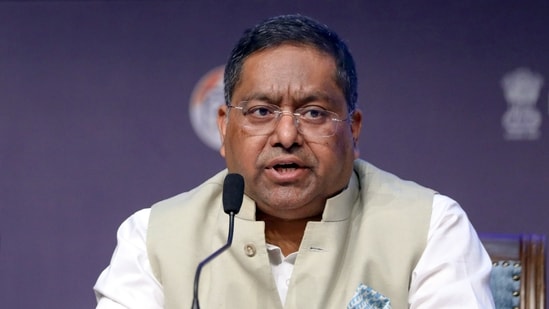
Did MEA say India backs Israel in Iran war, threaten Tehran? Viral video fact-checked| India News
**India’s Enduring Diplomacy in West Asia Conflict Resolution**
As tensions simmer and escalate across West Asia, one nation has consistently championed a path less volatile, a route paved with conversations rather than confrontations. India, a rising global power and an ancient civilization, has steadfastly maintained that dialogue and diplomacy must be pursued to de-escalate tensions. This isn’t merely a reactive stance but a deeply ingrained philosophy reflecting its foreign policy bedrock, meticulously observed by analysts and reported by outlets like Omni 360 News.
The complexities of the West Asia conflict, involving historical grievances, geopolitical maneuvers, and profound human suffering, present a formidable challenge to international stability. Yet, India’s approach has remained remarkably consistent: urging all parties to step back from the brink, engage in meaningful talks, and prioritize humanitarian concerns. This principle resonates with India’s long-standing commitment to peaceful coexistence and adherence to international law, a legacy from its non-aligned movement days.
For a 12th standard student, understanding this position is crucial. Imagine two friends arguing fiercely. Instead of picking a side or fueling the fight, a wise teacher would encourage them to talk things out, understand each other’s perspectives, and find a common ground. That’s essentially what India advocates on a global stage. When we talk about “de-escalation,” it means actively reducing the intensity of the conflict, preventing it from spiraling further out of control. “Dialogue” refers to open communication and negotiation between opposing sides, while “diplomacy” encompasses the broader art and practice of conducting international relations through negotiation.
India’s External Affairs Minister, S. Jaishankar, has repeatedly articulated this position in various global forums and bilateral discussions. His statements, often highlighted in regional Indian newspapers like the *Deccan Herald* or *The Tribune* which cater to a broad readership beyond the metropolitan centers, consistently call for a two-state solution to the Israeli-Palestinian issue—a framework accepted by the international community for a lasting peace. This involves the establishment of an independent Palestinian state coexisting peacefully alongside Israel. India’s diplomacy navigates a sensitive path, condemning terrorism in unequivocal terms while simultaneously advocating for the legitimate rights of the Palestinian people and emphasizing the urgent need for humanitarian assistance to affected regions.
Local reports from various Indian states underscore how this balanced approach is perceived domestically. Commentators often point out that India maintains significant diplomatic and economic ties with both Israel and several Arab nations, giving it a unique vantage point and a credible voice in advocating for peace. Its call for dialogue is not seen as an imposition but as a genuine effort to foster understanding and stability in a region vital for global energy security and trade.
The emphasis on diplomacy stems from a pragmatic understanding that military solutions rarely bring lasting peace and often exacerbate human suffering. India, having experienced and advocated for peaceful resolutions in its own neighborhood and beyond, understands the profound human cost of prolonged conflict. Protecting civilian lives, ensuring the delivery of humanitarian aid, and upholding international humanitarian law are not secondary concerns but central tenets of India’s appeal for peace.
This consistent messaging serves multiple strategic objectives for India. Firstly, it enhances its standing as a responsible global actor and a credible voice for peace and stability. Secondly, it protects its substantial diaspora in the region and safeguards its economic interests, which are deeply intertwined with the stability of West Asia. Lastly, it reaffirms India’s foundational foreign policy principle that disputes, no matter how entrenched, are ultimately resolvable through negotiation and mutual respect.
Key Takeaways:
* India consistently champions dialogue and diplomacy as the primary tools to de-escalate tensions in the West Asia conflict.
* This approach aligns with India’s long-standing foreign policy of non-alignment, peaceful coexistence, and adherence to international law.
* India advocates for a two-state solution for Israel and Palestine, emphasizing both security and the legitimate rights of the Palestinian people.
* The position is rooted in pragmatic considerations, including protecting its diaspora and economic interests, and enhancing its global diplomatic standing.
* India’s balanced stance, maintaining ties with all parties, lends credibility to its call for peace and humanitarian aid.
In conclusion, India’s unwavering commitment to dialogue and diplomacy in West Asia conflict resolution is a testament to its deeply held values and a reflection of its strategic vision for a more peaceful world. As the region grapples with monumental challenges, India’s consistent voice for conversation over conflict remains a beacon of hope, advocating for an inclusive, negotiated settlement that prioritizes human lives and fosters sustainable peace. This steadfast approach, diligently reported by media outlets like Omni 360 News, continues to shape international discourse on one of the world’s most enduring conflicts.





