
'Iranians must show some respect': Shashi Tharoor after attack on India-bound Thai ship| India News
**Shashi Tharoor’s Urgent Call India Navigates High Seas Tensions After Gulf Ship Incident Key Takeaways for Kandla Trade**
The serene blue waters, usually symbols of global connectivity and commerce, have lately become fraught with peril. In a stark reminder of escalating geopolitical tensions, a merchant vessel, reportedly a Thai ship heading for Gujarat’s pivotal Kandla port, was recently attacked by Iranian forces. This incident swiftly drew sharp commentary from veteran parliamentarian Shashi Tharoor, underscoring India’s delicate balancing act in a volatile maritime landscape. His remarks have sparked a crucial conversation about India’s maritime security and the protection of its vital trade routes.
The Incident Underlines Regional Instability
Details emerging from the Gulf region indicate that a merchant vessel, while traversing key international shipping lanes, faced an attack attributed to Iranian forces. While reports initially pointed to it as a Thai ship, the broader concern remains constant: a commercial vessel, destined for Indian shores, became a target in a region already grappling with heightened tensions. Such incidents are not isolated but part of a larger, unsettling pattern that threatens global shipping and, crucially, India’s economic lifelines.
Kandla Port, nestled on the Gulf of Kutch, stands as one of India’s largest and busiest ports. It is a critical gateway for imports, especially crude oil, chemicals, and fertilizers, serving a vast hinterland that includes northern and western India. Any disruption to vessels bound for Kandla sends ripples of concern across industries and the national economy. The thought of a ship, carrying essential goods for India, being intercepted or attacked, spotlights the vulnerability of our supply chains.
Shashi Tharoor’s Timely Intervention
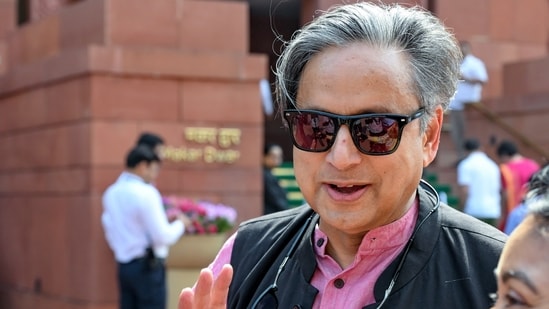
Following the news, Shashi Tharoor, known for his incisive grasp of foreign policy and international relations, wasted no time in articulating India’s predicament. His comments, widely reported by various Indian news platforms including regional dailies and online portals focusing on foreign affairs, reflected a deep understanding of the geopolitical chessboard. Tharoor reportedly emphasized that India, despite its traditional non-aligned stance, cannot afford to remain a passive observer when its economic interests and the safety of its seafarers are directly imperiled.
He reportedly urged the Indian government to adopt a more assertive diplomatic posture. This isn’t about choosing sides in regional conflicts but about unequivocally safeguarding national interests. His statements resonated with many who believe India needs to project its concerns more forcefully on the international stage, especially when incidents impact trade routes critical for energy security and economic stability. For a 12th-grade student, Tharoor’s point is simple: if someone is messing with the road your school bus takes, your parents have to speak up to ensure your safety.
India’s Deep Maritime Stakes
India is profoundly reliant on maritime trade. Approximately 95 percent of India’s trade by volume and 68 percent by value is conducted through sea. The Strait of Hormuz, where many such incidents occur, is a choke point through which a significant portion of the world’s oil supply, and a large chunk of India’s energy imports, must pass. Disruptions here translate directly into higher freight costs, increased insurance premiums, and potential delays, all of which ultimately affect the prices of goods consumed by ordinary Indian citizens.
Local maritime industry experts, often quoted in regional business journals like those focusing on Gujarat’s trade, have consistently voiced concerns over the instability in the Gulf and Red Sea. They highlight how shipowners face difficult decisions, sometimes re-routing vessels around the Cape of Good Hope, a much longer and costlier journey, simply to avoid these volatile zones. This impacts profit margins and, eventually, consumer costs. The Kandla Port Authority and various trade bodies, while not commenting directly on specific attacks, have consistently reiterated the importance of secure shipping lanes for uninterrupted trade flow to India.
The Geopolitical Tightrope Walk
India’s foreign policy regarding Iran and the wider Middle East is a complex tapestry. Historically, India has maintained cordial relations with Iran, evidenced by its investment in the Chabahar Port, a crucial alternative trade route bypassing Pakistan. However, India also has robust strategic partnerships with other regional players and global powers. This intricate web necessitates a diplomatic approach that protects India’s interests without alienating key allies or exacerbating regional tensions.
Tharoor’s comments implicitly acknowledge this tightrope walk. He isn’t advocating for military intervention but for a vigorous diplomatic offensive. This could involve direct communication with Iranian authorities, coordinating with international maritime organizations, and working alongside other affected nations to ensure safe passage for commercial vessels. The current climate, marked by the ongoing Israel-Hamas conflict and heightened Iran-Israel hostilities, adds layers of complexity, making India’s diplomatic maneuvering even more critical.
Key Takeaways for Omni 360 News Readers
1. Vulnerability of Trade Routes: The attack on a vessel bound for Kandla underscores how international conflicts directly threaten India’s economic security and daily life.
2. Need for Assertive Diplomacy: Shashi Tharoor’s call for a stronger Indian voice on maritime security is a sentiment shared by many who believe passive observation is no longer an option.
3. Economic Impact: Disruptions in key shipping lanes like the Strait of Hormuz lead to increased costs for imports, ultimately affecting Indian consumers.
4. Complex Geopolitics: India must balance its various relationships in the Middle East while prioritizing the safety of its trade and citizens.
5. Focus on Maritime Security: India needs to continue strengthening its own naval capabilities and engaging in international efforts to ensure freedom of navigation.
For India, the incident serves as a potent reminder that maritime security is not just a defense issue but an economic imperative. Protecting its sea lanes, engaging proactively in regional dialogues, and ensuring the safety of its seafarers must remain paramount. As the world navigates these turbulent waters, Omni 360 News will continue to bring comprehensive coverage, connecting global events to their local impacts, helping readers understand the profound stakes involved for India’s future prosperity. The call for vigilance and action is clear: India’s destiny is inextricably linked to the unimpeded flow of commerce across the oceans.





