
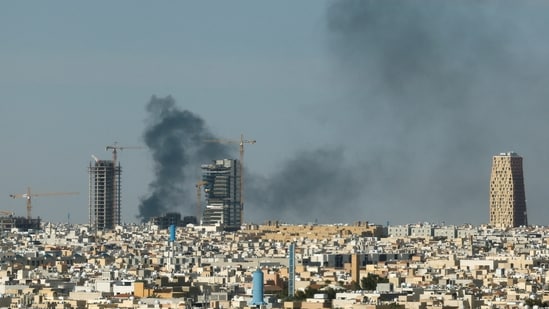
Centre monitors West Asia airspace as Indian carriers resume flights to Riyadh| India News
India and Riyadh Flights Reopen From March 12 Rekindling Gulf Ties
Riyadh, Saudi Arabia — A significant milestone in international travel unfolded on March 12, as regular scheduled commercial flights between India and Riyadh, Saudi Arabia, officially recommenced. This eagerly anticipated restart marks a crucial stride in re-establishing vital air connectivity between the vibrant South Asian nation and the economic powerhouse of the Gulf. The resumption brings a palpable sense of relief and renewed hope for countless individuals, businesses, and communities heavily reliant on this bustling air corridor.
For nearly two years, the global aviation landscape was largely grounded by the unprecedented challenges of the COVID-19 pandemic. Travel restrictions, border closures, and a general curtailment of movement severed essential links, leaving families separated, businesses struggling, and plans on hold. While “air bubble” arrangements offered some interim relief, they were temporary fixes, often limited in scope and capacity. The full-fledged resumption on March 12 signals a definitive move towards normalcy, allowing for greater frequency, flexibility, and accessibility for travelers.
The restart saw major carriers, including India’s flag carrier Air India and private airlines like IndiGo, alongside Saudi Arabian Airlines (Saudia), begin operations. Initial routes are connecting key Indian metropolitan hubs such as New Delhi, Mumbai, Bengaluru, and Hyderabad directly with Riyadh, reflecting the high demand for travel between these regions. Passengers are now able to book regular tickets, ending the era of special repatriation flights or restricted travel windows. This development provides much-needed predictability and convenience for all travelers.
A Lifeline for the Indian Diaspora
The impact of this resumption extends far beyond mere flight schedules. India boasts one of the largest expatriate communities in Saudi Arabia, with millions of Indian citizens living and working across various sectors. For these individuals, the consistent availability of flights is not just about travel; it is about maintaining familial bonds, addressing emergencies, pursuing educational opportunities, and managing business operations. Many families faced prolonged separations, with parents unable to visit children, and spouses unable to reunite. The reopening means a direct path home, a chance to visit loved ones, and the ability to plan future endeavors with greater certainty.
Consider the ordinary worker in Dammam or Jeddah, whose annual visit to their village in Kerala or Uttar Pradesh was put on hold. Or the student planning to pursue higher education, whose enrollment was contingent on reliable international travel. These are the human stories behind the statistics, and their relief is immense. The ability to travel freely, without the constant worry of cancellations or complex permissions, restores a fundamental aspect of their lives.
Boosting Economic and Business Ties
Beyond the human element, the restoration of air links carries substantial economic weight. Saudi Arabia is a vital trading partner for India, with bilateral trade spanning energy, infrastructure, and various goods and services. The renewed air connectivity facilitates increased business travel, allowing executives, entrepreneurs, and investors to engage in face-to-face meetings, forge new partnerships, and oversee existing projects. This ease of movement is critical for boosting trade volumes, attracting foreign direct investment, and fostering economic growth in both nations.
The construction, healthcare, and technology sectors, which often rely on a seamless flow of skilled personnel and expertise between India and the Gulf, stand to benefit significantly. Projects that might have been delayed due to travel impediments can now accelerate, contributing to job creation and economic prosperity. For businesses, the ability to send delegates for conferences, client meetings, or training sessions without logistical nightmares is a game-changer. The vibrant startup ecosystem in India also sees new avenues opening up for collaboration and expansion into the lucrative Saudi market.
Travel Protocols and Future Outlook
While flights have resumed, health and safety protocols remain a crucial consideration. Travelers are still advised to adhere to guidelines issued by both Indian and Saudi Arabian authorities, which typically include requirements for vaccination certificates, pre-departure PCR tests, and health declarations. These measures are in place to ensure a safe travel environment and prevent the resurgence of infectious diseases, allowing for sustained air travel operations.
Looking ahead, the resumption from March 12 is expected to pave the way for increased flight frequencies and potentially new routes as demand continues to surge. The positive momentum generated by this development will undoubtedly strengthen the enduring cultural, economic, and strategic relationship between India and Saudi Arabia. It underscores the global community’s collective effort to navigate beyond the pandemic’s shadow and rebuild interconnectedness. Omni 360 News will continue to monitor these developments, providing updates on evolving travel scenarios and their broader implications.
Key Takeaways:
* Regular scheduled commercial flights between India and Riyadh, Saudi Arabia, restarted on March 12.
* This marks a significant return to normal international air travel after pandemic-induced disruptions.
* Major airlines like Air India, IndiGo, and Saudia are operating routes connecting key Indian cities with Riyadh.
* The resumption provides immense relief and ease for millions of Indian expatriates and their families.
* It is expected to significantly boost economic cooperation, trade, and business travel between India and Saudi Arabia.
* Travelers are advised to remain updated on and adhere to prevailing health and safety protocols.
* This development signals a robust step towards strengthening bilateral ties and global connectivity.





