
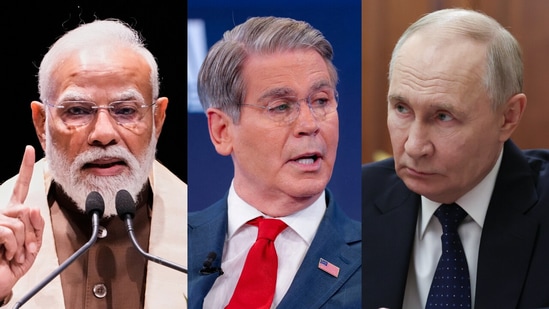
'It's inevitable': What Trump official said on 30-day waiver to India for buying oil from Russia| India News
Scott Bessent Forecasts Brief Russian Economic Surge Omni 360 News Key Takeaways
A statement from respected investor Scott Bessent has caught the attention of global economic observers. Bessent acknowledged a potential, albeit temporary, benefit for Russia, stating, “we hope that it will be in a micro period that they (Russia) will benefit.” This observation, coming from a figure known for his deep understanding of macroeconomics, warrants a closer look at the intricate forces shaping Russia’s current economic landscape.
Understanding the “Micro Period” Advantage
When a seasoned investor like Scott Bessent speaks of a “micro period” of benefit, it implies a short-term, fleeting advantage, not a fundamental shift in economic fortunes. This temporary boost for Russia has largely been attributed to specific global market dynamics following recent geopolitical events.
Firstly, a significant factor has been the surge in global commodity prices. Russia is a major exporter of oil, natural gas, metals, and agricultural products. When prices for these essential goods rise sharply on international markets, even with sanctions in place, the revenue generated from sales can initially cushion the blow of economic isolation. Nations needing these resources, particularly in Asia, have continued to purchase them, often at discounted rates, but still at volumes that provide substantial income.
Secondly, Russia has shown a degree of adaptability in rerouting its trade flows. Facing reduced access to Western markets and technologies, Moscow has sought new partners and established alternative supply chains, primarily with countries willing to bypass Western sanctions. This strategic pivot, while challenging, has allowed for some continuity in economic activity, preventing an immediate, catastrophic collapse. This initial adjustment period can be perceived as a “benefit” in the sense that the economy has not instantly ground to a halt.
Why the Benefit is Fleeting
However, the “micro” in Bessent’s analysis is the crucial qualifier. The structural issues confronting Russia suggest that any short-term gains are unsustainable.
The long-term impact of comprehensive sanctions is profound. These measures are designed to degrade Russia’s industrial capacity, restrict its access to advanced technology, and limit its financial integration with the global economy. Over time, this leads to a deterioration of infrastructure, a decline in productivity, and a severe hindrance to innovation.
Another critical challenge is the significant “brain drain.” Talented individuals, particularly in technology and finance, have left Russia seeking opportunities elsewhere. This exodus erodes the country’s human capital, vital for future economic growth and diversification. Without a vibrant, innovative workforce, Russia’s ability to develop new industries and compete globally diminishes.
Furthermore, relying heavily on commodity exports leaves Russia vulnerable to global price fluctuations. While high prices offer a temporary reprieve, any downturn in the oil or gas market could quickly expose the fragility of an economy lacking diverse, high-value industries. The shift away from fossil fuels globally also poses an existential long-term threat to Russia’s primary revenue streams.
Lastly, the absence of foreign investment and the difficulty in accessing international financial markets mean Russia struggles to fund necessary infrastructure projects and modernization efforts. This isolation stunts long-term development, making it increasingly difficult to catch up with technologically advanced economies.
Key Takeaways for Omni 360 News Readers
* Temporary Commodity Boost: Russia has seen short-term financial gains from elevated global commodity prices and the rerouting of trade.
* Sanctions Bite Slowly: The true impact of sanctions is cumulative, gradually eroding Russia’s economic foundation through technological isolation and reduced market access.
* Brain Drain Hurts Long-Term: The loss of skilled workers poses a significant challenge to future innovation and economic diversification.
* Unsustainable Economic Model: Russia’s heavy reliance on raw material exports is vulnerable to global market shifts and does not support sustainable, long-term growth.
In essence, Scott Bessent’s insight highlights a complex reality. While Russia might experience a transient economic uplift fueled by specific circumstances, this period is likely a temporary anomaly. The enduring challenges of sanctions, technological isolation, and a narrowing economic base suggest a future of constrained growth and diminished opportunities for the nation. For a human news reporter, this underscores the importance of looking beyond immediate headlines to understand the deeper, underlying economic currents.





