
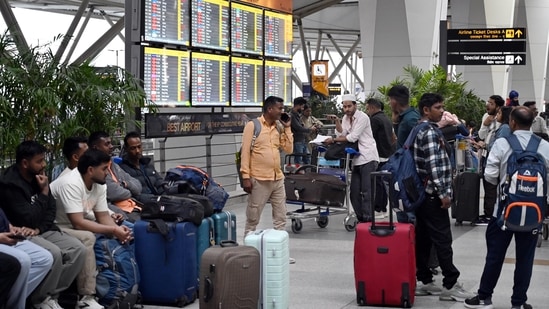
First Air India, now IndiGo, and more: Airlines hike fares as West Asia war sets oil prices on fire| India News
Soaring Skies, Soaring Costs Global ATF Price Surge Pressures Airlines, Travelers
The global aviation industry finds itself navigating turbulent economic headwinds as the price of Aviation Turbine Fuel, commonly known as ATF, experiences a notable and sustained escalation. This critical commodity, which typically constitutes a staggering 40 percent of an airline’s total operating expenses, has seen a sharp surge, prompting widespread concern across the sector and among air travelers alike. The ripple effects are already being felt, from the boardrooms of major carriers to the pockets of holidaymakers and business travelers.
Understanding the magnitude of this challenge requires a look at the fuel itself. ATF is essentially a specialized form of kerosene designed for jet engines. Unlike gasoline for cars, jet fuel needs to perform reliably under extreme conditions, including very low temperatures at high altitudes. Its price is directly tied to the global crude oil market, making it highly susceptible to geopolitical events, supply chain disruptions, and shifting demand. When crude oil prices rise, ATF prices inevitably follow, creating a direct and often immediate impact on airline finances.
The Heavy Burden on Airline Operations
For an industry still recovering from global travel restrictions and navigating a complex economic landscape, this substantial increase in fuel costs presents a formidable hurdle. Consider a local regional carrier, for instance, connecting smaller cities. While the large international airlines often have sophisticated fuel hedging strategies—essentially buying fuel at a predetermined price in advance to mitigate future price volatility—smaller operators frequently lack the capital or the infrastructure for such extensive programs. They are, therefore, more exposed to the immediate fluctuations of the spot market. Reports from regional aviation hubs, like those observed by Omni 360 News, indicate that some smaller freight and charter services are already adjusting their operational models, sometimes consolidating routes or increasing minimum load requirements to offset rising costs.
The direct consequence of higher ATF prices is a squeeze on airline profitability. With fuel making up such a significant portion of their expenses, a 10 percent increase in ATF can translate to millions, if not billions, of dollars in additional costs for a major airline over a year. This financial pressure can limit an airline’s ability to invest in new, more fuel-efficient aircraft, maintain competitive pricing, or even expand services. Several carriers have publicly stated that such cost increases are unsustainable without corresponding adjustments elsewhere.
Impact on the Everyday Traveler
Perhaps the most tangible effect for the general public is the inevitable rise in airfare. Airlines, facing these increased operational costs, have limited options. To maintain financial viability, they often pass a portion of these additional expenses onto consumers through higher ticket prices or the reintroduction of fuel surcharges. This means that that long-anticipated family vacation or crucial business trip could become noticeably more expensive.
Beyond ticket prices, travelers might also experience other changes. Airlines under financial stress may be compelled to reduce flight frequencies on less profitable routes or even discontinue some services altogether. This could lead to fewer direct connections, longer layovers, and reduced travel flexibility, particularly for those flying between secondary cities. The domino effect reaches the tourism sector, where higher travel costs can deter potential visitors, impacting local economies reliant on tourism revenue. Local hotels, restaurants, and tour operators are keenly watching these developments, understanding that fewer affordable flights mean fewer customers.
Navigating the Turbulent Economic Air
In response to these challenging conditions, airlines are exploring various strategies. Beyond fuel hedging, many are intensifying efforts to optimize flight paths for maximum fuel efficiency, investing in lighter aircraft materials, and improving ground operations to reduce fuel burn during taxiing. The push for newer generation, more fuel-efficient aircraft is also gaining momentum, though these are long-term investments with significant upfront costs.
Another area of focus is cargo. Air cargo operations, vital for global supply chains, are also seeing their costs rise. This directly impacts the price of imported goods, from electronics to fresh produce, ultimately affecting consumers far beyond just their travel plans. The interconnectedness of global trade means that higher ATF prices have a wide-ranging economic footprint.
Key Takeaways
* ATF’s Dominance in Costs: Aviation Turbine Fuel accounts for a substantial 40 percent of an airline’s operating expenses.
* Direct Link to Crude Oil: Global ATF prices are highly sensitive to fluctuations in crude oil markets.
* Financial Strain on Airlines: The sharp surge is squeezing airline profitability, especially for regional carriers without extensive hedging.
* Higher Airfares for Consumers: Travelers can expect increased ticket prices and potential fuel surcharges.
* Operational Adjustments: Airlines may reduce flight frequencies or consolidate routes to manage costs.
* Broader Economic Impact: The surge affects tourism, air cargo prices, and the cost of imported goods.
* Industry Adaptation: Airlines are focusing on fuel efficiency, hedging, and operational optimization.
The current landscape underscores the delicate balance within the aviation industry. While the thrill of flight remains, the economic realities of powering those journeys are becoming increasingly challenging. As Omni 360 News continues to monitor these developments, it is clear that the sector, and by extension, the global economy, will need to adapt strategically to these elevated fuel costs for the foreseeable future. The journey ahead for airlines and travelers alike promises to be anything but a smooth ride.





