
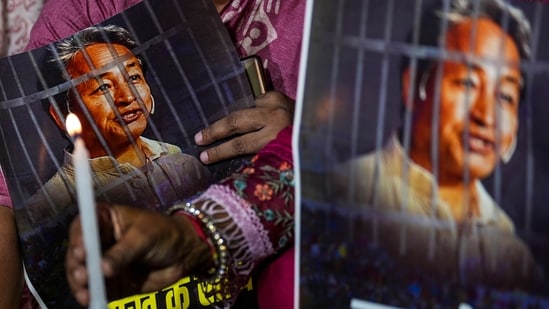
Govt decides to revoke Sonam Wangchuk's detention months after Leh protests| India News
Ladakh’s Cry for Safeguards Echoes Amidst Activist Detentions and NSA Concerns
The tranquil, majestic landscapes of Ladakh have long been a symbol of natural beauty and unique cultural heritage. Yet, beneath this serene exterior, a fervent movement advocating for the region’s future is gaining momentum, drawing significant attention to the plight of its activists. Recent developments, including the detention of prominent voices under the National Security Act (NSA), have cast a spotlight on the delicate balance between environmental conservation, democratic dissent, and governmental control in this strategically vital Himalayan territory. Omni 360 News has been closely monitoring these evolving narratives, aiming to provide a comprehensive, fact-based understanding of the complex situation.
While initial reports and public discourse often link renowned climate activist Sonam Wangchuk directly to NSA detention in Jodhpur, a deeper look reveals a more nuanced reality. Wangchuk, celebrated globally for his educational reforms and environmental advocacy, has indeed been at the forefront of the movement demanding constitutional safeguards for Ladakh. His powerful 21-day climate fast in March 2024 in Leh garnered national and international headlines, bringing the region’s demands for statehood and inclusion under the Sixth Schedule of the Constitution into sharp focus. During this period, he faced restrictions on his movement, described by many as preventive house arrest, to deter large gatherings. However, it was other prominent Ladakh activists, Sajjad Hussain Kargili and Tsering Angdus, who were detained under the National Security Act in April 2024 and subsequently transferred to Jodhpur jail. Their detention followed heightened tensions surrounding a planned ‘Pashmina March’ on April 7, 2024, which authorities preempted to prevent potential law and order issues. This sequence of events builds upon a continuum of protests, including those in September 2023, where local communities articulated their concerns over land, identity, and environmental protection.
Understanding Ladakh’s Demands
For decades, Ladakh’s people have nurtured a distinct identity, often feeling marginalized by the larger administrative structures. After the abrogation of Article 370 in August 2019, which led to the bifurcation of Jammu and Kashmir into two Union Territories, Ladakh became a separate Union Territory without a legislative assembly. This move, while initially welcomed by some as a step towards greater autonomy from Kashmir-centric politics, soon led to a new set of anxieties.
The primary demands articulated by the Ladakh Apex Body (LAB) and the Kargil Democratic Alliance (KDA), the two main representative organizations, revolve around four core points:
1. Statehood for Ladakh: Granting Ladakh full statehood, allowing its people greater self-governance and control over their local affairs.
2. Inclusion under the Sixth Schedule: This constitutional provision protects tribal populations by granting autonomous administrative powers to tribal councils, ensuring control over land, forest, water, and cultural identity. For Ladakh, with its significant tribal population and fragile ecosystem, this is seen as crucial to preserve its unique demographic and ecological balance against potential exploitation.
3. Separate Public Service Commission: To ensure that local Ladakhis get fair opportunities in government jobs within their own region.
4. Parliamentary Seats for Leh and Kargil: Demanding two separate parliamentary constituencies for the region, reflecting its distinct geographical and demographic makeup.
Activists like Sonam Wangchuk argue that without these safeguards, Ladakh’s delicate environment and unique culture are vulnerable to unsustainable development, industrialization, and an influx of outsiders that could dilute its identity and strain its limited resources. The region, known for its glaciers and pristine high-altitude deserts, is already grappling with the impacts of climate change, making environmental protection an urgent imperative.
The National Security Act and its Implications
The National Security Act (NSA) of 1980 is a powerful, preventive detention law that allows the government to detain individuals who are deemed a threat to national security or public order, without charges or trial for up to 12 months. Enacted to combat serious threats, its application in cases involving civil society activists and protesters has drawn significant criticism from human rights organizations and legal experts. They argue that the NSA can be misused to suppress dissent and bypass due process, as detainees have limited avenues for legal recourse and often face prolonged imprisonment without concrete evidence being presented in court.
In the context of Ladakh, the detention of Sajjad Hussain Kargili and Tsering Angdus under the NSA sent a chilling message through the activist community. Kargili, a prominent leader from Kargil, and Angdus, a Leh-based activist, were moved to Jodhpur jail hundreds of kilometers away from their homes, isolating them from their support systems and making legal consultations challenging. Local news reports from sources like ‘Kashmir Life’ and ‘The Daily Excelsior’ highlighted the widespread concern among their families and community members, who maintained that their activism was peaceful and democratic, aimed at securing constitutional rights, not destabilizing the nation. These arrests, coming after a period of intense public engagement and peaceful protests, raised questions about the state’s approach to managing public discontent in a sensitive border region.
The ‘Violent’ Aspect and Government Stance
The prompt mentions “violent Leh protests last September.” While protests in September 2023 saw large gatherings and strong expressions of discontent, authorities often characterize any large-scale defiance of orders as potentially leading to violence or disruption of public order. In the case of the planned ‘Pashmina March’ in April 2024, which led to the NSA detentions, authorities cited intelligence inputs about potential law and order disturbances. They argued that such marches, if allowed, could escalate into clashes or create unrest in a sensitive border area. The government’s primary concern, as often stated, is to maintain peace, national security, and territorial integrity, especially in regions bordering geopolitical hotspots. From the government’s perspective, preventive detentions under laws like the NSA are a necessary tool to preempt potential threats and uphold stability.
However, activists and local groups vehemently deny any intent of violence. They emphasize that their actions, including marches and fasts, are forms of peaceful democratic protest aimed at making their voices heard and drawing attention to their legitimate demands. They argue that labeling peaceful demonstrations as ‘violent’ or ‘seditious’ is a tactic to delegitimize their movement and stifle legitimate concerns.
A Reporter’s View: What It Means for Ladakh
For a 12th standard student trying to grasp this complex issue, think of it this way: Ladakh is like a unique, beautiful garden that needs special care. Its people feel that outside influences could harm this garden, so they are asking for stronger rules (like the Sixth Schedule) to protect their land, culture, and way of life. When they protest peacefully to ask for these rules, some of their leaders are arrested under a tough law (NSA) that allows detention without immediate trial, thousands of miles away. This makes many people worry about whether they can freely voice their concerns.
This situation in Ladakh underscores a critical juncture for democracy and environmental justice. The detention of activists under stringent laws like the NSA, even if aimed at maintaining order, often amplifies public grievances and can fuel a sense of alienation. It raises fundamental questions about the right to peaceful protest, freedom of expression, and the balance of power between citizens and the state. As Omni 360 News continues its commitment to bringing you comprehensive reporting, the evolving situation in Ladakh remains a critical story, touching upon India’s democratic fabric, its approach to regional autonomy, and the urgent need for climate action.
Key Takeaways:
* Ladakh’s primary demands include statehood, Sixth Schedule inclusion, a separate Public Service Commission, and additional parliamentary seats.
* Renowned climate activist Sonam Wangchuk has been a vocal leader of the movement, undertaking significant fasts and facing movement restrictions.
* Contrary to some reports, it was other prominent activists, Sajjad Hussain Kargili and Tsering Angdus, who were detained under the National Security Act and transferred to Jodhpur jail in April 2024, following the proposed ‘Pashmina March’.
* The National Security Act (NSA) allows for preventive detention without immediate charges, raising concerns among human rights advocates about its potential for misuse against dissent.
* The government justifies such actions by citing concerns over national security and public order, while activists maintain their protests are peaceful and democratic.
* The ongoing situation highlights the tension between local aspirations for self-determination and constitutional safeguards versus state control in sensitive border regions.





