
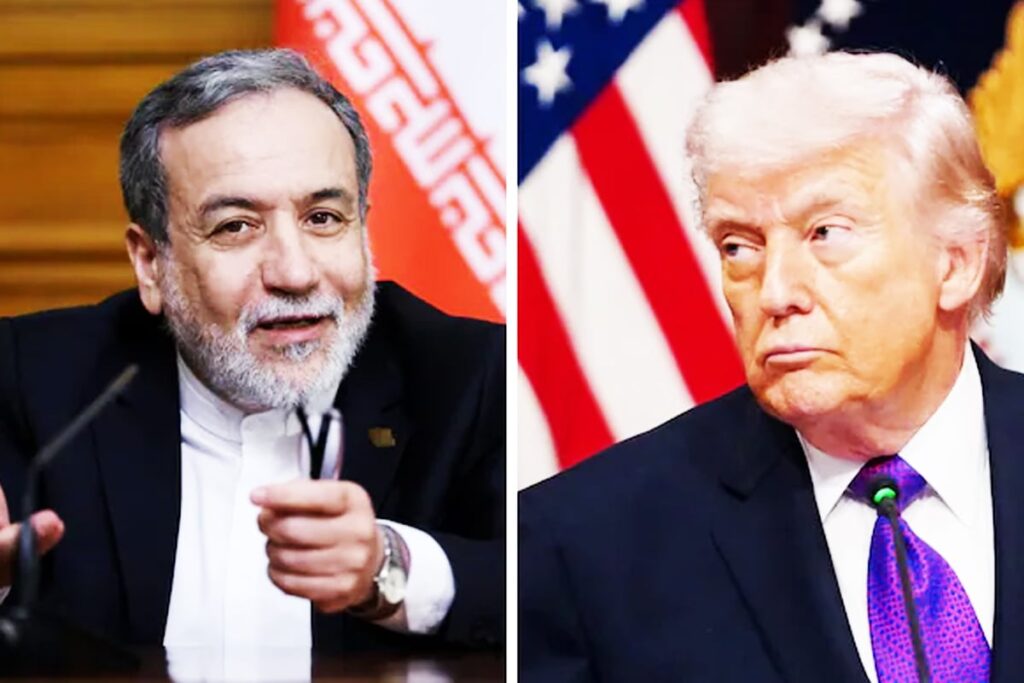
Iran’s Foreign Minister Abbas Araghchi targets Donald Trump over Russian oil waiver
Global Oil Shift America Changes Stance on Russian Fuel as Iran Threat Looms
The world’s energy landscape is witnessing a dramatic pivot. Washington, long a proponent of sanctions against Russian oil, has made a significant policy reversal. Citing escalating tensions in the Middle East and a looming global energy crisis, the United States has now given nations, including India, a temporary green light to purchase Russian crude oil already at sea. This unexpected shift comes as Iran threatens to close the vital Strait of Hormuz, a move that has sent shockwaves through international markets and dramatically pushed oil prices above $100 a barrel.
Hormuz Strait at the Heart of the Crisis
The Strait of Hormuz, a narrow waterway connecting the Persian Gulf to the open ocean, is arguably the world’s most critical oil transit chokepoint. Through this strategic passage, roughly one-fifth of the world’s total oil supply flows daily. Iran, angered by perceived joint Israeli and American aggression, has declared its intent to block this artery, threatening to destroy any ships attempting passage. This grave warning has effectively trapped an estimated 125 million barrels of Russian oil on cargo ships at approximately 30 different locations globally, sparking immediate concerns about global supply chains and energy security.
America’s Temporary Policy Reversal
In response to this rapidly unfolding scenario, the US administration has indicated a temporary relaxation of its stance on Russian oil. US Treasury Secretary Scott Bessent clarified that this “permission” is a temporary measure designed to stabilize global energy supplies and prevent further price hikes. For the next 30 days, countries can buy the Russian oil currently stranded at sea without fear of American punitive action. This strategic move aims to inject much-needed supply into a jittery market.
Iran Slams US as “Begging” for Oil
The policy shift has drawn sharp criticism from Iran’s Foreign Minister, Abbas Araghchi. Taking to his social media platform, Araghchi lambasted Washington’s sudden change of heart. He highlighted that for months, the US had pressured India and other nations to halt Russian oil imports. Now, faced with a global energy shortage stemming from the conflict with Iran, Washington is “begging” India and the rest of the world to buy Russian oil.
Araghchi did not mince words, labeling America’s actions against Iran an “illegal war.” He further alleged that European nations are supporting Washington in this conflict, driven by the anticipation of financial gain. Such strong rhetoric underscores the deep animosity and mistrust defining current geopolitical dynamics.
Global Ramifications and Omni 360 News Perspective
The immediate consequence of the Hormuz threat has been a rapid surge in global oil prices. A barrel of oil has quickly surpassed the $100 mark, igniting fears of a widespread fuel crisis impacting consumers and industries worldwide. This situation underscores how interconnected global energy markets are and how geopolitical tensions can translate into immediate economic hardship. The developments, as reported by Omni 360 News, highlight a critical moment where strategic waterways become flashpoints, forcing major powers to re-evaluate long-standing policies to avert deeper crises.
Key Takeaways
* The US has temporarily allowed countries, including India, to buy Russian oil currently at sea.
* This policy shift is a direct response to Iran’s threat to close the Strait of Hormuz.
* The Strait of Hormuz is a crucial global oil transit point; its closure would severely disrupt supply.
* Global oil prices have surged past $100 a barrel due to the escalating tensions.
* Iran’s Foreign Minister Abbas Araghchi has condemned the US move as “begging” and labeled US actions an “illegal war.”
* The permission to buy Russian oil is for a limited 30-day period, covering existing shipments.





