
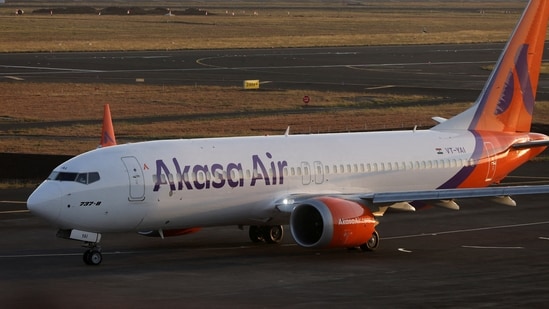
Akasa Air also hikes fares, adds ₹199–1,300 surcharge as West Asia war sets oil prices on fire| India News
Akasa Air Confronts Rising Fuel Costs As Geopolitical Tensions Mount
The hum of jet engines across India’s skies often masks the complex economic currents guiding the aviation industry. Lately, a significant headwind has emerged for airlines, particularly for newer entrants like Akasa Air: a sharp escalation in the price of Aviation Turbine Fuel (ATF). As an Akasa Air spokesperson recently highlighted, “There has been a significant increase in the price of aviation turbine fuel, driven by evolving geopolitical developments.” This statement, while concise, opens a window into the intricate global forces that directly impact an airline’s bottom line and, ultimately, the cost of air travel for millions. Omni 360 News delves into the details, bringing clarity to this crucial industry challenge.
Understanding the fuel at the heart of the matter—Aviation Turbine Fuel, or ATF—is the first step. For a student in the 12th standard, imagine ATF as the highly refined, specialised petrol that powers aircraft engines. Unlike the fuel used in cars, ATF undergoes stringent processing to ensure it performs reliably under extreme conditions, such as high altitudes and varying temperatures. It is the lifeblood of any airline, making up a substantial portion, often between 30-40%, of an airline’s total operating expenses. This means that even a minor fluctuation in ATF prices can have a monumental effect on an airline’s profitability and its capacity to offer competitive fares.
The price of ATF in India is intrinsically linked to global crude oil prices. India imports a significant portion of its crude oil requirements, meaning international market dynamics directly dictate the cost for local refineries. These refineries then process crude into products like petrol, diesel, and ATF, which are subsequently taxed by both central and state governments before reaching the airlines. Therefore, any disruption in the global crude oil supply chain or an increase in its benchmark price almost immediately translates into higher ATF costs for Indian carriers.
This brings us to the “evolving geopolitical developments” mentioned by Akasa Air. Geopolitics refers to the interplay of geography, economics, and politics on an international scale. In the context of oil prices, major geopolitical events can send shockwaves through the global energy markets. Consider, for instance, tensions in the Middle East, a region critical for a large percentage of the world’s crude oil supply. Any threat to oil production or shipping routes there can trigger fears of supply shortages, causing crude oil prices to spike. Similarly, major conflicts like the ongoing Russia-Ukraine war have led to sanctions, supply reconfigurations, and increased uncertainty, pushing up global energy costs. Decisions by OPEC+ (Organisation of the Petroleum Exporting Countries, plus allies like Russia) to either increase or cut oil production also have a powerful hand in shaping prices. If they decide to reduce output, global supply tightens, and prices generally rise.
Local news reports from various Indian business dailies often track the periodic revisions in ATF prices announced by state-run oil marketing companies. These revisions, typically occurring bi-monthly, are a direct reflection of the international crude oil market’s volatility. When global crude prices surge due to geopolitical events, these local revisions inevitably push ATF prices upwards for airlines operating in India.
For a relatively new airline like Akasa Air, these price increases present a unique set of challenges. New airlines are often focused on expanding their network, attracting customers with competitive fares, and establishing their brand. A sudden and significant surge in fuel costs can put immense pressure on their financial models, which might not have the same level of hedging strategies or economies of scale as more established carriers. Hedging involves buying fuel in advance at a fixed price to protect against future price increases, but it comes with its own risks and costs. Without robust hedging or sufficient financial buffers, Akasa Air might find it challenging to absorb these increased costs without either increasing ticket prices or impacting their profitability margins.
The ripple effect extends beyond Akasa Air to the entire Indian aviation sector. All airlines, from full-service carriers to other budget operators, feel the pinch of higher ATF prices. This collective burden often leads to an upward adjustment in air ticket fares across the board. For the average passenger, this means that travelling by air becomes more expensive, potentially impacting travel plans for leisure, business, or family visits. Increased operating costs can also slow down expansion plans for airlines, affect their capacity to introduce new routes, or even lead to a reduction in flight frequencies on less profitable routes.
From a broader economic perspective, the aviation sector is a crucial artery for trade, tourism, and business connectivity. When air travel becomes more expensive, it can have downstream effects on various industries. Tourism, for example, might see a dip in demand if flight costs become prohibitive. Businesses reliant on air cargo for time-sensitive deliveries might face higher logistics expenses. This cumulative impact underscores the importance of a stable and predictable energy market for a healthy economy.
Looking ahead, the skies remain unpredictable. As long as geopolitical tensions persist and major oil-producing nations navigate their complex interests, volatility in crude oil prices—and by extension, ATF prices—is likely to continue. Airlines will need to remain agile, exploring every possible operational efficiency, from optimising flight paths to investing in newer, more fuel-efficient aircraft. Passengers, too, might need to adjust to a dynamic fare environment, where ticket prices can reflect the fluid nature of global events.
Omni 360 News will continue to monitor these developments, providing comprehensive insights into how global dynamics shape our daily lives and industries.
Key Takeaways:
* ATF Price Surge: Akasa Air confirms a significant increase in Aviation Turbine Fuel prices.
* Geopolitical Drivers: Global events like Middle East tensions and the Russia-Ukraine conflict directly influence crude oil prices, which dictate Indian ATF costs.
* Airline Impact: ATF is a major operational cost; its rise puts financial pressure on all airlines, especially newer ones like Akasa Air, potentially affecting profitability and expansion.
* Passenger Fares: Higher ATF costs often translate into increased air ticket prices for consumers.
* Economic Ripple: The aviation sector’s health affects tourism, business travel, and cargo, highlighting the broader economic impact of fuel price volatility.
* Future Uncertainty: The unpredictable nature of global geopolitics means airlines and passengers must be prepared for ongoing fluctuations in air travel costs.





