
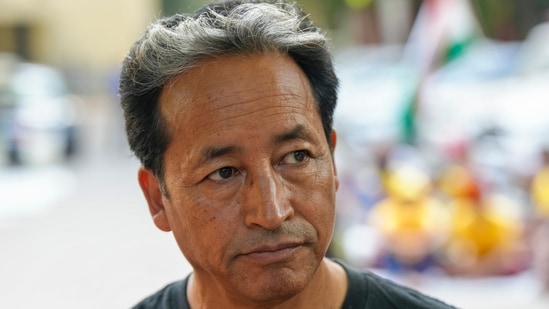
Climate activist Sonam Wangchuk walks free from Jodhpur jail| India News
Sonam Wangchuk Ladakh Detention Under NSA Explained Key Takeaways
Ladakh, a region of breathtaking natural beauty and rich cultural heritage, has recently been the focal point of significant concern following the detention of renowned educationist and climate activist Sonam Wangchuk. Reports from local sources confirm Wangchuk was taken into custody under the stringent National Security Act (NSA), an action that has ignited a firestorm of debate across the Union Territory and beyond. Authorities allege his actions amounted to inciting violence, a claim vigorously contested by his supporters and local community leaders.
Wangchuk, celebrated globally for his innovative educational models and pioneering climate initiatives, particularly his “Ice Stupas” that address water scarcity, has lately emerged as a prominent voice advocating for Ladakh’s environmental and constitutional protections. His activism shifted significantly after Ladakh’s reorganisation into a Union Territory in 2019, away from Jammu and Kashmir. Alongside other local groups, he has been campaigning for the inclusion of Ladakh under the Sixth Schedule of the Constitution, a provision designed to safeguard the land, culture, and identity of tribal populations. Additionally, the demand for statehood has grown louder, driven by anxieties over ecological fragility and the protection of local jobs.
The detention under the NSA, a law that permits preventive detention for up to twelve months without specific charges if authorities believe an individual poses a threat to national security or public order, marks a severe escalation. According to local police statements reported by regional news outlets such as the *Ladakh Monitor*, the allegations against Wangchuk stem from his recent public addresses and social media activity during a series of “Climate Fasts” he undertook. These fasts were aimed at drawing national and international attention to Ladakh’s environmental vulnerabilities and the urgent need for constitutional safeguards. Officials reportedly cited certain phrases and calls for mass participation at rallies, interpreting them as attempts to instigate unrest and potentially disrupt the fragile peace in the sensitive border region. These specific allegations, however, have not been detailed publicly in a transparent manner that satisfies civil society groups.
The local community’s response has been one of deep dismay and solidarity. The Ladakh Democratic Alliance (LDA) and the Kargil Democratic Alliance (KDA), two influential political fronts spearheading the demands for Sixth Schedule status and statehood, have unequivocally condemned the detention. Statements released to local press outlets like the *Himalayan Chronicle* emphasize Wangchuk’s long-standing commitment to non-violent protest and sustainable development. Supporters highlight his consistent message of peace and constructive dialogue, making the charges of ‘inciting violence’ appear incongruous with his public persona and track record. Several local student organisations and environmental groups have organised peaceful demonstrations in Leh and Kargil, urging his immediate release and expressing concerns over the implications for freedom of speech and peaceful assembly in the Union Territory.
For the people of Ladakh, particularly the youth and those deeply connected to their land, Wangchuk represents a beacon of hope for preserving their unique identity and ecological future. His recent climate fasts, held at extreme altitudes and temperatures, brought significant national attention to the region’s concerns. The use of the NSA against such a figure, who has garnered respect for his principled stance, is seen by many as an attempt to silence dissenting voices and stifle legitimate democratic protest.
The detention under the NSA means Wangchuk’s legal recourse is limited in the immediate term. While a review committee will assess the grounds for his detention, the process can be lengthy, and the burden of proof for the detaining authority is often less stringent than in criminal proceedings. This situation underscores the broader challenges faced by activists and civil society in regions where state security interests often intersect with democratic rights.
This unfolding situation in Ladakh remains a critical point of focus for Omni 360 News. Our commitment is to provide comprehensive, factual, and balanced reporting, shedding light on the intricate interplay of environmental concerns, constitutional demands, and civil liberties in this strategically vital Himalayan region. As events unfold, the implications for advocacy, governance, and the future of democratic dissent in India will be closely watched.
Key Takeaways:
* Renowned climate activist Sonam Wangchuk was detained under the National Security Act (NSA) in Ladakh.
* Authorities allege he was inciting violence, a claim disputed by his supporters and local groups.
* Wangchuk has been a vocal advocate for Ladakh’s demands for Sixth Schedule status and statehood to protect its environment, culture, and jobs.
* The NSA allows for preventive detention without immediate charges, raising concerns about civil liberties.
* Local communities and political alliances have strongly condemned the detention, citing Wangchuk’s history of non-violent activism.
* The incident highlights tensions between state security measures and democratic freedoms in Ladakh, drawing significant regional attention.





