
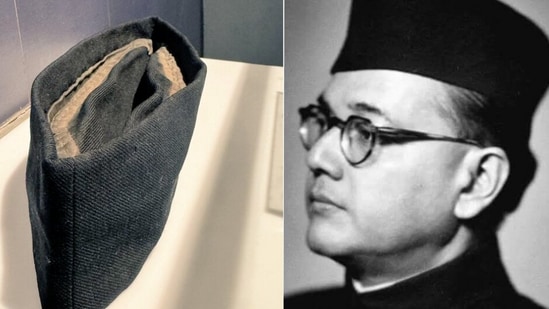
Netaji's cap ‘goes missing’, returns, but grandnephew has a doubt: Row over Subhas Chandra Bose's belonging, explained| India News
Empty Display Case Ignites Netaji Legacy Debate at Red Fort Museum Key Takeaways
A perplexing discovery at Delhi’s iconic Red Fort museum has sparked a renewed public conversation regarding the preservation and portrayal of national heroes. Members of the Open Platform for Netaji (OPN), an organization dedicated to upholding the legacy of Netaji Subhas Chandra Bose, recently brought to light an empty display case within the ‘Azadi Ke Deewane’ museum, specifically designated for artifacts related to the revered freedom fighter. This seemingly minor observation has quickly escalated into a significant controversy, drawing attention to historical memory, institutional responsibility, and the ongoing reverence for Netaji’s immense contributions to India’s independence struggle.
The Discovery and Immediate Reaction
The incident unfolded when representatives from OPN visited the ‘Azadi Ke Deewane’ (Martyrs of Freedom) museum, housed within the historic Red Fort complex. This particular museum wing was inaugurated with much fanfare, intended to commemorate the sacrifices of various freedom fighters, with a special emphasis on Netaji Subhas Chandra Bose and the Indian National Army (INA). To the astonishment of the OPN members, a prominently positioned display case, clearly earmarked for an exhibit pertaining to Netaji, stood completely bare. It was reportedly intended to house a replica of Netaji’s uniform, a powerful symbol of his military leadership and dedication.
The sight of the vacant space immediately raised alarms within the OPN, an organization that has long championed the declassification of Netaji files and ensured his rightful place in national memory. They swiftly brought the matter to public attention, questioning the apparent oversight or neglect by the museum authorities. For an institution built to honor such a pivotal figure, an empty display was perceived not merely as a logistical lapse but as a symbolic void, a potential diminishment of Netaji’s stature.
The Red Fort’s Historical Significance and Netaji’s Connection
To understand the weight of this controversy, one must appreciate the profound historical resonance of the Red Fort. This grand Mughal-era edifice is not merely a tourist attraction; it is a powerful symbol of Indian sovereignty and struggle. It was from its ramparts that India’s first Prime Minister, Jawaharlal Nehru, unfurled the national flag on August 15, 1947, proclaiming independence. More poignantly, for the context of Netaji, the Red Fort was the site of the infamous INA trials in 1945-46, where key officers of Netaji’s Indian National Army were court-martialed by the British. These trials galvanised public opinion across India, turning the INA soldiers into national heroes and intensifying the demand for immediate independence.
Given this backdrop, establishing a museum dedicated to freedom fighters, especially Netaji and the INA, within the Red Fort carries immense symbolic value. It serves as a physical testament to their bravery and sacrifice, educating generations about the often-unspoken chapters of India’s freedom movement. The museum, under the Archaeological Survey of India (ASI) and the Ministry of Culture, is expected to meticulously preserve and present these narratives.
Official Explanations and Public Skepticism
Following OPN’s public outcry, the museum authorities, primarily the ASI, offered explanations for the empty display. Initial reports, gathered by Omni 360 News from local Delhi outlets, suggested reasons ranging from “ongoing conservation work” to “plans for upgradation” or simply the “non-availability of a suitable artifact” at the time. Some officials hinted that artifacts might have been temporarily removed for maintenance or that the specific exhibit had not yet been finalized.
However, these explanations have been met with a degree of skepticism by OPN and other Netaji enthusiasts. They argue that a temporary removal for conservation should be clearly communicated to the public, perhaps with a sign explaining the absence. Furthermore, if a museum dedicated to a national hero has been open for a considerable period, the continued non-availability of a central exhibit like a replica of his uniform points to a systemic issue rather than a mere temporary glitch. For many, it underscores a perceived lack of diligence in curating and maintaining a significant historical exhibition.
OPN’s Demands and the Broader Discourse
The Open Platform for Netaji has unequivocally called for immediate action to rectify the situation. Their primary demand is the swift placement of a suitable artifact or a high-quality replica in the empty display case, ensuring Netaji’s presence is visibly honored. Beyond this immediate concern, OPN leverages such incidents to push for a more comprehensive and accurate portrayal of Netaji Subhas Chandra Bose in official historical narratives. They advocate for greater transparency regarding his life and disappearance, urging the government to declassify remaining files that could shed further light on his journey.
This controversy is not just about an empty case; it taps into a much larger national discourse surrounding history, memory, and identity. Different political and ideological groups often have varying interpretations of historical events and the roles played by key figures. Netaji, with his daring choices and independent spirit, remains a figure of immense national pride but also one around whom historical debates continue to swirl. Incidents like these fuel the discussion about who controls the narrative, how history is presented in public spaces, and the vigilance required from citizen groups to ensure accuracy and respect.
Looking Ahead: The Responsibility of Public Institutions
The incident at the Red Fort museum serves as a potent reminder of the immense responsibility borne by public institutions entrusted with preserving national heritage. Museums are not just repositories of old objects; they are storytellers, shaping public understanding and reinforcing national values. For a nation like India, with its rich and complex history, the meticulous curation and maintenance of such spaces are paramount.
The empty display case, now highlighted by Omni 360 News and local reports, calls for more than just filling a void. It demands a re-evaluation of how historical figures are honored, how public institutions communicate with citizens, and how the collective memory of a nation is safeguarded against oversight or perceived neglect. The Red Fort, a silent witness to centuries of history, now also bears testament to the ongoing vigilance required to ensure its stories, and those of its heroes, are told completely and respectfully.
Key Takeaways:
* The Open Platform for Netaji (OPN) discovered an empty display case meant for Netaji Subhas Chandra Bose artifacts at the ‘Azadi Ke Deewane’ museum in Red Fort, Delhi.
* This sparked a debate about the museum’s commitment to honoring national heroes and the preservation of historical narratives.
* The Red Fort holds deep historical significance, notably as the site of the INA trials, making the museum’s role in depicting Netaji’s legacy crucial.
* Official explanations for the empty case, such as conservation or non-availability of artifacts, have faced public skepticism.
* OPN demands the immediate rectification of the display and advocates for a more comprehensive and transparent portrayal of Netaji in national history.
* The incident underscores the ongoing public discourse on historical memory, institutional accountability, and the importance of accurate historical representation in public spaces.





