
India seeks ‘safe, unimpeded transit’ for more stranded vessels after Shivalik, Nanda Devi cross Strait of Hormuz| India News
Indian Oil Tankers Navigate Hormuz Securely Ensuring Energy Pathways
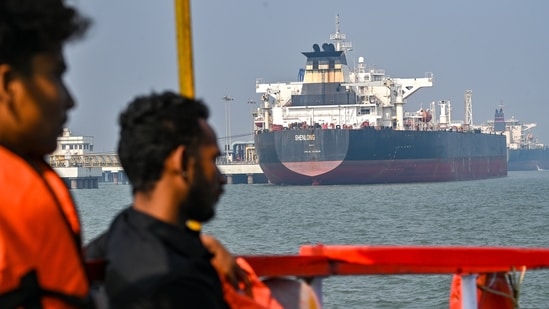
In a significant development for India’s energy security and global maritime trade, two Indian vessels, the Shivalik and Nanda Devi, successfully transited the Strait of Hormuz. Chartered by the Indian Oil Corporation (IOC), their safe passage earlier today underscores the nation’s continued reliance on critical sea lanes and the ongoing efforts to secure its energy lifelines. This event, closely monitored by maritime authorities, demonstrates the resilience of global shipping routes amidst complex regional dynamics.
For decades, the Strait of Hormuz has stood as a narrow yet immensely vital maritime gateway. It is a mere 39-kilometer wide channel connecting the oil-rich Persian Gulf to the open waters of the Arabian Sea. Think of it as a crucial bottleneck on a superhighway for global energy. Through this waterway, roughly a fifth of the world’s total petroleum consumption, including crude oil and refined products, embarks on its journey to various corners of the globe. Any disruption here sends ripples across international markets, impacting everything from fuel prices at the pump to industrial production costs. For a country like India, which imports over 80% of its crude oil, much of it from Gulf nations, the secure navigation of this strait is not merely a logistical concern; it is a fundamental pillar of its economic stability and growth.
The vessels in question, the Shivalik and Nanda Devi, are commercial tankers integral to India’s vast energy supply chain. Chartered by IOC, India’s largest commercial oil company, these ships routinely undertake voyages to transport crude oil from the Middle East to India’s refineries. Their operational continuity ensures a steady supply of energy that powers everything from commuter vehicles to large-scale industries across the subcontinent. The cargo they carry is the lifeblood of modern society, underpinning manufacturing, transportation, and daily life. Their unimpeded transit through volatile regions is a testament to the structured planning and coordination involved in international shipping.
The safe passage of these Indian tankers through the Strait of Hormuz holds considerable weight. It reaffirms the principle of freedom of navigation in international waters, a cornerstone of global trade. Furthermore, it sends a clear message of confidence in the current maritime security measures in place. While details of specific security escorts or naval presence are often kept discreet for operational reasons, the overarching understanding is that international and regional navies maintain a vigilant watch over these critical routes. For India, ensuring its energy vessels can traverse such strategic choke points securely is paramount to meeting its ever-growing energy demands and supporting its ambitious economic targets. This secure transit contributes directly to maintaining stable domestic fuel prices and preventing potential supply shocks that could destabilize the economy.
To put this in perspective for a 12th-standard student: imagine your school relies on a single, narrow road for all its supplies—textbooks, food for the canteen, and even buses for field trips. If that road becomes unsafe, everything grinds to a halt. The Strait of Hormuz is that crucial, narrow road for the world’s oil supply. When tankers like the Shivalik and Nanda Devi safely pass through, it means that the “school supplies” (the crude oil) can reach their destination (India’s refineries), which then turn it into gasoline for cars, diesel for trucks, and fuel for factories. This uninterrupted flow keeps the economy running smoothly and allows everyone to go about their daily lives without worry about energy shortages or sudden price hikes. It’s about ensuring the lights stay on and the wheels keep turning.
Key Takeaways:
* Two Indian Oil Corporation chartered vessels, Shivalik and Nanda Devi, safely passed through the Strait of Hormuz.
* The Strait of Hormuz is a critical global energy choke point, vital for India’s oil imports.
* Their secure transit underscores the importance of maritime security for India’s energy stability.
* This event highlights the ongoing efforts to ensure freedom of navigation and secure global trade routes.
* India’s energy security is deeply intertwined with the safe passage of such tankers.
The successful navigation of the Shivalik and Nanda Devi through the Strait of Hormuz provides a timely reminder of the delicate balance between geopolitics and global commerce. For Omni 360 News, this event isn’t just a shipping update; it’s a barometer of the intricate mechanisms that keep the global economy fueled and functioning, ensuring vital resources reach their destinations and nations like India can continue their journey of development with confidence in their supply lines.





