
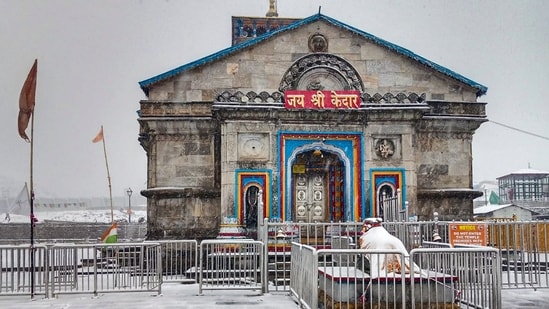
Heavy snowfall in Uttarakhand's Chamoli; white blanket engulfs Badrinath Dham| India News
Badrinath Dham Draped in White A Blanket of Snow Covers Sacred Peaks
The revered precincts of Shri Badrinath Dham in the Garhwal Himalayas have once again succumbed to nature’s magnificent artistry, as intense snowfall transformed the entire landscape into a pristine, white wonderland. Reports emanating from the higher reaches of Uttarakhand confirm that the temple premises, along with the majestic Neelkanth Parvat and the serene Narayan Parvat, are now completely enveloped in a thick blanket of snow. This breathtaking transformation, a regular winter spectacle, continues to captivate onlookers and reinforces the profound spiritual aura of the region.
As the mercury plunges and the biting Himalayan winds sweep through the valley, Badrinath Dham enters its annual dormant phase. The temple, dedicated to Lord Vishnu, traditionally closes its doors to pilgrims for the winter months, usually in November, to protect the sacred deity from the harsh climate. During this period, the Utsav Murti (processional idol) is relocated to the Narsimha Temple in Joshimath. It is precisely during this closure that the region experiences its most dramatic climatic shifts, with heavy snowfall becoming a defining characteristic of the landscape.
Local observations indicate that the recent spell of snow has been particularly robust, turning familiar landmarks into ethereal forms. The iconic temple structure, despite being closed, now stands as a solitary sentinel amidst the vast expanse of white, its golden roof glinting softly under the muted winter sun, if visible at all beneath the accumulating layers. The surrounding valleys and peaks, typically rugged and imposing, now exhibit a softer, more delicate beauty, creating scenes often likened to those from mythological epics.
The two prominent peaks flanking Badrinath—Neelkanth Parvat and Narayan Parvat—are central to the visual grandeur of the Dham. Neelkanth Parvat, often called the “Garhwal Queen,” is an awe-inspiring pyramidal peak rising to over 6,500 meters. Narayan Parvat, equally significant, provides a majestic backdrop. Both mountains, now cloaked in deep snow, present an even more formidable and pristine appearance. Their white caps stretch towards the heavens, creating a stark contrast against the often-cloudy winter skies, a sight that evokes a sense of deep reverence and tranquility.
For the residents of the remote villages nestled in the lower reaches of the Garhwal Himalayas, snowfall holds a dual significance. While it brings logistical challenges, often disrupting connectivity and daily life, it is also a vital source of water for the region’s rivers and springs. The slow melting of these vast snow deposits throughout spring and early summer replenishes the Alaknanda River, a tributary of the sacred Ganga, and ensures a steady supply of water for irrigation and consumption in the plains below. This natural cycle is crucial for the ecological balance and the agricultural prosperity of Uttarakhand.
Local administrative bodies and the Shri Badrinath-Kedarnath Temple Committee diligently monitor the conditions even during winter. While direct access to the temple remains restricted, officials keep track of snow accumulation and weather patterns, crucial information for planning the reopening of the pilgrimage route for the Char Dham Yatra in late April or early May. The sheer volume of snow currently blanketing the area signals a healthy winter, which often bodes well for the region’s water resources in the coming months.
The imagery shared by local sources, though sparse due to the remote nature of the region in winter, consistently depicts a landscape utterly transformed. These views, often captured by a handful of security personnel or locals who brave the winter conditions, are invaluable in conveying the magnitude of nature’s embrace. They highlight the serene yet formidable beauty of the Himalayas, a constant reminder of the raw power and peace that coexist in this ancient land. Omni 360 News diligently reports on these remote yet vital happenings, ensuring a comprehensive view of events across the nation.
Key Takeaways:
* Shri Badrinath Dham and its surrounding peaks, Neelkanth and Narayan Parvat, are under a significant cover of fresh snowfall.
* The snowfall marks the height of winter in the Garhwal Himalayas, during the temple’s annual closure period.
* This natural phenomenon enhances the spiritual and scenic beauty of the sacred pilgrimage site.
* Winter snowfall is crucial for replenishing regional water sources, including the Alaknanda River, vital for the ecosystem and downstream communities.
* Monitoring of snow conditions is essential for planning the successful reopening of the Char Dham Yatra routes in spring.
This annual winter spectacle is more than just a weather event; it is a profound natural occurrence that underscores the resilience of the Himalayas and the deep connection between spirituality and nature in this revered corner of India. As winter progresses, the majestic landscape of Badrinath will continue its silent vigil, awaiting the warmth of spring and the return of pilgrims to its hallowed grounds.





