
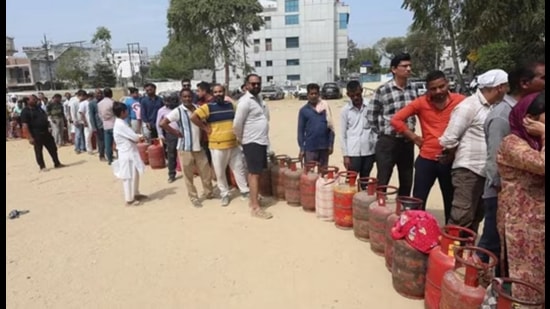
Govt asks domestic cooking gas consumers to get e-KYC done through Aadhaar| India News
Aadhaar Biometric Check for Ujjwala Beneficiaries Navigating Subsidy Renewal Challenges
New Delhi, India – The Union Government’s directive making annual biometric Aadhaar authentication mandatory for over 105.1 million beneficiaries of the Pradhan Mantri Ujjwala Yojana (PMUY) has sparked a critical conversation across rural and semi-urban landscapes. This measure, aimed at ensuring the transparent and targeted delivery of cooking gas subsidies, requires beneficiaries to undergo a yearly fingerprint or iris scan linked to their Aadhaar card to continue receiving their benefits. For Omni 360 News, we delve into the nuances of this significant policy update, exploring its intended benefits and the very real challenges faced by millions at the grassroots level.
Understanding the Pradhan Mantri Ujjwala Yojana
To grasp the implications of this new mandate, it’s essential to understand PMUY. Launched in 2016, the scheme aimed to provide clean cooking fuel (LPG) connections to women from economically weaker sections. The core idea was to replace polluting traditional fuels like firewood and cow dung cakes with LPG, improving health outcomes, especially for women and children, and reducing environmental degradation. The government subsidizes the initial connection cost and sometimes provides refills at a subsidized rate, a crucial support for many households struggling with daily expenses. The scheme has been widely successful in expanding LPG coverage across the nation.
The Mandate Explained: Why Annual Biometric Authentication?
At its heart, the annual biometric authentication is a governmental step to enhance the integrity of the PMUY program. Officials contend that this yearly check is vital to curb potential misuse, prevent “ghost beneficiaries” – individuals who might be receiving subsidies despite not being eligible or having passed away – and ensure that the aid reaches only the intended recipients. By linking subsidy disbursals directly to a live, authenticated biometric record, the government aims to create a robust system that minimizes leakages and maximizes efficiency in welfare delivery. For beneficiaries, this means physically visiting an authorized center once a year, providing their Aadhaar card, and successfully completing a biometric scan.
Ground Realities and Beneficiary Hurdles
While the intention behind the mandate is sound, its implementation on the ground presents a complex tapestry of challenges, particularly in remote and underserved areas. Local reports and community discussions reveal several pressing issues:
1. Accessibility and Distance: For many beneficiaries, especially those residing in far-flung villages, the nearest Aadhaar authentication center, Common Service Center (CSC), or LPG distributor point can be several kilometers away. This often translates to significant travel time and cost, a burden for families already living paycheck to paycheck. A day spent traveling for authentication means a day’s wages lost for daily wage earners, a substantial sacrifice for a benefit they depend on.
2. Digital Literacy and Technical Glitches: Not everyone is conversant with digital processes. Many elderly beneficiaries or those with limited education struggle to navigate the system. Technical issues, such as faulty fingerprint scanners, slow internet connectivity, or system downtimes at authentication centers, are common complaints that can prolong the process or require multiple visits. The quality of biometric data collected initially can also pose problems, leading to authentication failures years later.
3. Physical Limitations: Elderly individuals, those with disabilities, or the infirm face considerable difficulty in physically reaching authentication centers. For some, worn fingerprints due to age or manual labor can make biometric matching a persistent challenge, even with multiple attempts.
4. Awareness Gap: Despite government efforts, a significant segment of the beneficiaries remains unaware of the annual requirement or the precise procedure. This lack of information can lead to last-minute rushes, confusion, and even temporary suspension of subsidies for those who miss the deadline. Local administrations are making efforts, but reaching every household with clear communication remains a formidable task.
5. Impact on Women: Since PMUY primarily targets women, the onus of this authentication often falls on them. In many conservative settings, women might face additional mobility restrictions or require male escorts, adding another layer of complexity to the process.
The Administrative Perspective and Mitigating Efforts
Local government bodies and LPG distributors are tasked with facilitating this authentication. Many districts are organizing special camps in rural areas, extending service hours at CSCs, and deploying mobile authentication units to reach beneficiaries closer to their homes. Awareness campaigns through local self-help groups (SHGs) and public announcements are also being leveraged. However, the sheer scale of the operation – authenticating over 105 million individuals annually – means that resources are stretched thin, and consistent execution across all regions remains a hurdle.
Key Takeaways
* The annual biometric Aadhaar authentication for PMUY beneficiaries aims to enhance subsidy transparency and prevent misuse.
* Over 105.1 million beneficiaries are impacted, requiring a yearly in-person biometric scan.
* Challenges include accessibility, travel costs, digital literacy gaps, technical issues, and physical limitations for elderly or infirm beneficiaries.
* Local administrations are implementing special camps and awareness drives, but the scale of the task is enormous.
* The policy highlights the ongoing tension between ensuring efficiency in welfare schemes and maintaining accessibility for the most vulnerable populations.
Conclusion
The mandatory annual biometric Aadhaar authentication for PMUY beneficiaries marks a significant stride towards strengthening the integrity of India’s welfare programs. It underscores the government’s commitment to precision in aid delivery. However, the success of such a large-scale initiative hinges not just on its technological prowess but equally on its human-centric design. For Omni 360 News, the stories emerging from villages and small towns across India serve as a poignant reminder that while technology can streamline processes, it must be accompanied by robust support systems, widespread awareness, and genuine empathy to ensure that no deserving beneficiary is left behind. Balancing the pursuit of efficiency with the imperative of accessibility remains the paramount challenge as millions navigate this new requirement to secure their essential cooking fuel subsidy.





