
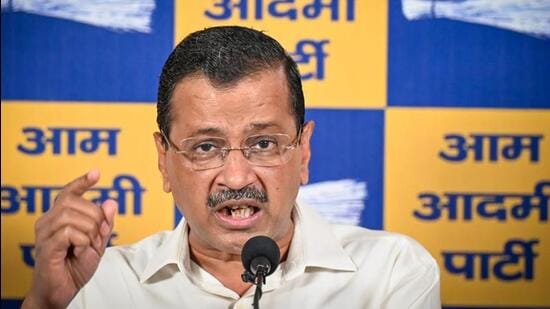
Excise case: Delhi HC grants time to Kejriwal to reply to CBI plea against discharge| India News
Solicitor General Tushar Mehta’s Strong Words on Trial Court Order Under Scrutiny
A significant moment unfolded in India’s legal landscape as Solicitor General Tushar Mehta, representing a key agency, vehemently challenged a trial court’s order, declaring it “perverse” and stating it “cannot remain on record even for a second more than necessary.” This forceful articulation by one of the nation’s top legal officers underscores the gravity with which certain judicial decisions are viewed, particularly when they involve high-stakes matters. The statement has naturally sparked considerable discussion within legal circles and among citizens following judicial developments.
The pronouncement by Solicitor General Mehta came during proceedings, signaling a clear intent to seek immediate intervention from a higher judicial authority. Such strong language from the Solicitor General, who advises the government on legal matters and represents it in significant cases, is not merely rhetoric. It signifies a profound disagreement with the lower court’s reasoning and application of law, suggesting a perceived fundamental flaw that requires swift rectification.
Understanding a “Perverse Order” in Legal Context
For many, the term “perverse order” might sound dramatic, but in legal parlance, it carries a very specific and serious meaning. When a court order is termed “perverse,” it generally implies that the decision is:
* Irrational or Unreasonable: It’s a conclusion that no reasonable person or court, acting judicially, could have reached based on the available evidence.
* Against the Weight of Evidence: The order ignores crucial evidence presented, or it draws conclusions that are directly contradicted by the facts on record.
* Misinterpretation of Law: The court has fundamentally misunderstood or misapplied established legal principles, statutes, or precedents.
* Procedural Irregularity: While less common for a “perverse” label, it can sometimes indicate a gross procedural error that fundamentally undermined the fairness of the trial.
Essentially, a “perverse order” is one that deviates so significantly from what is just and logical, given the facts and law, that it’s considered an egregious error demanding immediate correction. It’s not merely a difference of opinion but a deep-seated conviction that the trial court’s decision is unsustainable and unjust.
The Solicitor General’s Role and the Weight of His Words
Tushar Mehta holds the prestigious position of Solicitor General of India, the second-highest law officer of the country, assisting the Attorney General. His responsibilities include representing the Union Government and its various agencies in significant cases before the Supreme Court and High Courts. When an officer of his stature makes such a categorical statement about a trial court’s order, it carries immense weight.
His words are not just an opinion; they represent the considered legal position of the government agency he represents. This indicates that the agency believes the trial court’s decision has significantly hampered its ability to carry out its mandate or has led to an outcome that is demonstrably unjust or legally unsound. The urgency conveyed by “cannot remain on record even for a second more than necessary” signals an immediate appeal to a higher court, likely a High Court or the Supreme Court, seeking an interim stay or outright quashing of the impugned order.
Implications for the Judicial System and Public Trust
Such a robust challenge from the Solicitor General brings several implications. For the trial court and the judge involved, it signals intense scrutiny from higher judicial echelons. While judicial independence is a cornerstone of democracy, accountability for decisions is equally vital. The higher courts will now meticulously examine the trial court’s reasoning, the evidence considered, and the legal principles applied.
For the public, statements like these, reported widely by platforms like Omni 360 News, can fuel debates about the standards of judicial decision-making at all levels. It highlights the hierarchical structure of India’s judiciary, where superior courts act as checks on the decisions of lower courts, ensuring adherence to legal principles and fairness. It reinforces the idea that justice is a multi-tiered process designed to correct errors and uphold the rule of law.
The resolution of this challenge will be closely watched. If a higher court upholds the Solicitor General’s contention, it will reinforce the robustness of the appellate system. Conversely, if the higher court finds the trial court’s order to be sound, it will underscore the need for a careful and respectful approach to judicial scrutiny.
Key Takeaways:
* Solicitor General Tushar Mehta’s declaration of a trial court order as “perverse” is a severe legal indictment, signifying a profound disagreement with its reasoning.
* A “perverse order” implies an irrational, unreasonable, or legally flawed decision that fundamentally disregards evidence or law.
* The urgency in Mehta’s statement indicates an immediate appeal to a higher court, seeking a stay or reversal of the order.
* This development highlights the appellate mechanism within the Indian legal system, where higher courts review and correct errors from lower courts.
* The outcome will shape perceptions regarding judicial accountability and the consistent application of legal standards across all levels of the judiciary.
The judicial process, with its checks and balances, ensures that every order, especially one facing such a strong challenge, undergoes thorough review, affirming faith in the legal system’s commitment to justice.





