
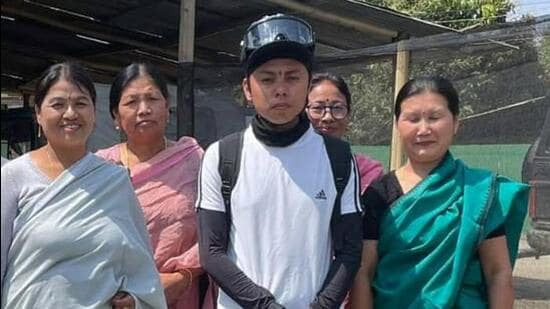
Meitei activist prevented from crossing buffer zone into Manipur’s Kuki area| India News
Manipur Peace Journey Halted Activist Malem Thongam Blocked in Chandel
In the ongoing saga of Manipur’s inter-community tensions, the determined peace walk of activist Malem Thongam encountered a significant roadblock in the Chandel district on March 12. Her mission, aimed at fostering dialogue and understanding between the state’s diverse communities, found itself curtailed just before reaching the Kuki-majority region of Churachandpur, a district often at the heart of the recent ethnic strife. This incident highlights the deep-seated divisions and the formidable challenges facing those advocating for peace in the troubled Northeastern state. Omni 360 News brings you a detailed look at the events and their broader implications.
For over a year, Manipur has grappled with an escalating ethnic conflict primarily between the Meitei and Kuki-Zo communities. The violence, which erupted in May 2023, has led to significant loss of life, widespread displacement, and a profound breakdown of trust. This conflict, rooted in historical grievances, land disputes, and demographic concerns, has fractured the social fabric, creating distinct geographical lines along community affiliations. Amidst this complex backdrop, individuals like Malem Thongam emerge, attempting to bridge the divides through direct engagement and a message of unity.
Malem Thongam, a social activist with a history of advocating for peace and human rights, embarked on her solidarity march with the clear objective of reaching out to all communities affected by the conflict. Her campaign, initiated from the Meitei-dominated Imphal Valley, was conceived as a non-partisan effort to promote healing and inter-community dialogue. The symbolic journey was meant to demonstrate a commitment to peace by physically traversing the boundaries that have become increasingly fortified by fear and suspicion. She intended to engage with local leaders, women’s groups, and ordinary citizens in both Meitei and Kuki-Zo areas, offering a platform for shared understanding and mutual respect.
However, her journey came to an abrupt halt at a security checkpoint within the Chandel district. Chandel, bordering Churachandpur, represents a sensitive transition zone between different community strongholds. Reports from local sources indicate that security personnel intercepted Thongam, citing concerns over public order and the potential for heightened tensions if she were to proceed into Churachandpur. The official explanation often points to the prevailing security advisories and the volatile situation in regions prone to ethnic clashes. This decision, while framed as a preventive measure, effectively underscores the fragile peace and the deep-seated apprehension that continues to dictate movement and interaction across community lines.
The stoppage of Malem Thongam’s peace march resonates deeply within Manipur. For many, it signifies the immense difficulty in overcoming the physical and psychological barriers erected by the conflict. Supporters of Thongam’s initiative express dismay, viewing the incident as a missed opportunity to foster much-needed dialogue and reduce mistrust. They argue that peace efforts, particularly those initiated by civil society, should be encouraged, not hindered, to pave the way for a lasting resolution. Local commentators suggest that such actions, even if taken with security in mind, can inadvertently reinforce the very divisions they aim to contain, making the path to reconciliation even steeper.
Conversely, security forces and some segments of the public argue that caution is paramount in such volatile zones. The fear of provocations, even unintended ones, leading to renewed violence is a constant concern. In a state where even small incidents can quickly spiral into larger confrontations, authorities often lean towards stricter control over movement, especially for individuals whose presence might be perceived differently by various factions. The underlying message is that while peace is desired, the ground reality makes direct, unsupervised inter-community outreach a high-risk endeavor.
The incident involving Malem Thongam’s halted journey serves as a stark reminder of the multifaceted challenges inherent in resolving the Manipur conflict. It highlights not just the physical barriers, but also the emotional and political ones that impede sincere attempts at reconciliation. For a 12th standard student trying to understand this complex situation, it’s like trying to build a bridge over a river with very strong currents and uncooperative banks on both sides; the intention is good, but the environment is incredibly tough. The conflict is not just about land or resources, but also about identity, historical grievances, and a deep sense of insecurity among all communities.
Key Takeaways:
* Persistent Divisions: The incident underscores the severe ethnic divisions and lack of trust that continue to plague Manipur, preventing free movement and interaction.
* Challenges for Peace Activism: It illustrates the immense difficulties faced by civil society activists attempting to bridge community gaps through direct engagement.
* Security vs. Dialogue: The event highlights the ongoing tension between maintaining public order through security measures and facilitating inter-community dialogue for long-term peace.
* Fragile Peace: Manipur’s peace remains incredibly fragile, with even well-intentioned peace efforts potentially perceived as risks by authorities or different communities.
As Omni 360 News continues to monitor the situation, the episode in Chandel is a crucial pointer to the long and arduous road ahead for Manipur. While the government and various organizations are working towards stability, the genuine efforts of individuals like Malem Thongam, even when obstructed, remain vital sparks in the pursuit of lasting harmony. Their commitment reminds us that true peace will ultimately require not just security, but also a willingness from all sides to engage, listen, and rebuild trust, brick by painstaking brick.





