
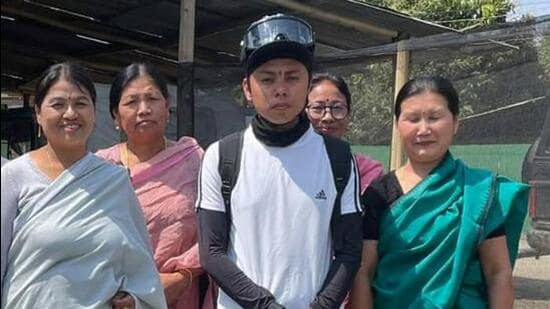
Meitei activist prevented from crossing buffer zone into Manipur’s Kuki area| India News
Activist Malem Thongam Halted in Chandel Amidst Manipur’s Volatile Terrain
A local activist’s determined journey toward Churachandpur met an administrative roadblock on March 12, as Malem Thongam was stopped in Chandel district. Her campaign, initiated with a stated goal of fostering understanding and addressing humanitarian concerns, underscores the deep-seated sensitivities and fractured realities persisting in Manipur’s interior. This incident, while specific, reflects the broader challenges authorities face in managing movement and maintaining order across ethnically divided territories.
The Journey Interrupted
Malem Thongam, a known figure in local social circles, embarked on her campaign with a clear intention: to reach Churachandpur, a district predominantly inhabited by the Kuki community. Her journey began amidst a backdrop of ongoing ethnic tensions that have gripped the state for months. Reports from local ground correspondents indicate that Thongam, accompanied by a small group of supporters, was intercepted by security personnel in Chandel. Authorities cited prevailing law and order concerns and the sensitive nature of inter-district travel, particularly between areas perceived as ethnically distinct, as reasons for halting her progress.
Local police officials, speaking on condition of anonymity to Omni 360 News, explained that the decision was a preventive measure. They emphasized that the administration’s primary objective is to avoid any potential escalation of tensions or unforeseen incidents that could arise from movements across sensitive boundaries. Such precautionary steps, they noted, are standard operating procedure in zones under increased security vigilance.
A Campaign for Connection
Thongam’s campaign, which began earlier in the month, was reportedly aimed at bridging the communication gap and offering a perspective on the humanitarian plight affecting communities on all sides of the conflict. While specific details of her agenda for Churachandpur remain somewhat general in local reports, the underlying theme was consistently peace and dialogue. Her supporters articulated her belief that direct engagement, even symbolic, could foster empathy and understanding where official channels might struggle. The activist’s resolve to physically traverse these divides highlights a civilian effort to assert unity in the face of fragmentation.
The refusal to allow her passage has sparked varied reactions among local observers. Some view it as a necessary measure by the authorities to prevent any misinterpretations or unintended provocations in an already fragile environment. Others see it as an infringement on the freedom of movement and a setback for grassroots peace initiatives. This divergence in perspective mirrors the wider societal debates within Manipur regarding solutions to the enduring conflict.
Understanding the Local Context
For a clearer picture, imagine a community where neighbors, who once lived side-by-side, are now separated by invisible but potent lines of suspicion and fear. Manipur, particularly since May of last year, has experienced profound divisions between its primary ethnic groups, the Meiteis and the Kukis. Churachandpur, being a Kuki-majority district, has been at the epicenter of much of the recent turmoil and displacement.
Movement between Meitei-dominated areas and Kuki-dominated areas has become fraught with security risks and administrative restrictions. These restrictions are not always about malice; often, they are genuine attempts by the state to prevent further violence, clashes, or the spread of misinformation. An individual, even with the best intentions, crossing into a territory perceived as ‘the other side’ can inadvertently trigger anxieties or even violent reactions from local populations or security forces acting on intelligence.
Chandel district itself, bordering Churachandpur, serves as a crucial transit point and has its own complex ethnic tapestry. The decision to stop Thongam here suggests a calculated move to prevent her from entering what authorities might deem a particularly volatile zone for an outsider, regardless of her stated aims.
Broader Implications and The Path Forward
This incident, as reported by Omni 360 News, brings into sharp focus the precarious balance between civil liberties and security imperatives in conflict-ridden regions. It underscores the immense difficulty of initiating reconciliation efforts when even individual acts of outreach are deemed too risky by state machinery. While the activist’s intentions may be noble, the ground reality of deep-seated distrust and the potential for misinterpretation means every movement is scrutinized through a security lens.
The halting of Malem Thongam’s campaign serves as a poignant reminder that peace in Manipur is not just about political negotiations or security operations; it is also about rebuilding trust at the community level, a process that is painstakingly slow and often fraught with obstacles. For any meaningful dialogue to emerge, there must eventually be space for individuals to cross these internal boundaries, but the timing and manner of such crossings remain intensely debated.
Key Takeaways:
* Activist Malem Thongam’s journey to Churachandpur was stopped in Chandel by authorities on March 12.
* Security forces cited law and order concerns and the sensitive ethnic situation as reasons for preventing her entry into the Kuki-majority district.
* Thongam’s campaign aimed to foster understanding and address humanitarian issues, highlighting grassroots efforts for peace.
* The incident reflects the broader challenges of freedom of movement versus security measures in Manipur’s ongoing ethnic conflict.
* The event underscores the deep divisions and the complexities involved in reconciliation efforts within the state.





