
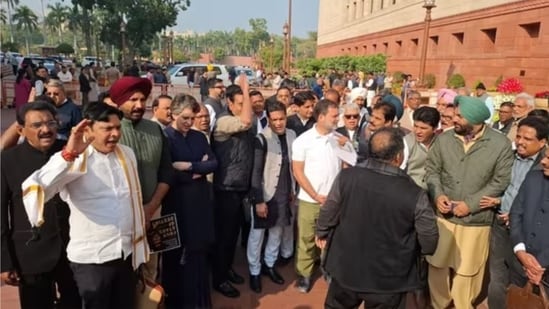
Suspension of 8 Opposition MPs to be revoked? Matter to come up in Lok Sabha on March 17| India News
Eight MPs Suspended Budget Session Impact on Representation
The halls of India’s Parliament recently witnessed a significant moment of contention, as eight elected members were suspended for the entirety of the crucial Budget session. Seven Members of Parliament (MPs) from the Congress party and one from the Communist Party of India (Marxist) faced this disciplinary action, cited for ‘unruly behaviour’ during parliamentary proceedings. This development, while not entirely unprecedented, has ignited discussions about parliamentary decorum, the rights of opposition, and the very essence of democratic representation.
From the perspective of Omni 360 News, understanding this event requires looking beyond the immediate headlines to grasp its underlying implications for governance and public trust.
Understanding the Suspension
To explain this to a 12th standard student, imagine a school assembly. There are rules about how students should behave – you listen when someone is speaking, you don’t shout, and you don’t disrupt important announcements. Parliament works in a similar way, but on a much larger scale, dealing with the country’s laws and money.
MPs are elected representatives, sent to Parliament by citizens to voice their concerns and help make laws. However, there are established rules of conduct, often called “Rules of Procedure and Conduct of Business,” that all members must follow. These rules are in place to ensure debates are orderly, serious discussions can take place, and decisions can be made effectively.
When an MP is deemed to be violating these rules – perhaps by shouting slogans, rushing into the well of the House (the area in front of the Speaker’s desk), or disrupting proceedings – the presiding officer (the Speaker in Lok Sabha or Chairperson in Rajya Sabha) has the authority to ask them to maintain order. If the disruption continues, the officer can name the MP and, following a motion, suspend them from attending future sittings for a specified period. In this instance, the suspension was for the entire Budget session, a significant period given its importance.
The term ‘unruly behaviour’ is often broad, encompassing various actions that hinder the smooth functioning of the House. Opposition parties often argue that their disruptions are a legitimate way to protest government policies or to demand answers when they feel their voices are not being heard. The government, conversely, maintains that such disruptions impede legislative work and waste taxpayers’ money. This clash of interpretations is at the heart of many such disciplinary actions.
The Critical Nature of the Budget Session
The timing of these suspensions is particularly noteworthy. The Budget session is arguably the most vital parliamentary session of the year. It is when the government presents its annual financial statement – the Union Budget – outlining its spending plans, revenue projections, and economic policies for the upcoming fiscal year. This document impacts every citizen, from farmers and small business owners to students and pensioners.
During this session, MPs have the crucial responsibility to scrutinize the Budget, debate its various provisions, and propose amendments. They question ministers on spending priorities, economic assumptions, and the allocation of funds to different sectors and regions. This intense scrutiny ensures accountability and transparency in public finance.
With eight MPs suspended, a significant number of voices from the opposition benches are now absent from these critical discussions. This means fewer questions raised, fewer alternative viewpoints presented, and potentially less robust debate on policies that will shape the nation’s future. For the constituents of these suspended MPs, it translates directly into a loss of direct representation during a period when their economic interests are being deliberated upon.
A Silenced Voice and Democratic Concerns
The impact of such suspensions extends beyond the immediate legislative process. It touches upon fundamental aspects of democracy. In a parliamentary democracy, the opposition plays a vital role. It is meant to hold the government accountable, offer alternative policies, and represent dissenting voices. When opposition members are suspended, it can be perceived as an attempt to stifle dissent and reduce the space for critical examination of government actions.
Local news reports from various constituencies often highlight how citizens feel when their elected representatives are unable to participate. They have sent their MP to Delhi to speak on their behalf, to raise issues pertinent to their region – be it agricultural distress, infrastructure needs, or social welfare concerns. A suspension, regardless of the stated reasons, means that the unique perspectives and demands of these specific communities are temporarily absent from the nation’s highest legislative body. This can lead to a sense of disenfranchisement among the voters.
Moreover, repeated instances of parliamentary suspensions can erode public trust in democratic institutions. When the public sees frequent disruptions and disciplinary actions, it can foster cynicism about the effectiveness and seriousness of parliamentary proceedings. It raises questions about the balance between maintaining order and allowing vigorous debate, a cornerstone of a healthy democracy.
Political Echoes and Local Reactions
The suspensions have naturally drawn sharp reactions from political parties. The opposition claims the actions are politically motivated and an authoritarian attempt to silence legitimate protest. The ruling party, conversely, defends the Speaker’s decision as necessary to uphold parliamentary dignity and ensure productive work.
These national-level political battles often reverberate strongly at the local level. Party workers, local leaders, and citizens in the constituencies of the suspended MPs gather to protest, express solidarity, or voice their disapproval. Public discourse shifts to questions of fairness, the power dynamics within Parliament, and the perceived shrinking space for dissent. Debates ignite in tea stalls and local community centers about whether the MPs went too far, or if the government overreacted. This creates a charged atmosphere where the public attempts to decipher the true intentions behind the actions and their broader implications for the democratic fabric.
Key Takeaways from Omni 360 News:
* Parliamentary Order vs. Opposition Rights: The incident highlights the ongoing tension between the need for orderly parliamentary proceedings and the opposition’s right to protest and demand accountability.
* Impact on Budget Scrutiny: The suspension of eight MPs directly reduces the breadth and depth of scrutiny on the crucial Union Budget, affecting the representation of their constituents’ interests.
* Erosion of Trust: Frequent disruptions and suspensions can potentially diminish public trust in democratic institutions and the legislative process itself.
* Importance of Dialogue: The event underscores the critical need for all political parties to find common ground and mechanisms for constructive dialogue, even amidst disagreements, to ensure Parliament functions effectively for all citizens.
Ultimately, while maintaining decorum is essential for the smooth functioning of Parliament, a robust democracy also thrives on vigorous debate and the unhindered voice of the opposition. The suspension of eight MPs for the entire Budget session serves as a stark reminder of the delicate balance required to uphold both parliamentary sanctity and democratic vitality. As the session progresses, all eyes will be on how these events shape future legislative debates and the broader political landscape.





