
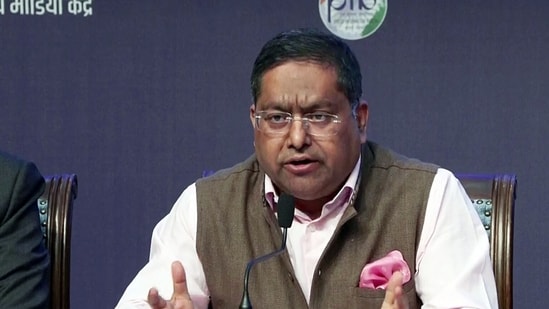
India dismisses USCIRF report, describes it as motivated and biased| India News
**USCIRF Report Scrutiny on India’s Religious Freedom Sparks Diplomatic Tensions Calls for Targeted Sanctions Key Takeaways**
A recent report by the United States Commission on International Religious Freedom (USCIRF) has ignited significant debate, casting a critical eye on the state of religious freedom in India. Released earlier this month, the findings accuse India of systemic violations against religious minorities and controversially advocate for targeted sanctions against specific Indian organizations, namely the Rashtriya Swayamsevak Sangh (RSS) and the Research and Analysis Wing (R&AW). This development has quickly become a focal point for international diplomacy and domestic discourse, prompting strong reactions from various quarters.
For decades, India has prided itself on its secular fabric and diverse religious landscape, a cornerstone of its democratic identity. However, the USCIRF report, an annual publication from an independent, bipartisan U.S. federal government commission, paints a different picture. It suggests a deteriorating environment for religious minorities, particularly Muslims and Christians, citing concerns over discriminatory laws and policies.
The report details allegations ranging from increasing incidents of violence against religious minorities to the implementation of laws perceived as detrimental to their rights. Specific focus is placed on legislation such as the Citizenship Amendment Act (CAA), which critics argue could exclude Muslim refugees, and various anti-conversion laws enforced in several Indian states. These laws, according to the report, are often used to harass and criminalize interfaith relationships and proselytization efforts, disproportionately affecting minority communities. The commission also highlighted instances where government actions or inaction have allegedly contributed to an atmosphere of intolerance.
Perhaps the most striking aspect of the USCIRF’s recommendations is the call for the U.S. government to impose targeted sanctions. These sanctions would specifically target individuals and entities within the RSS and R&AW that the commission believes are responsible for severe violations of religious freedom. The RSS, a Hindu nationalist volunteer organization, is seen by the commission as a driving force behind policies and sentiments that marginalize minorities. R&AW, India’s primary foreign intelligence agency, is implicated for alleged involvement in activities that impact religious freedom. Such a recommendation, if adopted by the U.S. administration, would mark a significant escalation in diplomatic pressure.
India’s Ministry of External Affairs has, as expected, vehemently rejected the USCIRF report. Official statements from New Delhi have consistently dismissed the commission’s observations as biased, uninformed, and a misrepresentation of facts. Indian authorities often reiterate that the USCIRF lacks a proper understanding of India’s constitutional framework and its robust protections for religious freedom. They emphasize that India is a vibrant democracy where all citizens enjoy equal rights and that any issues are addressed through its independent judiciary and democratic processes. The government views such reports as an unwarranted interference in its internal affairs and questions the commission’s methodology and sources.
Within India, the report has elicited a wide spectrum of responses. Many minority groups and human rights organizations have welcomed the USCIRF’s findings, seeing them as an international validation of their long-standing concerns regarding the erosion of secular values and the rise of majoritarian nationalism. They hope that international scrutiny will prompt the Indian government to reassess its policies and take concrete steps to protect minority rights. Conversely, nationalist organizations and segments of the majority community have condemned the report as biased, ill-informed, and part of a larger conspiracy to malign India’s image on the global stage. They view the recommendations for sanctions as an affront to India’s sovereignty and an attempt to dictate its internal governance. Local news discussions across the country reflect these divided opinions, with debates often focusing on the balance between national security, cultural preservation, and individual liberties.
The implications of this report extend beyond immediate diplomatic exchanges. It adds to ongoing international conversations about human rights and religious freedom, potentially influencing how global bodies and other nations view India. For **Omni 360 News**, tracking these developments is crucial as they shape India’s standing in the world and impact the daily lives of its diverse population. The debate underscores the challenges of balancing national interests with universal human rights principles.
Key Takeaways:
* The USCIRF report alleges significant violations of religious freedom against minorities in India.
* Specific concerns include the impact of laws like the CAA and anti-conversion statutes.
* The report recommends targeted U.S. sanctions against individuals and entities within the RSS and R&AW.
* India has strongly rejected the report, labeling it as biased and an interference in its internal matters.
* The findings have sparked diverse reactions within India, from validation by minority advocates to condemnation by nationalist groups.
* This issue highlights the ongoing international scrutiny of India’s human rights record and its implications for diplomatic relations.





