
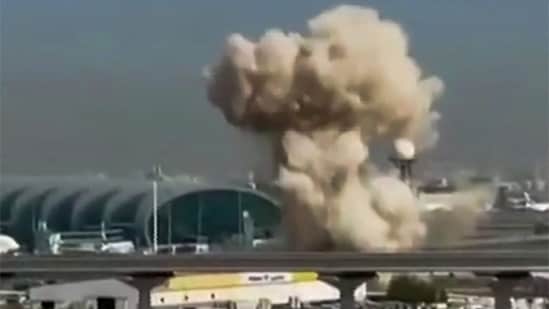
Iran punishing UAE for supporting US and moderation| India News
Gulf Tensions Simmer After Weeks of Iranian Retaliation A Regional Security Update
For eighteen days, the region has held its breath. What began as a sharp escalation of Iranian retaliation has, according to observers and local reports from across the Persian Gulf, tapered in its overt intensity. Yet, the underlying currents of threat persist, keeping both Gulf nations and Israel on high alert. This is a crucial moment for regional stability, monitored closely by Omni 360 News.
The recent period of heightened tension unfolded following a series of events that stoked long-standing animosities. For a 12th-grade student trying to grasp the situation, imagine a tense standoff between rival school teams after a controversial play. One team feels wronged and retaliates. The initial retaliation might be very public and direct, like a loud argument. As days pass, the direct confrontation might lessen, but the bad feelings, the subtle threats, and the potential for new disputes remain very real. That’s the essence of what has been playing out in the Middle East.
While the dramatic, widely reported missile launches and drone attacks that marked the initial phase of Iran’s response have visibly decreased, the concern for security has not. Instead, the nature of the threat seems to have shifted, becoming more complex and insidious. Local maritime advisories in the Strait of Hormuz, for instance, continue to urge extreme caution for commercial shipping. Fishing communities along the coasts of Saudi Arabia, the UAE, and Bahrain report a palpable sense of unease, a quiet vigilance that affects daily life and trade. These aren’t the headlines of major international news, but the lived experiences on the ground.
The Persistent Shadow Over Gulf Nations
For the Gulf Cooperation Council (GCC) states – nations like Saudi Arabia, the United Arab Emirates, Kuwait, Qatar, Bahrain, and Oman – the past weeks have underscored their strategic vulnerabilities. While their advanced defense systems were primed and often effective during the initial overt attacks, the long-term threat casts a different shadow.
One primary concern for these nations is the security of vital shipping lanes. A significant portion of the world’s oil transits through the Strait of Hormuz. Any disruption, even minor ones like increased insurance premiums or delayed transit times due to perceived risk, reverberates through global energy markets. Local port authorities, as detailed in internal bulletins, are maintaining heightened security protocols, not just for large tankers but for all vessels. This careful scrutiny of maritime traffic speaks volumes about the enduring apprehension.
Economically, the sustained tension, even if less overt, can deter foreign investment and tourism. News of potential conflict, regardless of its intensity, often makes international businesses hesitant. Local businesses, from grand construction projects in Riyadh to small tourism operators in Dubai, understand that a stable environment is paramount for growth. This is not about active war, but about a chilling effect on confidence.
Furthermore, these nations contend with the potential for proxy activities. Iran has historically supported various non-state actors in the region. A decrease in direct Iranian action might correspond with an increase in activity from these groups, targeting infrastructure or perpetrating cyberattacks. Regional security forces are well aware of this shifting landscape, with local law enforcement agencies quietly strengthening their digital defenses and intelligence gathering, often highlighted in local government announcements about “enhancing national resilience.”
Israel’s Unwavering Vigilance
Thousands of miles across the Arabian Peninsula, Israel remains equally, if not more, focused on the evolving situation. Having been a direct target in the initial retaliatory strikes, Israel’s defense establishment views any Iranian action with serious gravity.
The decrease in direct attacks from Iranian soil does not equate to a decrease in the perceived threat. Israel’s intelligence services continue to monitor Iran’s missile and drone capabilities, as well as the activities of its regional allies, such as Hezbollah in Lebanon or various groups in Syria. The nation’s advanced Iron Dome defense system remains on high alert, a constant fixture of daily life for many Israelis.
Local reports and public safety announcements in Israeli border towns often discuss preparedness drills and community resilience programs. This speaks to a population that lives with a constant awareness of potential threats, a situation that hasn’t changed despite the reduction in recent direct engagements. The focus shifts from intercepting incoming projectiles to preempting future threats through intelligence and strategic positioning.
Key Takeaways for Regional Stability
The situation, eighteen days after the initial Iranian retaliation, offers several critical insights:
* De-escalation vs. De-threat: The visible de-escalation of direct conflict does not signify a removal of the underlying threat. Tensions simmer, and the risk of renewed hostilities or proxy actions remains.
* Economic Ripple Effects: Even low-intensity tension affects regional economies, impacting shipping, investment, and tourism.
* Shifting Tactics: The threat landscape might be evolving from overt military strikes to more subtle forms of pressure, including cyber warfare or proxy activities.
* Diplomacy’s Quiet Work: Behind the scenes, diplomatic channels are likely working tirelessly, often out of the public eye, to manage the crisis and prevent wider conflict.
* Persistent Vigilance: Gulf nations and Israel continue to maintain high levels of security and preparedness, reflecting the enduring nature of regional challenges.
At Omni 360 News, we understand that these developments are not mere geopolitical maneuvers; they touch the lives of millions. From the shipping clerk worried about cargo delays to the family in a border town living with sirens, the impact of these tensions is real. The region finds itself in a precarious balance – a phase of reduced open conflict, but one where the potential for further escalation is never far from the surface. The coming days and weeks will reveal whether this reduced intensity signals a genuine path to calm or merely a strategic pause in a protracted confrontation.





