
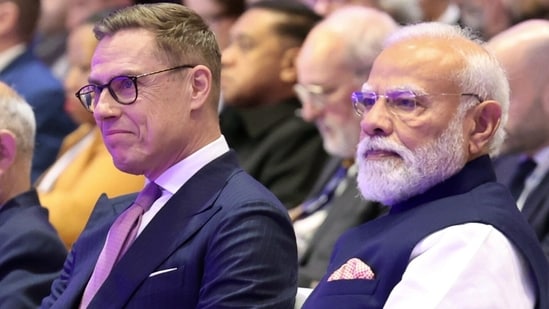
Finland PM suggests India could broker Iran-US ceasefire: ‘We saw Jaishankar calling for it’| India News
Finland’s Prime Minister Alexander Stubb recently offered a thoughtful reflection on global conflicts, particularly the simmering tensions involving Iran, the United States, and Israel. In a widely reported interview, Stubb articulated a clear call for a ceasefire among these nations, prompting a vital conversation about the future of Middle Eastern stability. More pointedly, he raised the intriguing question of whether European nations, or even India, could step into a crucial mediating role to help de-escalate the volatile situation. This proposition from a leader of a traditionally neutral, now NATO-member state, signals a growing global concern and a proactive search for peace.
For readers of Omni 360 News, understanding this complex geopolitical landscape is key. Imagine a disagreement between three friends that keeps getting worse. Finland’s PM is suggesting that perhaps two other friends – Europe and India – who have good relationships with all sides, could step in and help them talk things out, calm down, and agree to stop fighting.
The Deep-Rooted Tensions
The situation Stubb addressed involves a long history of intricate relationships and conflicts. Iran, a major regional power, has been at odds with both the United States and Israel for decades. These tensions stem from various factors including Iran’s nuclear program, its support for various proxy groups in the Middle East, historical grievances, and conflicting regional interests. The United States maintains a strong alliance with Israel and views Iran’s actions with significant concern, often imposing economic sanctions. Israel, for its part, sees Iran’s nuclear ambitions and its regional influence as direct existential threats.
This creates a dangerous cycle of mistrust and confrontation. Any incident, however small, has the potential to spiral into a larger conflict, impacting global oil markets, international trade routes, and regional stability. Stubb’s call for a ceasefire acknowledges the urgency of breaking this cycle and finding a pathway to dialogue.
Europe’s Potential Role
Prime Minister Stubb’s suggestion that Europe could aid in mediation is rooted in the continent’s historical experience with diplomacy and its significant economic and political ties across the globe. Europe, specifically the European Union, has often positioned itself as a diplomatic bridge-builder, advocating for multilateralism and peaceful resolutions. Many European nations maintain diplomatic relations with both Iran and Israel, albeit with varying degrees of warmth.
A European mediation effort could involve several strategies. It might focus on creating a neutral platform for direct talks, offering guarantees for any agreements reached, or leveraging economic incentives to encourage de-escalation. However, Europe’s internal divisions on foreign policy and its close alignment with the United States on certain issues could also present challenges. Finnish political analysts, weighing Stubb’s remarks, observe that while Europe has the diplomatic infrastructure, achieving a unified stance and gaining the trust of all parties would be a formidable task. Yet, the sheer economic and diplomatic weight of the EU makes it a significant potential player in any serious peace effort.
India’s Emerging Influence
Equally compelling is Stubb’s proposal for India’s involvement. India, a rising global power, has historically pursued a policy of non-alignment, allowing it to maintain good working relationships with a diverse array of nations, including the U.S., Israel, and Iran. India imports significant amounts of oil from the Middle East and has a large diaspora in the region, giving it a vested interest in stability.
India’s diplomatic approach is often characterized by pragmatism and a focus on economic cooperation. It has successfully navigated complex geopolitical relationships without taking overtly adversarial stances. For example, India has maintained energy ties with Iran while also deepening its strategic partnership with Israel and the U.S. This balanced approach could make India a credible and trusted mediator for all parties involved. Experts in New Delhi have suggested that India’s unique position, free from the historical baggage of Western powers or the direct regional rivalries, could provide a fresh perspective and a less biased platform for dialogue. However, India’s traditional focus on its immediate neighborhood and its cautious approach to international mediation in distant conflicts would need to be considered.
Why Finland’s PM is Speaking Out
Finland, a nation with a long history of seeking peaceful resolutions and maintaining a balanced foreign policy, now finds itself as a new member of NATO. Stubb’s comments reflect a broader shift in global responsibilities. Even as Finland strengthens its security ties, its diplomatic ethos of de-escalation and dialogue remains strong. His call is not merely about a specific conflict but underscores a global need for countries to step up and facilitate peace, rather than passively observing escalating tensions. It highlights a conviction that proactive diplomacy is essential for global security, moving beyond traditional power blocs to embrace a wider array of mediators.
Key Takeaways
Prime Minister Stubb’s proposition is a significant call to action. Here are the main points:
* Urgent Call for De-escalation: Stubb highlights the critical need for a ceasefire between Iran, the U.S., and Israel to prevent wider conflict.
* New Mediators: He specifically suggests Europe and India as potential, credible mediators, recognizing their unique diplomatic positions and relationships with all parties.
* Europe’s Diplomatic Power: Europe’s extensive diplomatic experience and economic leverage could be instrumental in facilitating dialogue and agreement.
* India’s Neutral Stance: India’s non-aligned history and balanced relations with all involved nations offer a fresh and potentially trusted mediation avenue.
* Proactive Diplomacy: The Finnish leader’s statement underscores a belief that global stability requires proactive, multilateral diplomatic efforts from a broader range of international actors.
This proposal by Alexander Stubb, as reported by Omni 360 News, invites a critical global conversation on who can, and should, shoulder the responsibility of peace-making in an increasingly interconnected and volatile world. It’s a reminder that solutions to complex problems often require looking beyond the usual suspects and empowering new voices in diplomacy.





