
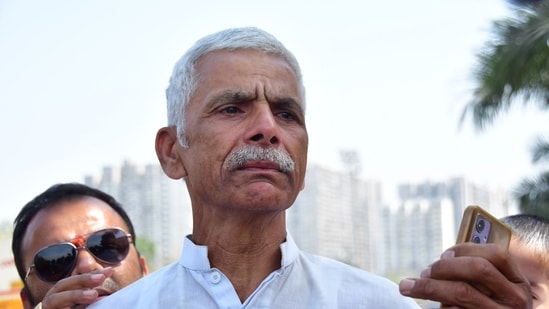
Harish Rana's passive euthanasia process begins after emotional goodbye, 'could take 2-3 weeks'| India News
India’s Top Court Allows Passive Euthanasia for Harish Rana A Landmark Ruling
In a deeply significant moment for India’s legal and ethical landscape, the Supreme Court has granted permission for passive euthanasia for Harish Rana, a resident of Ghaziabad. This ruling marks an unprecedented first for the nation, addressing the profound and often agonizing question of a dignified end-of-life choice. For over a decade, Mr. Rana has remained in an irreversible comatose state following a severe head injury sustained in 2013.
The Human Story Behind the Legal Battle
The case of Harish Rana is a poignant testament to a family’s enduring struggle and their quest for peace amidst unimaginable pain. Ten years ago, a tragic accident left Mr. Rana in a persistent vegetative state. Local medical reports from Ghaziabad hospitals have consistently indicated no signs of recovery, painting a grim picture for his loved ones. His family, bearing the immense emotional and financial burden of his prolonged condition, eventually sought legal recourse to allow him to die with dignity, rather than prolonging what they described as a mere biological existence without consciousness or hope.
Sources close to the family reveal the immense toll Mr. Rana’s condition took on them. The constant need for care, the emotional drain of witnessing a loved one in an unresponsive state, and the slow erosion of hope eventually led them to this difficult decision. Their plea to the highest court was not one of abandonment, but of profound love and a desire to alleviate suffering for Harish and for themselves. It underscores the universal human desire for dignity, even in the face of death.
Understanding Passive Euthanasia A Simple Explanation
For many, the terms surrounding end-of-life care can be complex. Passive euthanasia, as allowed in Mr. Rana’s case, is distinct from active euthanasia. Think of it this way: active euthanasia involves directly intervening to end a life, such as administering a lethal injection. This remains illegal in India.
Passive euthanasia, on the other hand, involves the withdrawal of life-sustaining treatment, allowing nature to take its course. This could mean removing a ventilator that breathes for a patient, or discontinuing artificial nutrition and hydration through a feeding tube. The crucial aspect is that no active steps are taken to cause death; rather, actions that prolong life artificially are ceased. The goal is to allow the person to die naturally, free from suffering, when there is no medical hope for recovery and often, when the patient or their designated decision-makers believe it is in their best interest. This decision is never taken lightly and is subject to stringent checks and balances.
The Supreme Court’s Cautious Compassion and Legal Precedent
The Supreme Court’s decision in Harish Rana’s case does not emerge in a vacuum. It builds upon previous landmark rulings, most notably the 2018 judgment concerning Aruna Shanbaug, which recognized the right to die with dignity and allowed for passive euthanasia under strict guidelines. The court then outlined a framework for ‘living wills’ or ‘advance medical directives’, enabling individuals to express their wishes regarding end-of-life treatment while they are still competent.
In Mr. Rana’s situation, where an advance directive wasn’t available, the court had to carefully navigate the existing legal framework and the unique facts presented. The judiciary’s approach has consistently emphasized a balance between preserving life and respecting an individual’s right to dignity in death. The court mandates stringent safeguards, including the formation of a medical board to assess the patient’s irreversible condition, followed by judicial oversight to ensure transparency and prevent misuse. This multi-layered scrutiny ensures that such a grave decision is made only after thorough medical and legal deliberation, prioritizing the patient’s best interest above all.
Key Takeaways from the Harish Rana Ruling
The Supreme Court’s decision for Harish Rana marks several critical junctures for India:
* A Defining Legal First: It is the first time the Supreme Court has directly allowed passive euthanasia for an individual not covered by an advance directive, under specific circumstances.
* Emphasis on Dignity: The ruling reinforces the understanding that the “right to life” under Article 21 of the Constitution includes the right to die with dignity, particularly when life becomes a mere continuation of existence without quality or consciousness.
* Pathway for Families: This judgment offers a glimmer of hope and a legal pathway for countless families grappling with similar heart-wrenching situations across the country. It provides a framework for seeking legal recourse when a loved one is in an irreversible vegetative state.
* Stringent Safeguards: The court’s insistence on a robust process involving medical boards and judicial approval underscores its cautious approach, aiming to prevent any potential misuse or abuse of this sensitive provision.
* Evolving Societal Dialogue: This ruling is set to spark further important conversations within Indian society about ethics, medical advancements, individual autonomy, and the very definition of life and death.
As Omni 360 News continues to follow the broader implications of this landmark decision, it is clear that Harish Rana’s case transcends individual suffering. It represents a significant step forward in India’s legal journey, balancing compassion with caution, and ultimately, allowing for a dignified farewell when all hope for recovery has faded.





