
West Bengal Assembly Election: Mamata Banerjee attacks BJP-ECI before candidate list announced
West Bengal Election Battle Intensifies TMC Unveils Candidate List
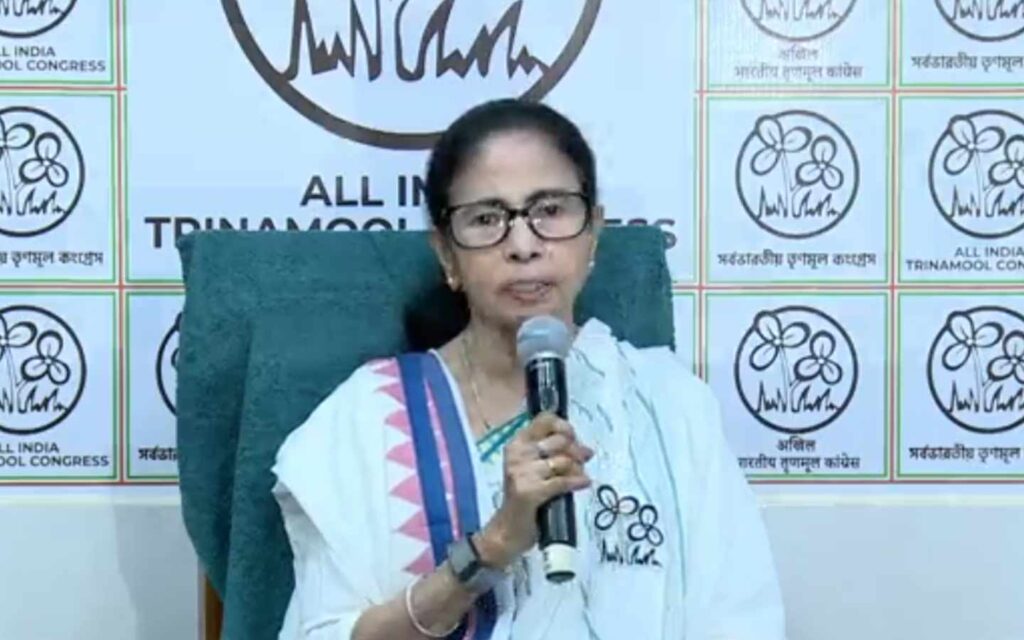
The political climate across West Bengal has reached a fever pitch. The drums of the assembly election battle are beating loudly, signaling the start of a fierce contest for power. With the Bharatiya Janata Party (BJP) and the Left Front having already announced partial candidate lists, all eyes have now turned to the ruling Trinamool Congress (TMC). The anticipation among the people of Bengal to discover who will contest from the 294 assembly seats has been palpable. On a recent Tuesday afternoon, before revealing the much-awaited list from her Kalighat residence, TMC supremo Mamata Banerjee launched scathing attacks against both the BJP and the Election Commission.
The Political Stage is Set
The announcement of candidates marks a critical phase in any election cycle, as it sets the tone for campaigning and defines the battle lines. For weeks, local political pundits and the general public alike have been speculating about the TMC’s choices. Given the party’s incumbent status and its strong local presence, the selection process is keenly watched, as each candidate reflects the party’s strategy for securing or retaining control in specific constituencies. From the bustling streets of Kolkata to the serene villages in the districts, every corner of Bengal awaits these decisions, understanding that individual candidate strength often dictates local outcomes.
Mamata Banerjee’s Sharp Rebuke
Before diving into the list of names, the TMC leader addressed the media with a fiery speech, directly questioning the BJP’s tactics and the Election Commission’s neutrality. Her pointed rhetorical query to the BJP, “Why are they so afraid? May good sense prevail,” resonated across the political landscape. This statement hints at the underlying tension and the accusations often leveled against the BJP of employing aggressive strategies, including leveraging central agencies, to gain an advantage in the state. Such comments are not merely rhetoric; they are designed to galvanize her party’s base and challenge the perception of the opposition’s strength.
Turning her attention to the Election Commission, Ms. Banerjee’s remarks were even more direct and critical. “Why is the game being played from behind a cloud at BJP’s behest? Play directly,” she challenged. This evocative metaphor of “playing from behind a cloud” suggests a lack of transparency and an allegation of indirect influence exerted by the BJP over the election watchdog. She went further, stating, “Since all laws are being violated, why not directly descend to the ground, set up a stage, and hold meetings? Why not directly stand for the BJP? I would smile and say, do whatever you wish.” This stark challenge implicitly accuses the Election Commission of bias, suggesting it is not acting as an impartial referee but rather as an enabler for the BJP.
These strong words from the TMC chief underscore the high stakes of the upcoming election. They highlight a common concern in state elections where ruling regional parties often accuse central agencies and the Election Commission of siding with the national ruling party. Such accusations, whether substantiated or not, become a significant part of the election narrative, shaping public perception and influencing voter sentiment regarding the fairness of the electoral process. Local news outlets extensively cover these exchanges, as they speak to the very core of democratic conduct and the integrity of institutions.
The Contest Takes Shape
While the TMC’s complete list was the most anticipated, the BJP and the Left Front have already made their initial moves. The BJP’s partial list reflects its strategy to make significant inroads into West Bengal, a state where it has historically struggled but has seen growing support in recent years. Their candidate choices often focus on high-profile defectors from other parties or individuals with strong local influence, aiming to consolidate anti-TMC votes. Similarly, the Left Front, comprising various communist parties, is striving to regain its lost ground in a state it once dominated for decades. Their partial announcements indicate a focus on traditional strongholds and youth mobilization, attempting to present an alternative to both the TMC and BJP.
For the ordinary citizen, these announcements mean the election machinery is fully operational. From door-to-door campaigning to large public rallies, the political discourse will intensify. Omni 360 News strives to bring comprehensive, factual reporting on these developments, providing context and analysis for every twist and turn in this crucial election. We understand that for a 12th-standard student, understanding the nuances of these political jousts can be challenging. Simply put, when a leader like Mamata Banerjee speaks so strongly, it means she believes the rules of the game are being bent, and she is openly calling it out. This is a common tactic to put pressure on institutions and rally supporters.
Looking Ahead
As the candidate lists from all major parties become public, the election campaign will transition from speculation to direct confrontation. The focus will shift to individual candidates, their manifestos, and their ability to connect with the electorate on local issues – be it development, employment, or social welfare. The Election Commission, having been publicly challenged, will face immense pressure to demonstrate its impartiality and ensure a level playing field for all political parties. How it responds to these allegations, and how it conducts the elections, will be scrutinized by the public, the media, and international observers.
The upcoming days will be filled with heightened political activity. Rallies, debates, and public meetings will become commonplace, each serving as an opportunity for parties to articulate their vision for West Bengal. The people of Bengal, known for their political awareness and active participation, will carefully weigh their options, considering the promises and past performances of each candidate and party. This election is not just about choosing leaders; it is about deciding the future direction of the state, its governance, and its people’s aspirations.
Key Takeaways
* The West Bengal election battle is officially underway with major parties announcing candidates.
* TMC Supremo Mamata Banerjee unveiled her party’s candidate list from Kalighat.
* Ms. Banerjee launched strong criticisms against the BJP, accusing them of fear and unfair tactics.
* She severely challenged the Election Commission’s neutrality, implying it acts at the BJP’s behest and urging it to be transparent.
* The Left Front and BJP have also made partial candidate announcements, signaling a multi-cornered contest.
* These political statements set a contentious tone for the upcoming campaign, putting pressure on institutions and energizing party bases.
* The election’s outcome will significantly impact West Bengal’s future governance and development.





