
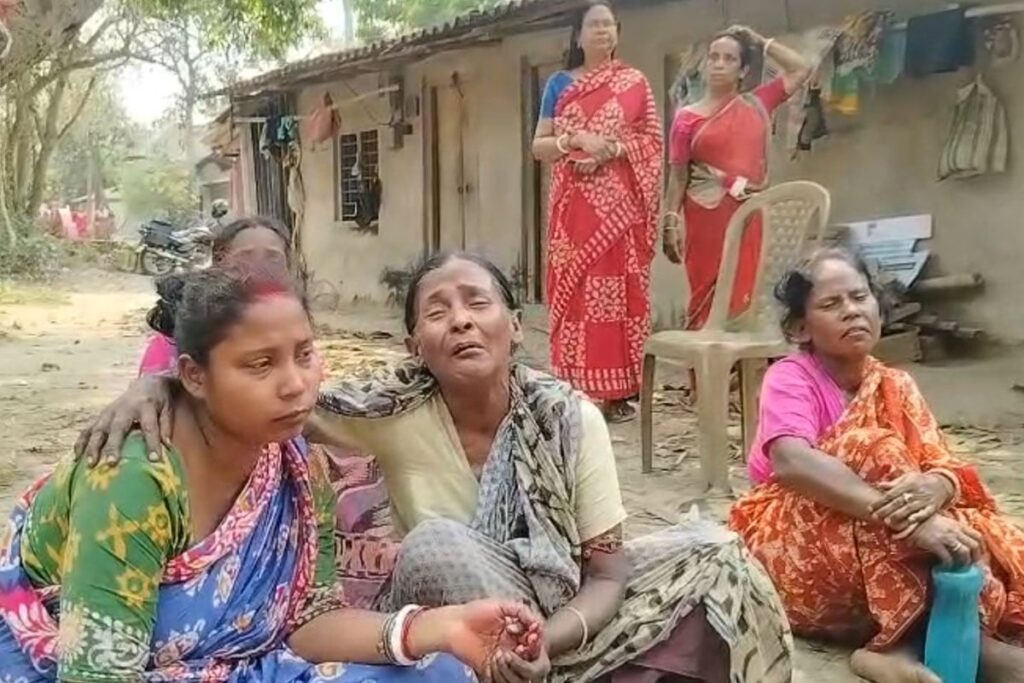
Potato farmer killed himself in Goghat
Hooghly Farmer’s Despair Sparks Urgent Calls for Potato Price Stability
Goghat, Hooghly – The fields of West Bengal have yielded a bumper potato crop this season, a sight that should bring joy and prosperity to its farmers. Yet, for many, the abundant harvest has become a cruel irony. In a heart-wrenchwrenching incident that casts a long shadow over the agricultural community, Bapan Sur, a 45-year-old potato farmer from Goghat, Hooghly, tragically took his own life, overwhelmed by mounting debt and the rock-bottom prices for his produce. His desperate act has ignited renewed calls for a stable support system for the state’s potato cultivators, a story closely followed by Omni 360 News.
Local sources paint a grim picture of Bapan’s struggle. Like countless others, he had invested heavily, cultivating ten bighas of land with potatoes, relying on loans taken at high-interest rates. This year, the yield was exceptional, promising a substantial return. However, the open market told a different story. Prices plummeted, leaving farmers like Bapan with little to show for their arduous labor. The family recounted his prior year’s losses as well; fifty to sixty cartloads of potatoes stored in cold facilities had fetched only a meager seventy rupees per sack, leading to significant financial setbacks. This season’s continued price decline pushed him to the brink, his mind consumed by worry over how to repay his debts.
The tragedy unfolded within his home, where family members discovered him. He was rushed to Arambagh Medical College Hospital, but medical personnel pronounced him deceased. Authorities have sent the body for post-mortem examination as the community grapples with the sudden loss. The despair is palpable within Bapan’s family, particularly for his wife, who now faces the daunting task of raising their five-year-old son alone. The weight of supporting a family, coupled with the profound grief, has cast a dark cloud over their future.
Bapan Sur was known in his locality as an active member of the Trinamool Congress, frequently participating in party programs. Following the tragedy, local TMC leaders have extended their condolences and assured the family of their support during this incredibly difficult time, promising to stand by them.
This isolated incident is, unfortunately, not an anomaly. Reports indicate at least two other farmers in the state have made similar drastic decisions this season, highlighting a deeper, systemic issue impacting the agricultural backbone of West Bengal. The overwhelming surplus of potatoes, while good for consumers in terms of affordability, has become a curse for producers. Farmers find themselves in a precarious position, unable to recover their cultivation costs, let alone make a profit.
Recognizing the widespread distress, the state government has announced a series of measures aimed at providing relief to potato farmers. Chief Minister Mamata Banerjee, speaking from the Dharna platform in Dharmatala, affirmed the state’s commitment. “The state government will directly purchase potatoes,” she declared. “We have held discussions, and wherever potatoes are left unsold, the government will step in to buy them.” This initiative, known as the ‘Potato Procurement Scheme,’ aims to create a direct channel for farmers to sell their produce at a fair price, bypassing the volatile open market. Furthermore, the government has moved to simplify the process for cold storage owners to secure bank loans, enabling them to purchase potatoes from farmers and store them, thereby helping to stabilize market prices.
While these government interventions offer a glimmer of hope, the tragic death of Bapan Sur underscores the urgent need for long-term strategies. The agricultural sector, especially for staple crops like potatoes, requires robust support mechanisms that can weather market fluctuations and ensure farmers receive fair compensation for their labor. The cycle of high yields leading to low prices, and subsequently, farmer distress, is a recurring challenge that demands sustainable solutions beyond seasonal procurement schemes. For families like Bapan’s, the wait for stability is an agonizing one, their future now uncertain amidst the very fields that once held so much promise.
Key Takeaways:
- A potato farmer in Hooghly, Bapan Sur, died by suicide due to financial distress caused by low potato prices and outstanding loans, despite a good harvest.
- This incident highlights a broader issue of farmer despair in West Bengal, with other similar tragedies reported this season due to a market surplus.
- Bapan Sur had a young son and was an active local political worker, with local leaders now pledging support to his grieving family.
- The state government has announced a ‘Potato Procurement Scheme’ to directly buy potatoes from farmers and ease bank loans for cold storage owners to help stabilize prices.
- The situation calls for more comprehensive, long-term solutions to protect farmers from market volatility and ensure fair remuneration for their produce.





