
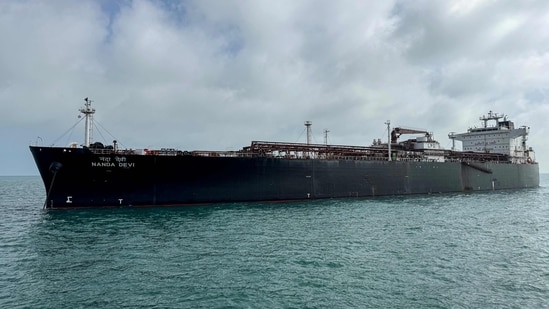
India's second LPG tanker Nanda Devi arrives at Gujarat's Kandla port after passing Strait of Hormuz| India News
Strait of Hormuz Shipping Risks Indian LPG Carrier MT Nanda Devi Energy Security Key Takeaways
The Strait of Hormuz stands as a critical artery for global energy flow, a narrow passage where geopolitical currents frequently converge. Recent attention has centered on the Indian-flagged medium-range carrier, MT Nanda Devi, whose precious cargo underscores the inherent vulnerabilities of this vital waterway. This vessel carries enough liquefied petroleum gas (LPG) to fill an astonishing 3.3 million standard 14.2 kg cylinders, a volume capable of serving countless households for essential needs.
For those unfamiliar, imagine the cooking fuel supply for millions of families across a nation like India; that is the sheer scale of energy reliant on safe passage through this strait. The Strait of Hormuz, barely 39 kilometers wide at its narrowest point, links the Persian Gulf’s vast oil and gas fields to the world’s oceans. Roughly one-fifth of the world’s total oil consumption and a significant portion of its LPG and liquefied natural gas (LNG) traverses these waters daily. Any disruption here sends immediate ripples through global energy markets, impacting prices and availability far beyond the region.
Current tensions in the vicinity, though often subtle in daily news cycles, represent a persistent security challenge for international shipping. These pressures stem from complex regional dynamics and have, at various times, led to increased naval presence, warnings, and even direct maritime incidents. For India, a major energy importer, the secure transit of vessels like the MT Nanda Devi is not merely an economic concern but a matter of national energy security and the daily sustenance of its population.
The potential for delays, diversions, or incidents in the Strait of Hormuz directly translates to higher shipping costs, increased insurance premiums, and ultimately, elevated prices for consumers globally. Local news outlets frequently highlight how even minor disruptions can create shortages or price hikes in essential commodities like cooking gas, directly affecting household budgets. Omni 360 News observes that safeguarding these maritime routes is paramount for economic stability and human welfare.
Key Takeaways: The Strait of Hormuz is indispensable for global energy supply, especially LPG. The MT Nanda Devi’s cargo illustrates the enormous stakes involved for consumer supply. Ongoing regional tensions pose tangible risks to shipping, leading to potential economic instability and higher consumer costs. Ensuring maritime security here is a shared global responsibility to prevent widespread disruptions.





