
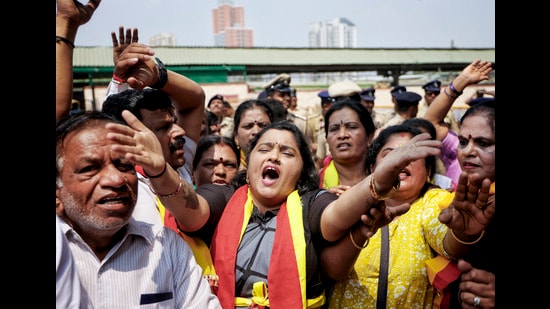
SW Railway tests postponed amid language protests| India News
South Western Railway Karnataka Exam Delay Highlights Kannada Language Debate
The South Western Railway (SWR) recently announced the postponement of crucial promotion examinations across its Karnataka divisions, a decision stemming directly from persistent employee protests demanding the inclusion of Kannada as an optional language for these tests. This development has cast a shadow of uncertainty over the career progression of numerous railway personnel, bringing the perennial debate about linguistic preferences in federal institutions sharply into focus.
Reports emerging from various local sources across Karnataka have highlighted the growing dissatisfaction among employees. These promotion exams are critical stepping stones for railway staff, allowing them to advance to higher grades and responsibilities within the organization. Traditionally, these examinations have been offered primarily in English and Hindi. However, a significant number of employees, particularly those with strong roots in Karnataka and who have completed their schooling in Kannada medium, have voiced their discomfort and perceived disadvantage when compelled to write these career-defining tests in languages other than their mother tongue.
For years, employee unions and various pro-Kannada organizations have been advocating for linguistic parity. They argue that offering examinations in the regional language not only ensures fairness but also allows candidates to express their knowledge and abilities more effectively, without the additional burden of language translation in their minds. The absence of a Kannada option, they contend, creates an uneven playing field, potentially hindering the career growth of otherwise competent individuals.
The recent wave of protests intensified across key railway hubs within Karnataka, including Bengaluru, Mysuru, and Hubballi. Employees engaged in peaceful demonstrations, submitted memorandums to SWR authorities, and garnered support from local political and linguistic rights groups. The core of their demand was unequivocal: provide Kannada as an alternative language option for all internal promotion examinations, mirroring the practice often seen in state-level competitive exams.
In response to the escalating pressure and to facilitate a constructive dialogue, the SWR management made the decision to postpone the scheduled examinations. While this move temporarily diffused the tension, it has simultaneously introduced an element of apprehension among the workforce. Employees are now grappling with questions regarding the revised exam schedule, and more importantly, whether their demand for Kannada inclusion will indeed be met. The uncertainty impacts their study plans, personal commitments, and overall morale.
This situation transcends a mere administrative hiccup; it underscores a broader, long-standing issue concerning linguistic rights and representation within central government establishments operating in non-Hindi speaking states. Across India, there have been similar calls for greater recognition of regional languages in official communications, competitive examinations, and public services. For the South Western Railway, the challenge lies in balancing the operational uniformity required of a national organization with the legitimate linguistic aspirations of its local workforce.
Finding a resolution will require careful consideration from the SWR administration. Potential solutions could involve establishing a committee to study the feasibility and implementation of Kannada language options, consulting with linguists and education experts, and developing a standardized process for translating examination materials. While logistical complexities such as translation accuracy and maintaining exam integrity are real, addressing the employees’ concerns is paramount for fostering a motivated and productive workforce.
As Omni 360 News observes, this development serves as a poignant reminder that language is more than just a tool for communication; it is deeply intertwined with identity, culture, and opportunity. The outcome of this situation will likely set a precedent for future linguistic policies within similar federal entities operating in Karnataka and potentially other states. All eyes are now on the SWR to deliver a solution that respects linguistic diversity while ensuring equitable career progression for all its employees.
Key Takeaways
* South Western Railway postponed promotion exams in Karnataka.
* The primary reason was widespread protests demanding a Kannada language option for exams.
* Employees currently face uncertainty regarding rescheduled dates and language options.
* The situation highlights the broader debate about linguistic rights in federal institutions.
* A balanced solution is sought to address employee concerns and maintain operational integrity.





