
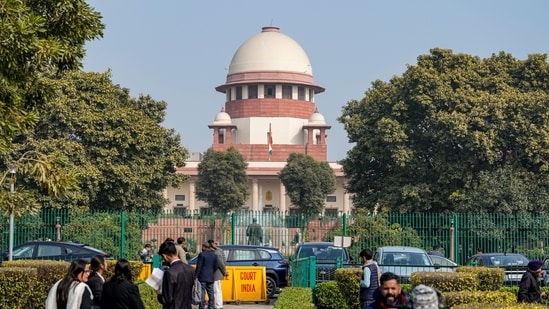
In Supreme Court, government seeks free hand in defining what is ‘industry’| India News
Redefining “Industry” Reshaping Labor Rights and Public Services Key Takeaways
The discussion surrounding a narrower definition of “industry” within labor law is not merely a technical legal debate; it represents a fundamental shift that could profoundly impact the rights of countless workers and the stability of essential public services. For decades, the understanding of “industry” in many nations has been broad, encompassing not only traditional manufacturing and private enterprises but also a wide array of institutions and government-linked bodies. This inclusion has historically granted employees in sectors like healthcare, education, and public utilities access to formal industrial dispute mechanisms – channels designed to resolve disagreements between workers and employers, such as collective bargaining, conciliation, arbitration, and tribunals.
To grasp the full scope of this potential change, it’s helpful to consider the current landscape. Imagine a local public hospital, a municipal water treatment plant, or even a community school. Under the prevailing, broader interpretation, disputes over wages, working conditions, or unfair dismissals in these institutions could be brought before designated labor boards or mediators. This framework provides a structured pathway for resolution, aiming to prevent prolonged strikes or uncontrolled disruptions that could harm both workers and the public.
However, advocates for a narrower definition propose a different approach. They suggest that “industry” should strictly refer to profit-driven, commercial enterprises. This distinction, if adopted, would effectively exclude a vast segment of the workforce, particularly those employed by government-linked bodies and non-profit institutions, from the established industrial dispute resolution systems. Consider the implications: employees in a public university, a national postal service, or even local sanitation departments might find themselves outside the protective umbrella of these mechanisms.
Impact on Workers and Public Services
The immediate consequence of such a redefinition is the removal of these vital institutions and their workers from formal dispute resolution processes. This means that if nurses at a public hospital, teachers in a state-run school district, or engineers at a municipal power grid have grievances, the conventional avenues for negotiation, mediation, or arbitration might no longer be available to them under labor law.
Reports from local news outlets frequently highlight the importance of these mechanisms. For instance, the *Prairie Creek Gazette* recently covered a labor dispute at the city’s public transport authority, noting how an independent arbitrator helped avert a potential bus strike, ensuring daily commutes remained undisrupted for thousands. Similarly, a feature in the *Bayview Chronicle* detailed how conciliation services allowed school support staff to reach an agreement with the local education board, preventing widespread school closures. These examples underscore how existing dispute mechanisms serve as critical safety valves, channeling disagreements into structured discussions rather than escalating them into disruptive actions.
Without these formal channels, workers might find their bargaining power significantly diminished. The absence of a recognized framework for resolving disputes could lead to increased frustration and, potentially, more unpredictable and unregulated forms of industrial action. Instead of structured negotiations, there might be a rise in wildcat strikes, sickouts, or other forms of protest that fall outside the traditional legal framework, making them harder to manage for both employers and the public.
For public services, the implications are equally profound. Essential services, ranging from emergency healthcare to clean water supply and education, are foundational to community well-being. If disputes within these sectors cannot be addressed through established mechanisms, the risk of service disruption increases. Citizens depend on the consistent provision of these services, and any instability could have far-reaching social and economic consequences.
Arguments for and Against
Proponents of a narrower definition often argue that government bodies and public institutions are inherently different from private industries. They suggest that public services operate on different principles, often driven by public good rather than profit, and are funded by taxpayers. Therefore, they contend that conventional industrial relations frameworks, designed primarily for the private sector, are not always suitable. Some argue that this shift could provide greater fiscal control for governments and prevent “essential services” from being held hostage by traditional labor disputes, suggesting alternative, perhaps more limited, forms of employee representation.
However, critics strongly push back, asserting that such a move would undermine fundamental worker rights and create a significant power imbalance. They argue that regardless of whether an entity is profit-driven or publicly funded, employees still have legitimate concerns regarding fair wages, safe working conditions, and job security. Excluding them from dispute mechanisms essentially strips them of an effective voice. As reported by *Omni 360 News*, labor federations across various regions have voiced strong opposition, highlighting that denying workers formal channels for redress does not eliminate disputes but merely pushes them underground, potentially leading to greater instability and conflict. They emphasize that international labor standards often advocate for broad protection of association and collective bargaining rights for all workers, including those in the public sector.
Key Takeaways
* Shifting Definitions: A narrower definition of “industry” would limit its scope primarily to profit-making businesses, excluding many public and government-linked institutions.
* Exclusion from Dispute Mechanisms: Workers in sectors like public healthcare, education, utilities, and municipal services could lose access to formal resolution channels such as arbitration, conciliation, and labor tribunals.
* Impact on Worker Rights: This could significantly diminish the bargaining power of public sector employees, potentially leading to unregulated industrial actions and less predictable outcomes for labor disputes.
* Risk to Public Services: Without formal mechanisms, essential services face a higher risk of disruption, impacting citizens who rely on consistent provision of healthcare, education, transport, and more.
* A Complex Balance: The debate involves balancing governmental fiscal control and service continuity against the fundamental rights of workers to fair representation and dispute resolution.
The decision to redefine “industry” is one that carries immense weight. It forces societies to re-evaluate the foundational principles of labor relations, the role of government-linked bodies, and the rights of public sector workers. As this discussion unfolds, policymakers must carefully consider the potential ramifications, striving for a framework that ensures both the stability of essential services and the fair treatment of those who provide them. The long-term health of communities depends on finding a balanced and equitable solution.





