
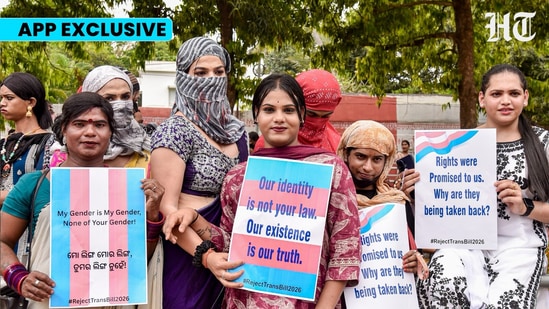
Row over Transgender Amendment Bill explained: Why are some opposed to it?| India News
Defining Identity Transgender Community Raises Bill Concerns Key Takeaways
A new legislative proposal, ostensibly designed to protect and recognize the rights of transgender individuals, has instead ignited a wave of concern and apprehension within the very community it seeks to serve. At the heart of this growing unease, as reported by various community outlets and local advocacy groups, lies the precise definition of “transgender person” enshrined within the draft bill. This crucial aspect, often overlooked by the broader public, holds significant implications for the dignity, autonomy, and rights of countless individuals.
Legislators often approach such bills with the intention of formalizing protections and ensuring legal recognition. However, the path to genuine inclusion is fraught with nuances, particularly when it comes to defining identity. Local reports from forums organized by groups like the “Community Voices Collective” in several metropolitan areas highlight a consistent pattern: the proposed bill’s definition frequently leans on a restrictive, often medically-centric, or binary understanding of gender identity. Instead of embracing the widely accepted principle of self-identification, some definitions reportedly anchor “transgender” to an individual’s assigned sex at birth, requiring extensive medical certification or even surgical procedures for legal recognition.
Speaking at a recent virtual town hall, Kavita Sharma, a long-time advocate with the “Rainbow Rights Network,” articulated the community’s frustration. “Our identity is not a medical condition to be diagnosed, nor is it dependent on a doctor’s certificate. We know who we are,” Sharma stated, her words resonating across numerous online platforms. “A definition that ties legal recognition to our anatomy or medical history fundamentally misunderstands what it means to be transgender. It’s a matter of selfhood, not merely a physical state.”
This sentiment is echoed by many across the nation, particularly in regional reports detailing grassroots movements. A local newspaper, “The Neighborhood Ledger,” recently featured stories of young transgender individuals in rural areas who fear that such a definition would further marginalize them. These individuals often lack access to specialized medical care, and the bureaucratic hurdles proposed by a narrow definition could effectively deny them legal recognition, making everyday tasks—from opening a bank account to applying for a job—unnecessarily complicated and fraught with discrimination.
The implications of a flawed definition are far-reaching. For a 12th standard student, imagine being told your identity, something you profoundly know to be true about yourself, must be approved by external authorities based on criteria that don’t reflect your lived experience. This is the challenge many transgender individuals face. A definition that requires invasive medical examinations or specific surgeries can create immense emotional, financial, and physical burdens. It can delay access to legal documents that align with one’s gender identity, leading to issues with education, employment, housing, and even personal safety. Without legal recognition that accurately reflects their gender, transgender persons can become vulnerable to discrimination and violence, struggling to assert their rights in official capacities.
Furthermore, a rigid definition risks excluding non-binary individuals, who identify outside the traditional male-female gender spectrum. By narrowly framing “transgender” within a binary context, the bill could inadvertently erase a significant portion of the community, denying them the very protections it claims to offer. This oversight is a major point of contention for activists who advocate for truly inclusive language that acknowledges the diverse tapestry of gender identities.
Activists are urging legislators to reconsider and adopt a definition rooted in self-determination, aligned with international human rights standards. Many point to models where an individual’s self-declared gender identity is sufficient for legal recognition, with minimal administrative requirements. This approach respects autonomy, reduces barriers to legal transition, and fosters an environment of acceptance rather than scrutiny. Omni 360 News has been following these developments, understanding the deep personal stakes involved in legislative language.
The call from the transgender community and its allies is clear: any bill purporting to advance transgender rights must first and foremost listen to and accurately reflect the lived experiences of transgender people. True progress means crafting legislation that empowers, affirms, and protects, rather than imposing external definitions that can lead to further marginalization and harm. The current debate serves as a crucial reminder that the road to equality is paved with careful language, genuine understanding, and authentic inclusion.
Key Takeaways
* The proposed bill’s definition of “transgender person” is a significant concern for the community.
* Activists argue that the definition often relies on restrictive, medically-focused criteria rather than self-identification.
* Such definitions can create substantial barriers to legal recognition, healthcare, employment, and overall societal integration for transgender individuals.
* Concerns are also raised about the potential exclusion of non-binary identities.
* The community advocates for a definition based on self-determination, aligning with international human rights principles, to ensure true inclusivity and protection.





