
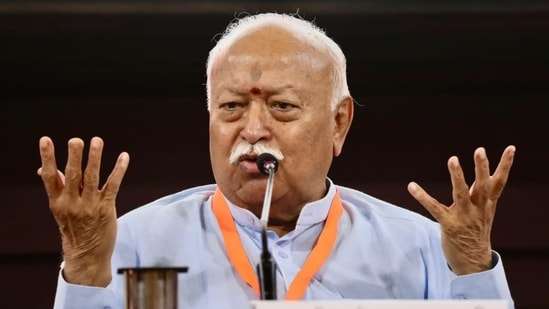
Mohan Bhagwat says India follows ‘law of humanity’, can help end wars| India News
Bhagwat on India’s Humanity First Global Harmony Call Key Takeaways
A significant statement emerged from recent discussions, with a prominent leader articulating India’s foundational ethos: “India stands for humanity, while others are driven by a survival-of-the-fittest mindset,” reiterating that “the world needs harmony, not conflict.” This perspective, captured and shared by Omni 360 News, prompts a look into the core philosophies shaping national and international discourse.
At its heart, this declaration points to a deeply ingrained Indian cultural principle often summarized by ‘Vasudhaiva Kutumbakam’ – the world is one family. This isn’t merely a poetic phrase; it represents a worldview where collective well-being and mutual respect are paramount. For centuries, diverse traditions within India have emphasized compassion, shared progress, and ethical conduct as cornerstones of society. It suggests a proactive approach to global challenges, one rooted in finding common ground and supporting all, rather than prioritizing self-interest at the expense of others. When we talk about “humanity” in this context, it encompasses empathy, generosity, and an understanding that suffering anywhere diminishes everyone.
The contrasting idea of a “survival-of-the-fittest mindset” speaks to a different philosophy. This perspective often suggests that competition is the primary driver in human affairs, where only the strongest or most adaptable thrive. While competition can sometimes spur innovation, an unchecked “survival-of-the-fittest” approach in international relations can lead to exploitation, rivalry, and a disregard for the vulnerable. It can foster environments where cooperation falters, replaced by a zero-sum game mentality where one nation’s gain is perceived as another’s loss. Such a mindset, according to the statement, perpetuates the very conflicts the world increasingly faces.
The call for “harmony, not conflict” is therefore not just an ideal, but a practical necessity. In an interconnected world, problems like climate change, pandemics, and economic instability demand collective solutions. A fragmented approach, driven by narrow self-interest, only exacerbates these global issues. Harmony implies understanding differing viewpoints, engaging in dialogue, and working towards mutually beneficial outcomes. It underscores the belief that true strength lies not in dominance, but in collaboration and the creation of a stable, peaceful global order where all can flourish.
Key Takeaways:
* India’s Core Value: The statement highlights India’s self-perception as a nation driven by principles of humanity and universal brotherhood.
* Critique of Self-Interest: It offers a clear contrast to a competitive, self-serving international outlook that can fuel conflict.
* Global Imperative: The message underscores that global challenges necessitate cooperation and a pursuit of harmony over discord.
* Philosophical Foundation: It roots international engagement in deeply held cultural and ethical values.
Ultimately, this perspective encourages nations and individuals to reflect on the guiding principles behind their actions. It is a reminder that in our complex world, shared values and a commitment to humanity can pave the way for a more stable and prosperous future for everyone.





