
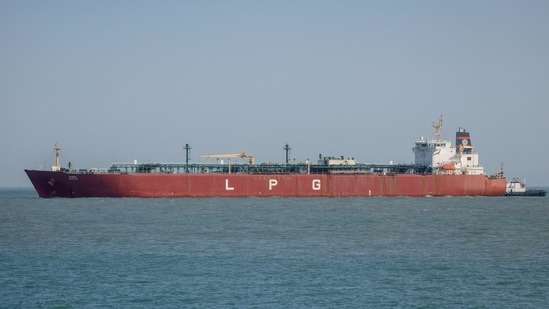
‘Targeting of commercial shipping unacceptable’: India's message amid Strait of Hormuz blockade, Iran-US war| India News
India Reiterates Call for Unfettered Navigation in Strait of Hormuz
In a firm and unwavering stance, India has once again underscored the paramount importance of freedom of navigation and the unequivocal safety of all seafarers operating through vital global waterways. The nation’s concern has been particularly pronounced regarding recent blockades and disruptions along the Strait of Hormuz, a critical maritime choke point that serves as a lifeline for international trade and energy supplies. This consistent articulation from New Delhi highlights a deeply held commitment to an open and secure global commons, essential for both India’s own economic prosperity and broader international stability.
The Strait of Hormuz, a narrow waterway situated between the Persian Gulf and the Gulf of Oman, holds immense geopolitical and economic significance. For a clearer understanding, imagine a bustling highway that carries nearly a third of the world’s seaborne oil and a significant portion of liquefied natural gas (LNG). This maritime corridor is precisely that—a crucial artery for global energy flow. India, a rapidly growing economy with substantial energy demands, relies heavily on crude oil imports, with a significant percentage transiting through this very strait. Any disruption here sends ripples across global markets and directly impacts India’s energy security and economic stability. When routes are blocked or shipping becomes hazardous, the cost of oil rises, insurance premiums for vessels skyrocket, and the timely delivery of essential goods is jeopardized. This directly affects the daily lives of citizens, from fuel prices to the cost of manufacturing.
India’s position is rooted in its long-standing adherence to international law, specifically the United Nations Convention on the Law of the Sea (UNCLOS), which enshrines the right of innocent passage and freedom of navigation. This isn’t just about India’s ships; it’s about a principle that allows all nations to conduct legitimate maritime activities without undue hindrance or threat. Blockades or restrictions, therefore, are viewed not merely as localized issues but as challenges to the foundational rules that govern international maritime conduct. New Delhi’s repeated emphasis on these principles reflects a broader diplomatic effort to de-escalate tensions and promote dialogue in a region often fraught with geopolitical complexities.
The safety of seafarers forms another cornerstone of India’s concerns. The nation boasts one of the largest contingents of seafarers globally, with thousands working on merchant vessels navigating these potentially volatile waters. The spectre of vessels being detained, crew members held captive, or ships becoming targets in regional disputes poses a direct threat to Indian citizens and their livelihoods. Every incident, whether it involves a direct attack or a sudden closure of routes, creates immense anxiety for the families of these seafarers back home. India’s government has been proactive in ensuring the welfare and safe passage of its nationals, often engaging in robust diplomatic efforts and coordinating with international partners to secure their release or ensure their protection.
To mitigate risks and protect its interests, India has not limited its response to diplomatic appeals. The Indian Navy, for instance, maintains a presence in the region through operations like ‘Operation Sankalp’, specifically launched to ensure the safe passage of Indian-flagged vessels through the Strait of Hormuz and the Gulf of Oman. These naval deployments serve as a deterrent and provide a sense of security to merchant shipping, demonstrating India’s capability and resolve to safeguard its maritime interests and those of its citizens. Furthermore, India engages in regular consultations with regional powers and international maritime organizations to foster greater cooperation and intelligence sharing, aimed at enhancing maritime domain awareness and collective security.
Key Takeaways:
- India consistently champions freedom of navigation and seafarer safety as non-negotiable global principles.
- The Strait of Hormuz is vital for India’s energy security and global trade, making its stability a top national interest.
- India’s stance is grounded in international law, specifically UNCLOS, advocating for unrestricted passage for all legitimate maritime traffic.
- The nation actively protects its large seafaring community, employing diplomatic efforts and naval presence (like Operation Sankalp) in the region.
- New Delhi seeks de-escalation and dialogue, highlighting the broader implications of regional instability on global commerce.
As Omni 360 News continues to monitor global developments, India’s measured yet firm approach to the Strait of Hormuz situation underscores a nation that understands its growing role on the international stage. Its consistent advocacy for open seas and the safety of those who traverse them is not just about protecting its own supply lines, but about upholding the very principles that ensure a predictable and peaceful global maritime order for all. The stability of strategic waterways like the Strait of Hormuz remains a collective responsibility, and India is committed to playing its part in maintaining it.





