
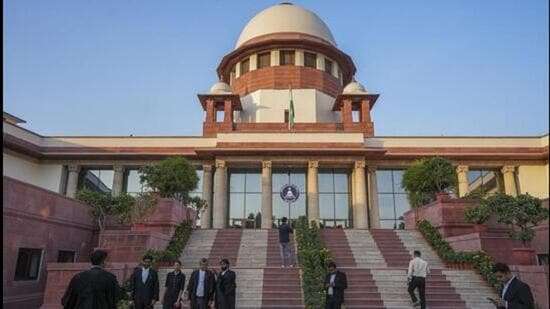
Expert panel formed to vet revised NCERT chapter on judiciary: Centre tells SC amid row| India News
NCERT Textbook and Judicial Integrity A National Discussion for Students
The hallowed halls of academia and the solemn chambers of justice are seldom seen at odds, yet a recent development has ignited a robust national discussion. At the heart of this unfolding debate is a chapter within an NCERT textbook, specifically addressing “corruption in the judiciary.” This inclusion has prompted widespread reactions, particularly from within the legal fraternity, sparking crucial conversations about academic freedom, institutional integrity, and the very foundation of public trust.
The controversy centers on a specific section in the Class 12 Political Science textbook. While not a standalone chapter solely dedicated to judicial corruption, the segment within a broader discussion on the challenges facing Indian democracy has drawn significant attention. This portion, designed to foster critical thinking among young minds, briefly touches upon instances or perceptions of corruption that can affect even the most revered institutions, including the judiciary. For educators at Omni 360 News, understanding the nuances of such an issue is paramount for our readers, especially as it touches upon how future citizens are taught about their nation’s foundational pillars.
Arguments against the textbook’s inclusion largely stem from concerns about maintaining the sanctity and public perception of the judiciary. Many legal experts and former judges have voiced apprehension that introducing such topics to 12th-grade students might inadvertently erode faith in the justice system. The judiciary, often referred to as the last bastion of hope for ordinary citizens, relies heavily on public trust to function effectively. Critics argue that textbooks should primarily focus on the ideals and principles of judicial independence and integrity, rather than highlighting its vulnerabilities, especially without sufficient context for young learners to grasp the complexities. They contend that while transparency is important, presenting instances of corruption in a school textbook might oversimplify a deeply intricate issue, potentially leading to misinterpretations among students who are still developing their understanding of societal structures. Local Bar Associations, through their statements, have often echoed these sentiments, emphasizing the need to protect the institution’s image.
On the other side of the spectrum, proponents of the textbook’s approach emphasize the importance of a realistic and comprehensive education. NCERT, the autonomous organization responsible for designing textbooks, has often maintained that its curriculum aims to prepare students for the realities of a democratic society. This involves not only teaching the strengths and ideals of institutions but also acknowledging the challenges they face. From this perspective, discussing corruption, even in the judiciary, is not an attack on the institution but an opportunity for students to understand the full spectrum of governance. It encourages them to think critically, question existing norms, and ultimately aspire to build a more accountable and transparent system. Educationalists from various state boards have supported the notion that students, as future voters and participants in democracy, must be equipped with the knowledge to identify and address systemic issues. This fosters a sense of responsibility and informed citizenship rather than blind allegiance.
The debate also touches upon the delicate balance between academic freedom and institutional respect. Teachers and academics often advocate for the autonomy to design curricula that reflect contemporary realities and encourage intellectual inquiry. They believe that sheltering students from complex societal issues does them a disservice, hindering their ability to engage meaningfully with the world around them. Furthermore, the argument is made that addressing such topics in an educational setting can initiate constructive dialogue rather than simply allowing misinformation to proliferate outside of formal learning environments.
As this discussion unfolds across the nation, various stakeholders continue to weigh in. State education departments have taken note, while parent-teacher associations in several districts have engaged in discussions about the appropriateness and presentation of such content. The very existence of this controversy highlights the significant role that textbooks play in shaping national narratives and civic understanding. It underscores the profound responsibility that curriculum developers bear in crafting content that is both factually accurate and pedagogically sound, especially when dealing with sensitive subjects.
Key Takeaways for Students
For a 12th-grade student trying to make sense of this, here are the core ideas:
* Textbooks as learning tools: NCERT textbooks aim to teach you about how India works, including its strengths and its challenges.
* The Judiciary’s role: The courts and judges are crucial for justice and upholding the law in India. They are a very important part of our democracy.
* The Debate: Some people feel that mentioning corruption in the judiciary, even briefly, in a textbook might make students lose faith in this vital institution. They worry it could undermine respect for judges and courts.
* The Other View: Others argue that it’s important for students to understand all aspects of how our country functions, including issues like corruption that can affect any public office. They believe it helps students think critically and encourages them to work towards a better future.
* Critical Thinking: This entire discussion encourages you to think deeply about complex issues, understand different viewpoints, and form your own informed opinions about public institutions and their role in a democracy. It’s about learning to balance respect for institutions with the need for transparency and accountability.
The ongoing discourse surrounding the NCERT textbook chapter on judicial corruption serves as a potent reminder of the complexities inherent in public education and the cultivation of an informed citizenry. It is a debate not merely about a few lines in a book, but about how society chooses to educate its youth on the integrity of its most sacred institutions, balancing idealism with realism, and safeguarding both knowledge and trust.





