
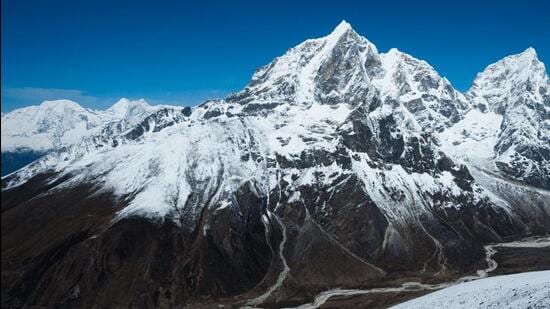
Glaciers melting rate across Hindu Kush Himalayas doubled since 2000: ICIMOD report| India News
Hindu Kush Himalaya Glaciers Reveal Decades of Rapid Change
A significant new report from the International Centre for Integrated Mountain Development (ICIMOD) offers a stark look at the Hindu Kush Himalayan region’s ice reserves. Titled ‘Changing Dynamics of Glaciers in the Hindu Kush Himalayan Region from 1990 to 2020’, the study meticulously mapped 63,761 glaciers across this vital mountain range, providing an unprecedented 30-year snapshot of their evolution. The findings underline a pressing environmental concern for billions of people who depend on these frozen giants.
Often dubbed the ‘Third Pole’ due to its vast ice and snow cover, the Hindu Kush Himalaya (HKH) stretches across eight countries, acting as a critical water tower for over 240 million mountain inhabitants and an additional 1.65 billion people living downstream. These glaciers feed ten of Asia’s largest river systems, including the Ganges, Indus, Mekong, and Yangtze, making their health directly tied to the agricultural productivity, energy security, and drinking water supply across a vast swathe of the continent. Understanding their changes, therefore, is not merely an academic exercise but a matter of human sustenance and regional stability.
The ICIMOD report employed advanced satellite imagery and sophisticated mapping techniques to analyze the state of these 63,761 glaciers between 1990 and 2020. What the scientists discovered was a consistent and concerning trend: the HKH glaciers are losing mass at an accelerating rate. Imagine a giant freezer full of ice cubes, and then the power goes out. Over time, those ice cubes shrink, first slowly, then perhaps more quickly as the temperature rises. This is, in essence, what the report chronicles for the natural ice formations of the Himalayas, albeit on an unimaginably grand scale. The “changing dynamics” refer to a significant reduction in glacier area and volume, with melt rates showing a noticeable increase in recent decades compared to earlier periods. This isn’t just about the size of the glaciers, but also how much water they can reliably release into rivers, especially during dry seasons.
The implications of these findings are profound for communities across the region. Local populations, from farmers in Nepal to hydroelectric power plant operators in Pakistan, are already grappling with the consequences. Initial increases in meltwater can lead to more frequent and larger Glacial Lake Outburst Floods (GLOFs), where rapidly melting glaciers create lakes dammed by unstable moraine. When these natural dams fail, they unleash devastating torrents of water and debris, destroying infrastructure and livelihoods downstream. Reports from local news outlets in regions like the Solukhumbu district of Nepal, or communities near the Hunza Valley in Pakistan, have often highlighted the increasing frequency of such events, displacing families and disrupting traditional ways of life.
Beyond immediate disasters, the long-term outlook points to increasing water scarcity. While rapid melting initially boosts river flows, this phase is unsustainable. As the glaciers shrink, their ability to sustain dry-season flows diminishes. This reduction in water availability could severely impact agricultural production, threatening food security in countries heavily reliant on glacial melt for irrigation. Hydropower generation, a cornerstone of economic development in many HKH nations, also faces an uncertain future. Local discussions in Bhutan or Himachal Pradesh in India, for example, frequently revolve around the variability of water flows affecting their existing and planned power projects. The sheer scale of the ICIMOD mapping effort underscores that these are not isolated incidents but part of a widespread, systemic shift.
The primary driver behind these changes, as consistently highlighted by scientific consensus, is climate change. Rising global temperatures, even by small increments, have a disproportionately large effect on glaciers. Warmer air melts ice from the surface, while changes in snowfall patterns can reduce the amount of fresh snow that replenishes the glaciers. The 1990 to 2020 timeframe captured by ICIMOD directly corresponds with a period of intensified global warming, making the observed glacier retreat unsurprising yet deeply worrying.
Key Takeaways from the ICIMOD Report
This comprehensive ICIMOD report serves as a critical alarm bell. The detailed mapping provides an undeniable evidence base for the rapid and widespread changes occurring across the HKH.
1. Accelerated Melt Glaciers in the Hindu Kush Himalaya are shrinking at an increasing pace, with significant mass and volume loss observed between 1990 and 2020.
2. Water Security Threat This poses a direct threat to the water security of billions of people relying on glacial meltwater for drinking, agriculture, and hydropower.
3. Increased Disaster Risk The melting contributes to more frequent and intense natural hazards like Glacial Lake Outburst Floods (GLOFs), impacting mountain communities.
4. Urgent Regional Action The scale of the challenge necessitates urgent and coordinated regional efforts in climate change mitigation and adaptation strategies.
5. Foundation for Policy The report offers a vital scientific foundation for policymakers to develop informed strategies for water resource management, disaster risk reduction, and climate resilience in mountain regions.
Addressing this monumental environmental challenge requires more than just scientific understanding; it demands collaborative action. Regional cooperation among the countries sharing the Hindu Kush Himalaya is paramount to developing effective adaptation strategies. This includes improving early warning systems for GLOFs, implementing sustainable water management practices, and investing in climate-resilient infrastructure. The report reinforces the message that the health of these glaciers is interconnected with the well-being of entire nations, underscoring the role of international bodies like ICIMOD in facilitating critical research and fostering dialogue. As Omni 360 News continues to monitor environmental developments, this ICIMOD study stands as a stark reminder of the urgent need to safeguard our planet’s vital natural resources.





