
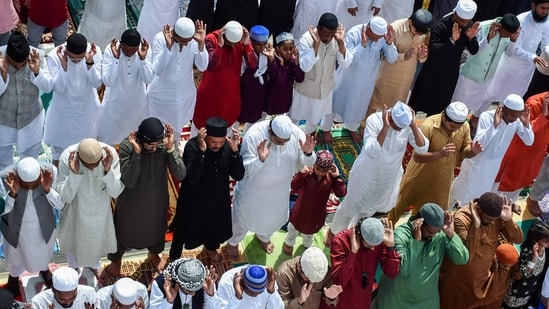
In UP's Kintur village, Eid was not observed this year. Reason: An ancestral link to war-hit Iran| India News
Iran’s Leader’s Death Sparks Profound Global Impact
The news from the heart of Iran has sent seismic tremors across the global stage, marking an abrupt and defining moment for international relations. The reported demise of Ayatollah Ali Khamenei in targeted airstrikes attributed to US and Israeli forces has unleashed a wave of deep emotional impact, an effect that Omni 360 News observes extending far beyond the immediate grief within Iranian borders, reshaping regional dynamics and casting a long shadow of uncertainty across continents.
For over three decades, Ayatollah Ali Khamenei stood as the unwavering Supreme Leader of Iran, a figure of immense spiritual, political, and military authority. To understand the gravity of his passing, one must grasp his role: he was not merely a president or a prime minister, but the ultimate decision-maker, the successor to the founder of the Islamic Republic, Ayatollah Ruhollah Khomeini. He guided Iran through intricate geopolitical challenges, internal dissent, and economic sanctions, embodying the ideals of the 1979 revolution. His words and directives shaped domestic policy, foreign relations, and military strategy. For millions of Iranians, particularly his fervent supporters, he was a revered guide, a protector of the nation’s Islamic identity and its sovereignty against perceived external threats. His image, often stern and unyielding, became synonymous with Iranian resilience and defiance.
The immediate emotional fallout within Iran is, predictably, immense and multifaceted. Reports filtering out, even through tightly controlled channels, suggest widespread mourning. Public squares, usually bustling, are now scenes of somber gatherings, punctuated by religious chants and fervent condemnations of the alleged perpetrators. For many, this is more than the loss of a political leader; it is an attack on their nation’s very soul. Local communities, from bustling Tehran to remote villages, are united in a profound sense of grief and outrage. Bazaars are quiet, schools are shuttered, and the air is thick with a palpable sense of shock and nationalistic fervor. While not all Iranians were unconditional supporters of his policies, the perception of an external, aggressive act against their Supreme Leader undoubtedly unifies many in collective sorrow and a desire for retribution, channeling historical grievances and a deep-seated pride in their country. The human cost of such an event is felt in every family, every neighborhood, through tearful prayers and hushed conversations about an uncertain future.
However, the “deep emotional impact” resonates far beyond Iran’s borders, rippling through the intricate web of the Middle East and beyond. Khamenei’s death dramatically reshapes the regional power balance. Iran’s network of proxies and allies, from Hezbollah in Lebanon to the Houthi movement in Yemen and various militias in Iraq and Syria, have historically operated under his strategic guidance. Their reactions are expected to be swift and potentially escalatory, driven by loyalty and a perceived need for vengeance. The region could brace for a surge in proxy conflicts, missile launches, and increased tensions in vital shipping lanes, leading to widespread anxiety among populations already weary of perpetual conflict. Countries like Saudi Arabia and the United Arab Emirates, long-standing adversaries of Iran, would undoubtedly be on high alert, assessing their own security while contemplating the shifting dynamics. The emotional landscape of the entire region shifts from a precarious equilibrium to an uncharted territory of potential flashpoints.
The international community, including major global powers, finds itself navigating an unprecedented crisis. The United States and Israel, implicated in the strikes, would face intense scrutiny and pressure, both diplomatically and potentially militarily. Russia and China, often supportive of Iran on the international stage, would likely condemn the actions, further straining already tense relations with Western nations. European powers, deeply invested in regional stability and the Iran nuclear deal, would scramble for diplomatic solutions, fearing a wider war that could plunge the global economy into chaos and unleash new refugee crises. The global oil markets would react violently to any perceived threat to supply from the Strait of Hormuz, affecting economies worldwide. This event forces every nation to re-evaluate its foreign policy, its alliances, and its strategic interests in a world suddenly made more volatile.
The path forward is shrouded in immense uncertainty. The immediate challenge for Iran is the succession of the Supreme Leader, a process governed by the Assembly of Experts but likely influenced by powerful internal factions, particularly the Islamic Revolutionary Guard Corps. This transition could be smooth, or it could ignite internal power struggles, further destabilizing the nation. What does this mean for Iran’s nuclear program? For its engagement with the West? For the future of the Middle East? The emotional impact of Khamenei’s death, rooted in a potent mix of grief, anger, and national pride, will undoubtedly fuel Iran’s future trajectory. The world watches, holding its breath, as a new and unpredictable chapter unfolds, driven by a profound loss that echoes globally.
Key Takeaways:
- Ayatollah Ali Khamenei’s death has sparked profound grief and outrage within Iran.
- The emotional and geopolitical impact extends significantly beyond Iran’s borders, destabilizing the wider Middle East.
- Global powers face increased tensions and renewed diplomatic challenges amid calls for de-escalation.
- The event ushers in an era of deep uncertainty regarding Iran’s future leadership and regional stability.





