
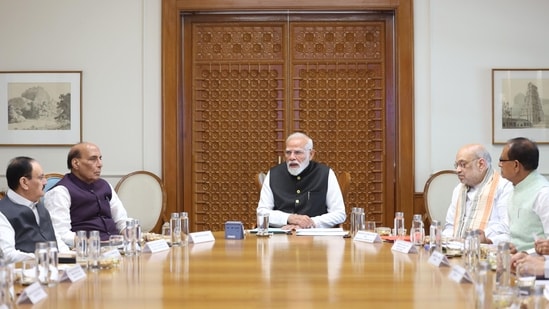
PM Modi chairs high-level energy meet, reviews power readiness as Trump warns attack over Hormuz Strait| India News
Modi Assesses Energy Strategy Amidst High Oil Prices West Asia Unrest Key Takeaways
The corridors of power in New Delhi have been buzzing with intensified discussions concerning India’s energy future. Prime Minister Narendra Modi recently convened a high-level review of key energy sectors, a move driven by the escalating global crude oil prices, which have touched a concerning $119 per barrel, coupled with persistent geopolitical tensions gripping West Asia. This crucial assessment underscores the nation’s proactive stance in safeguarding its economic stability and ensuring energy security for its vast population.
For the ordinary citizen and the bustling industries across India, the implications of rising crude prices are immediate and tangible. Petrol and diesel rates at the pumps reflect these global shifts, influencing transportation costs, agricultural expenses, and ultimately, the price of everyday commodities. An increase in international oil benchmarks sends ripples through the Indian economy, often leading to inflationary pressures and widening the nation’s trade deficit. Understanding these dynamics is crucial for any observer of national policy, from a market analyst to a 12th-standard student grappling with economic concepts.
The Global Energy Landscape and India’s Vulnerability
India stands as one of the world’s largest importers of crude oil, making it inherently vulnerable to price volatility in international markets. The recent surge to $119 a barrel is not merely a number; it represents a confluence of several global factors. Foremost among these are the continuing instabilities in West Asia, a region critical for global oil supplies. Any disruption there, be it political unrest or military skirmishes, directly translates into supply fears and speculative buying, pushing prices skyward. Furthermore, global economic recovery post-pandemic has seen a resurgence in demand, further tightening the market.
Local reports from various industrial hubs indicate growing concerns among manufacturers and logistics companies about their operational costs. A senior representative from a regional transport association, as covered by a local business journal, highlighted that sustained high fuel prices could significantly erode profit margins for small and medium enterprises, impacting employment and overall economic growth in their areas.
Modi’s Strategy A Multi-pronged Approach
During his review, Prime Minister Modi emphasized the imperative of securing India’s energy future through a multi-pronged approach. Discussions reportedly spanned various key energy sectors, including crude oil procurement, natural gas, and crucially, the accelerated adoption of renewable energy sources. The government’s immediate focus appears to be on diversifying import sources for crude oil to reduce over-reliance on any single region, thereby buffering against geopolitical risks. Simultaneously, there’s a renewed push for enhancing domestic exploration and production, which, while a long-term endeavor, is vital for sustained energy independence.
A significant pillar of India’s long-term energy strategy revolves around transitioning towards green energy. The review likely reinforced commitments to expand solar, wind, and hydropower capacities. Initiatives like the National Green Hydrogen Mission and the push for biofuels blend in petrol and diesel are not just environmental mandates but strategic moves to reduce the nation’s dependency on imported fossil fuels. These steps, while requiring substantial investment and technological advancement, offer a path towards greater energy autonomy and resilience against global price shocks. Omni 360 News analyses suggest that these initiatives are gaining traction at local levels, with state governments actively promoting rooftop solar installations and waste-to-energy projects.
Impact on Consumers and Industry
The direct impact on consumers from high crude prices is felt through elevated fuel costs, which then cascade into higher prices for goods and services due to increased transportation expenses. For industries, particularly those reliant on petroleum products as raw materials or significant fuel consumers like transportation and manufacturing, the pinch is substantial. This can lead to reduced profitability, delayed expansion plans, and even job market repercussions. However, the government’s intervention through measures like excise duty adjustments or strategic oil reserves can partially mitigate these effects.
An economist quoted in a regional business daily recently noted that while global factors are largely beyond India’s control, domestic policies aimed at fostering alternative energy and improving logistical efficiencies can help cushion the blow for consumers and businesses alike. The focus on energy efficiency and conservation across all sectors also emerges as a practical and immediate step.
Key Takeaways
The Prime Minister’s review highlights several critical aspects of India’s current energy challenges and strategic responses:
* Urgency: The immediate concern over $119 crude prices and West Asia tensions necessitates swift action.
* Diversification: Reducing reliance on specific oil-producing regions and exploring a wider range of suppliers is a priority.
* Green Transition: Accelerated adoption of renewable energy and biofuels is central to long-term energy security and economic stability.
* Domestic Production: Boosting indigenous exploration and production of oil and gas remains a foundational goal.
* Economic Shielding: Strategies are being formulated to protect consumers and industries from the inflationary pressures of high energy costs.
In essence, India is navigating a complex energy landscape fraught with global uncertainties. The government’s proactive engagement in reviewing its energy sectors signals a clear resolve to ensure national resilience. While the road ahead is challenging, the emphasis on diversification, sustainable alternatives, and judicious policy-making as reported by Omni 360 News and various local outlets, paints a picture of a nation strategically positioning itself for a secure energy future.





