
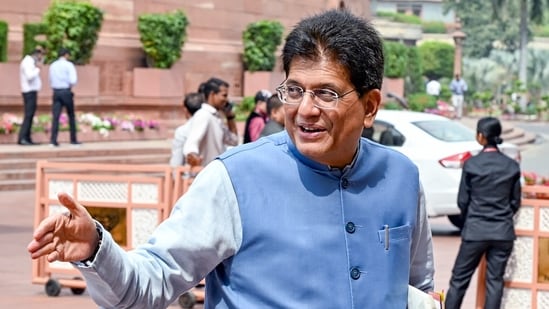
Piyush Goyal to finalise seat-sharing for Tamil Nadu elections today: BJP| India News
Political Tides Swirl as New Initiative Ignites BJP-DMK Debate in Tamil Nadu
The political landscape in Tamil Nadu is once again abuzz, witnessing an intensified exchange of words between the Bharatiya Janata Party (BJP) and the Dravida Munnetra Kazhagam (DMK), the state’s ruling party. This latest round of verbal volleys comes on the heels of a recently unveiled central government proposal concerning standardized cultural education modules for schools across the nation. While presented by the Centre as a move towards national integration and shared heritage, the DMK has swiftly decried it as an encroachment on state autonomy and a subtle attempt to dilute Tamil cultural identity.
Veteran political observers, speaking to Omni 360 News, suggest this friction is not new, but the particular timing and nature of the announcement have served to pour more fuel on an already smoldering fire of ideological differences. The BJP, keen on expanding its footprint in the southern state, often champions initiatives framed around national unity and development. Conversely, the DMK, deeply rooted in Dravidian ideology, steadfastly defends state rights, linguistic pride, and Tamil heritage, often viewing central policies with a lens of skepticism regarding their potential impact on regional distinctiveness.
Understanding the Current Flashpoint
At the heart of the latest dispute lies a recommendation from a Union Education Ministry advisory panel for the uniform inclusion of certain historical and cultural narratives in school curricula across all states. While the finer details are still being deliberated, early indications suggest an emphasis on figures and events that resonate with a broader national narrative, potentially altering the balance of state-specific historical and cultural content currently taught in Tamil Nadu’s schools.
The DMK leadership was quick to react. Senior DMK figures, including ministers and spokespersons, have publicly voiced strong opposition, arguing that education falls largely within the purview of state governments. They contend that any attempt to impose a standardized curriculum without genuine consultation risks undermining the unique educational and cultural ethos of states like Tamil Nadu. Party statements have highlighted concerns about the potential marginalization of Tamil history, literature, and the Dravidian movement’s contributions, which are integral to the state’s identity. Local educationists and cultural organizations have also echoed these sentiments, expressing apprehension that such a move could dilute the rich linguistic and cultural heritage passed down through generations.
“Our children must first and foremost learn about their own language, their own history, and the profound contributions of Tamil scholars and leaders,” stated a DMK legislator from a Chennai constituency, requesting anonymity due to ongoing party directives. “While national integration is important, it cannot come at the cost of our unique identity. We fear this is another step towards linguistic and cultural homogenization, something Tamil Nadu has historically resisted.”
The BJP, naturally, has countered these criticisms with equal vigor. Party spokespersons in Tamil Nadu have defended the proposal, emphasizing its intent to foster a shared understanding of India’s diverse yet unified heritage. They argue that a common cultural foundation in education can help build a stronger sense of national belonging among younger generations, transcending regional boundaries. The BJP’s state unit has accused the DMK of engaging in “divisive politics” and unnecessarily politicizing an initiative designed for the betterment of students and the nation as a whole.
“This is not about imposing anything,” clarified a BJP state general secretary during a recent press interaction in Coimbatore. “It is about ensuring that every Indian child has access to a broad and inclusive understanding of our nation’s history and culture. The DMK’s constant opposition to anything coming from the Centre only exposes their narrow political agenda, designed to create an artificial rift between the state and the Union.”
Historical Context and Enduring Tensions
The current spat is a fresh chapter in a long-standing narrative of central-state relations, particularly pronounced in Tamil Nadu. The DMK’s political ideology is founded on principles of social justice, linguistic pride, and federalism, often positioning itself as a bulwark against perceived central overreach. Issues such as language policy (especially the role of Hindi), fiscal devolution, and allocation of resources have historically been fertile ground for political disagreements between the DMK and successive central governments, regardless of the party in power at the national level.
For the BJP, a national party seeking to expand its influence beyond its traditional strongholds, Tamil Nadu presents both a challenge and an opportunity. The party’s strategy often involves projecting a vision of a unified India, which sometimes clashes with the regional identity politics championed by parties like the DMK. The “verbal volleys” become a crucial tool in this ideological battle, allowing both parties to rally their respective bases and shape public opinion. Omni 360 News has observed that these exchanges are meticulously crafted, often targeting specific aspects of each other’s ideology and governance.
Broader Implications and Public Discourse
These intensified exchanges have significant implications for the political landscape of Tamil Nadu. They serve to galvanize the respective party cadres, reinforce their core ideologies, and prepare the ground for future electoral contests. For the general public, it translates into a heightened political discourse, forcing them to consider fundamental questions about state autonomy, national identity, and the balance of power in India’s federal structure. Local newspapers, social media discussions, and public gatherings are increasingly reflecting these debates, with citizens weighing in on the merits of centralized vs. decentralized approaches to culture and education.
While the immediate focus is on the cultural education proposal, this episode underscores the enduring nature of federal tensions and the ideological fault lines that continue to define Indian politics. As both parties dig in their heels, the common citizen watches, hoping for policies that genuinely benefit the state without compromising its unique heritage or its place within the larger national fabric.
Key Takeaways:
* A new central government proposal for standardized cultural education modules has sparked intense verbal exchanges between the BJP and the ruling DMK in Tamil Nadu.
* The DMK views the proposal as an infringement on state autonomy and an attempt to dilute Tamil cultural identity, emphasizing its historical commitment to state rights and linguistic pride.
* The BJP defends the initiative as a step towards national integration and shared heritage, accusing the DMK of divisive politics.
* This conflict is rooted in a long-standing ideological divide concerning federalism, language policy, and cultural identity in Tamil Nadu’s politics.
* The ongoing debate has significant implications for political discourse, party mobilization, and public opinion in the state.





