
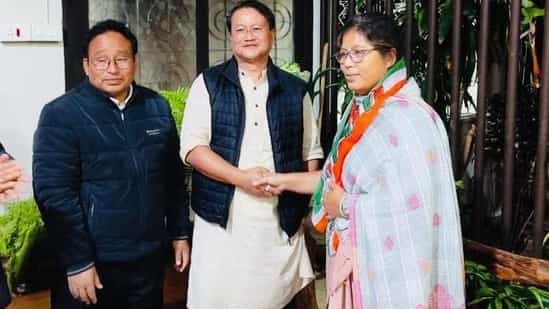
BJP minister Nandita Gorlosa joins Congress day before Assam nomination deadline; to contest from Halflong| India News
Haflong’s Electoral Shift BJP Fields Rupali Langthasa Over Sitting MLA Nandita Gorlosa Key Takeaways
A significant political tremor has rippled through Haflong, a constituency nestled in the picturesque Dima Hasao district of Assam. The Bharatiya Janata Party (BJP) recently unveiled its list of candidates for the upcoming assembly elections, a roster that has stirred local discussions by notably omitting the name of sitting MLA Nandita Gorlosa. In a strategic move, the party has instead placed its trust in Rupali Langthasa to contest from the Haflong seat. This decision is not an isolated incident but part of a broader party strategy to introduce new faces and recalibrate its electoral approach, evidenced by the denial of tickets to several other incumbent legislators across the state.
For many local residents and political observers, the news regarding Nandita Gorlosa came as a surprise. Gorlosa has been a recognizable figure in Haflong’s political landscape, serving as the constituency’s representative in the state assembly. Her tenure has seen various local development initiatives and her presence often associated with the party’s growth in the region. To abruptly step aside for a new face signals a calculated shift in the BJP’s strategy, aiming to perhaps counter anti-incumbency sentiments or tap into new demographic support. Such decisions are rarely made lightly and often reflect intricate internal party assessments regarding candidate electability, public perception, and long-term political objectives.
The introduction of Rupali Langthasa marks a new chapter for the BJP in Haflong. While specific details of her political journey prior to this nomination may be less public, her selection indicates a deliberate choice by the party high command. Langthasa is expected to bring a fresh perspective and perhaps resonate with a different segment of the electorate. Often, parties consider candidates with strong grassroots connections, a clean public image, or the potential to consolidate specific community votes when replacing an incumbent. Her candidature will now be under intense scrutiny as she prepares to lead the BJP’s campaign in a constituency where the outgoing MLA had established a firm footing.
This move by the BJP is a clear demonstration of a political party’s continuous evaluation process, where electoral success takes precedence. Denying a ticket to a sitting MLA, even one with a decent track record, is a high-stakes gamble. It can energize the party cadre with the promise of new leadership and fresh ideas, but it also risks alienating supporters of the former representative. The party leadership likely weighed factors such as internal surveys, public feedback, the performance metrics of the sitting MLA, and the potential impact of a new candidate in a competitive electoral environment. The ultimate goal is to field the strongest possible contender who can secure a victory for the party.
For a 12th standard student trying to understand this, imagine a sports team. Sometimes, even if a player has been on the team for a while, the coach might decide to bring in a new player for the next big match. This isn’t necessarily because the old player was bad, but perhaps the new player has skills that are better suited for the upcoming challenge, or maybe the coach wants to try a fresh strategy. In politics, parties are like coaches, and MLAs are like players. The party decides who gets to “play” (contest elections) based on what they think will help them “win” (get votes) in a particular area. When a sitting MLA doesn’t get a ticket, it means the party has decided a new person might have a better chance or fit better into their current strategy.
The local political landscape in Haflong will now brace for an intriguing electoral battle. The BJP’s decision sends a clear message about its readiness to make bold choices in pursuit of its objectives. The supporters of Nandita Gorlosa may feel a sense of disillusionment, while Rupali Langthasa faces the immediate challenge of building a strong connection with the electorate and consolidating party support. The coming weeks will see intense campaigning, as Langthasa strives to make her mark and convince voters that she is the right choice to represent Haflong.
This strategic re-jig in Haflong is a microcosm of larger political dynamics playing out across the state and country. Political parties frequently reassess their strategies, especially when facing crucial elections. The decision to drop sitting legislators often indicates a party’s attempt to rejuvenate its image, overcome perceived weaknesses, or align more closely with evolving voter sentiments. Omni 360 News will continue to monitor these developments, providing insightful analysis into how such grassroots-level changes can influence the broader electoral outcome.
Key Takeaways:
* Sitting MLA Denied Ticket: Nandita Gorlosa, the current BJP MLA from Haflong, was not renominated by her party.
* New Candidate: Rupali Langthasa has been chosen by the BJP to contest from the Haflong constituency.
* Strategic Party Move: This decision is part of a broader BJP strategy to introduce new faces and potentially mitigate anti-incumbency across various seats.
* Local Impact: The move is expected to reshape the political dynamics in Haflong, leading to an interesting electoral contest.
* Electoral Calculus: Parties often make such changes based on perceived electability, public mood, and long-term political goals.





