
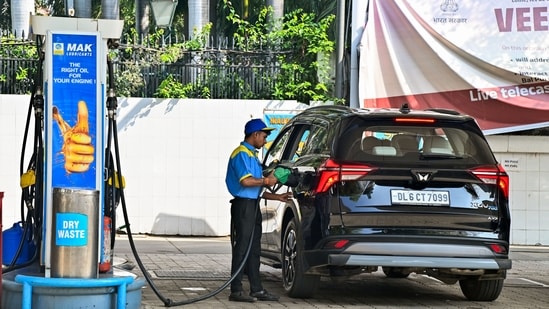
No surge in pump price of petrol, diesel even as fuel import cost at record high amid West Asia conflict| India News
India’s Fuel Price Puzzle Amidst Global Oil Spikes Keeping Pump Costs Steady
For weeks now, global crude oil prices have been climbing, fueled by a cocktail of geopolitical tensions and robust demand. Yet, at petrol pumps across India, a striking calm prevails. Both public and private sector oil marketing companies (OMCs) continue to absorb these escalating input costs, maintaining steady retail prices for regular petrol and diesel. This unusual stability in the face of international volatility presents a fascinating economic scenario, closely watched by consumers, businesses, and industry observers alike.
The global oil market has been on an upward trajectory, with benchmark crude varieties like Brent and WTI experiencing significant surges. Factors ranging from supply disruptions in key producing regions to stronger than anticipated demand in emerging economies have pushed the cost of crude barrels higher. Normally, such movements translate fairly swiftly into higher pump prices, as OMCs pass on the increased procurement costs to consumers to protect their operating margins. However, the current situation paints a different picture altogether.
Public sector giants, including Indian Oil Corporation, Bharat Petroleum Corporation, and Hindustan Petroleum Corporation, alongside their private counterparts such as Reliance-BP and Nayara Energy, have largely kept retail fuel prices unchanged. This concerted effort to shield consumers from the global price shocks comes at a considerable financial burden to these companies. Local reports suggest OMCs are currently operating with significantly compressed marketing margins, effectively subsidizing fuel sales from their own balance sheets.
Several underlying factors likely contribute to this sustained price absorption. One primary reason often cited by industry analysts is the broader economic imperative to maintain stability. Fuel prices have a cascading effect across the economy, influencing everything from transportation costs for goods to the daily commute of millions. Any sudden hike could trigger inflationary pressures, impacting household budgets and potentially dampening consumer sentiment and economic growth. The government, while not directly interfering in daily pricing, often signals its preference for price stability, especially during periods of economic sensitivity or ahead of key elections. This “moral suasion” can be a powerful influence on OMCs, particularly the public sector entities.
Furthermore, the competitive landscape plays a subtle role. No single OMC wants to be the first to raise prices and risk losing market share to competitors who might choose to absorb costs for longer. This creates a sort of standoff, where companies collectively bear the brunt to maintain their competitive positions. Local business journals have noted the tightrope walk OMCs are undertaking, balancing profitability with their role in ensuring national economic stability.
The current scenario is reminiscent of past periods where OMCs accumulated “under-recoveries,” meaning they sold fuel below its true cost. While the pricing mechanism is now largely deregulated, the spirit of cushioning consumers from extreme volatility appears to persist. The financial health of OMCs in the long run will depend on how sustained these high crude prices remain and whether they eventually get an opportunity to recover these absorbed costs. For now, the focus is on maintaining stable retail prices, a move that provides significant relief to truckers, farmers, and daily commuters who rely heavily on predictable fuel expenses.
This delicate balancing act underscores the intricate relationship between global energy markets, domestic economic policies, and the daily lives of citizens. As Omni 360 News continues to monitor developments, the question remains: how long can this absorption continue before OMCs need to adjust their pricing strategy?
Key Takeaways:
* Global crude oil prices are rising due to various international factors.
* Indian OMCs, both public and private, are currently absorbing these high input costs.
* Retail prices for petrol and diesel at pumps remain stable across the nation.
* This stability helps prevent inflationary pressures and supports overall economic steadiness.
* Government influence and competitive pressures among OMCs play a role in this pricing strategy.
* OMCs are operating with reduced marketing margins, taking a financial hit to maintain stable prices.





