
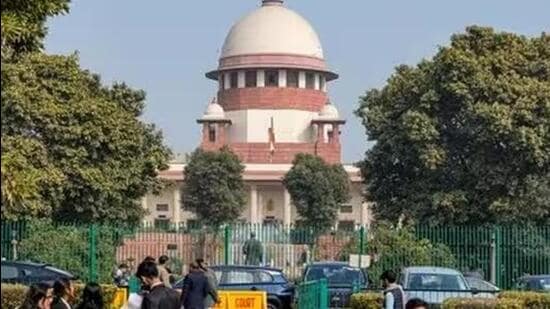
SC agrees to consider plea for National Emblem atop court dome on administrative side| India News
Judicial Lines Clarified Courts Emphasize Internal Administrative Authority Key Takeaways
A recent observation from a court bench has subtly but firmly underscored a fundamental principle governing the functioning of our judiciary. The bench concluded that a specific matter fell squarely within the administrative domain of the Chief Justice and other senior judges, deeming it inappropriate for a formal judicial order. This seemingly technical distinction holds significant weight, clarifying the delicate balance between the judicial and administrative responsibilities within the court system. For anyone seeking to understand the intricate workings of justice, this observation offers vital insights into how our courts manage their own affairs while upholding their core duty of adjudication.
Understanding the Court’s Observation
When a court states that a matter is “administrative” rather than “judicial,” it’s drawing a crucial line. Imagine a school: a teacher’s job is to teach subjects, grade papers, and manage classroom conduct – that’s their core “judicial” role in this analogy. However, deciding which textbooks to use, scheduling classes for the entire school, or allocating budgets for different departments falls under the “administrative” domain of the principal and school board. These are essential decisions for the school to run smoothly, but they aren’t about judging an individual student’s performance.
Similarly, in the legal system, the “judicial” function involves hearing cases, interpreting laws, delivering judgments, and ensuring justice for individual disputes. This is what most people typically associate with courts. The “administrative” function, on the other hand, deals with the internal management, infrastructure, and operational efficiency of the court itself. This includes things like assigning judges to specific benches, allocating courtrooms, managing court staff, framing rules for internal procedure, and even deciding the roster for hearing different types of cases.
The Chief Justice’s Administrative Authority
At the heart of a court’s administrative machinery stands the Chief Justice. They are not merely the senior-most judge but also the primary administrative head. This dual role is vital. As Chief Justice, they are often referred to as ‘master of the roster,’ meaning they hold the power to decide which judge or bench hears which case. This authority is not arbitrary; it’s a critical function to ensure cases are distributed fairly, efficiently, and according to judicial expertise. Other administrative powers include:
* Bench Constitution: Deciding the composition of benches (e.g., single judge, division bench, larger constitutional bench).
* Case Allocation: Distributing cases among various judges or benches based on subject matter or workload.
* Court Infrastructure: Overseeing the physical and technological needs of the court, from courtrooms to digital systems.
* Personnel Management: Managing court staff, their appointments, transfers, and general conduct.
* Rule-Making: Framing procedural rules for the smooth conduct of court business, distinct from substantive laws.
These administrative duties are essential for the court system to operate effectively and deliver justice in a timely manner. Without a clear administrative head, the court could descend into disarray, undermining its judicial functions.
Why Avoid a Judicial Order in Administrative Matters?
The bench’s decision not to issue a judicial order stems from several important principles:
1. Separation of Powers Within the Judiciary: While the judiciary is a single branch of government, there’s an internal separation between its adjudicatory and administrative wings. Allowing one bench to judicially direct the Chief Justice on an administrative matter could lead to a constant cycle of litigation within the court itself, creating an unstable environment.
2. Maintaining Judicial Independence: The Chief Justice’s administrative powers are crucial for maintaining the independence and smooth functioning of the institution. If individual benches could issue judicial directives on how cases are assigned or how the court is managed, it could undermine the Chief Justice’s authority and lead to internal conflicts, potentially affecting the court’s overall efficiency and public perception.
3. Avoiding Overreach: When a bench decides a matter is administrative, it’s essentially acknowledging that stepping into that domain with a judicial order would be an overreach of its own adjudicatory powers. It respects the internal governance structure of the judiciary.
4. Efficiency and Practicality: Administrative decisions are often dynamic and require a nuanced understanding of internal resources, personnel, and workload. These are best handled by the designated administrative authority (the Chief Justice and senior judges) rather than being subjected to the often lengthier and more formal process of judicial review, unless there is a clear legal challenge demonstrating illegality or mala fide intent.
Implications for Court Functioning and Governance
This observation by the bench reinforces the established framework of judicial administration. It sends a clear message that while courts are open to hearing grievances, matters pertaining solely to the internal management and allocation of judicial resources typically fall outside the scope of judicial intervention. This clarity helps maintain discipline and an orderly approach to internal court governance. It supports the Chief Justice’s role as the institutional leader responsible for the court’s operational health, allowing them to make necessary administrative decisions without constant judicial scrutiny from within.
For citizens, understanding this distinction is crucial. It means that while you can seek judicial remedy for violations of your rights or legal disputes, you cannot typically ask a court to judicially order the Chief Justice to change the court’s roster or reallocate judges. Such pleas would likely be directed back to the administrative channels of the court. This maintains respect for the internal autonomy and decision-making processes that keep the entire judicial system running.
Key Takeaways
* Courts have both judicial (adjudicating cases) and administrative (internal management) functions.
* The Chief Justice serves as the primary administrative head, with powers over case allocation, bench constitution, and court management.
* A court bench will generally avoid issuing a judicial order on matters deemed purely administrative.
* This distinction upholds internal judicial governance, maintains the Chief Justice’s authority, and prevents inter-bench conflicts.
* Understanding this separation is key to appreciating how courts efficiently manage their complex responsibilities.
This principled stance, reported by Omni 360 News, highlights the mature and self-regulating nature of our judicial system, where clear lines of authority ensure its consistent and effective operation for all.





