
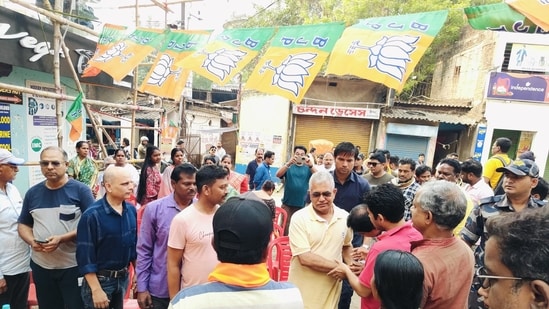
Top BJP leader's big promise in Bengal: 'UP-style encounters'. TMC replies with ‘not here’| India News
West Bengal Police Under Scrutiny Dilip Ghosh Alleges Government Control Key Takeaways
The political landscape in West Bengal often buzzes with sharp exchanges, and recent statements from Dilip Ghosh, a prominent BJP leader and former state unit president, have ignited another heated debate. Ghosh has openly accused police personnel in Trinamool-ruled West Bengal of operating under the direct influence and instructions of Mamata Banerjee’s government, rather than strictly upholding the law. This allegation brings into focus a long-standing point of contention in the state’s governance and policing. Omni 360 News brings you a detailed look into these claims and the reactions they have provoked.
Understanding the Allegations
Dilip Ghosh’s remarks, delivered amidst a charged political atmosphere, suggest a fundamental breakdown in the independent functioning of the state’s law enforcement. He asserted that police in West Bengal often look the other way when it comes to crimes allegedly committed by cadres of the ruling Trinamool Congress (TMC). This, he claimed, creates an environment where political affiliations seemingly dictate the application of justice, eroding public trust in institutions meant to be impartial.
Ghosh’s criticism specifically targeted the perceived inaction of police against alleged unlawful activities involving TMC members. He painted a picture where political loyalty supersedes legal obligation for sections of the police force. The BJP leader further declared that if his party were to assume power in West Bengal, they would “straighten out” the police administration within a mere two months. In a statement that drew significant attention and controversy, he even referenced the possibility of “UP-style encounters” to achieve this overhaul, alluding to the controversial practice seen in Uttar Pradesh where alleged criminals are sometimes killed in police encounters. This specific mention raised eyebrows and fueled the political firestorm.
The Trinamool Congress’s Strong Rebuttal
The Trinamool Congress was swift and vocal in its condemnation of Dilip Ghosh’s statements. Senior TMC leaders, including state ministers, vehemently rejected the accusations, asserting that the West Bengal Police operates professionally and adheres to the rule of law. They countered Ghosh’s claims by emphasizing that Bengal is not Uttar Pradesh, directly addressing his controversial “UP-style encounters” reference.
Firhad Hakim, a prominent TMC minister, criticised the notion of an “encounter raj,” stating that such an approach is antithetical to democracy and constitutional governance. He highlighted that the police in West Bengal are tasked with maintaining peace and order according to legal procedures, not through extrajudicial means or political vendetta. The TMC leadership underscored that any suggestion of the police acting on political dictates is unfounded and an attempt by the opposition to destabilize the state’s administration and malign its image ahead of crucial elections. They reiterated their commitment to upholding democratic values and ensuring that law enforcement remains independent and accountable.
Historical Context and Broader Implications
Accusations of police politicization are not new in West Bengal’s often turbulent political history. Both the erstwhile Left Front government and the current Trinamool Congress administration have, at various times, faced similar allegations from opposition parties. These claims often surface during heightened political periods, such as elections or major public protests, when the role of law enforcement becomes particularly scrutinized.
Ghosh’s recent statements, however, add a new dimension by explicitly linking police conduct to the chief minister’s direct influence and by introducing the controversial idea of “UP-style encounters.” Such rhetoric has significant implications for public trust in institutions. When a political leader suggests that the police are not independent, it can sow seeds of doubt among citizens about the fairness and impartiality of law enforcement. For a 12th-standard student, understanding this means recognizing that a police force should ideally operate without fear or favor, treating all citizens equally under the law, regardless of their political alignment. When this impartiality is questioned, it weakens the foundations of a democratic society.
Furthermore, the mention of “encounters” draws attention to debates around human rights and due process. In a democratic state, every individual is entitled to a fair trial, and the police’s role is to investigate and apprehend, not to deliver summary justice. Calls for such methods, even if rhetorical, can be perceived as undermining legal principles.
Key Takeaways
The ongoing political discourse in West Bengal, particularly around the conduct of its police force, highlights several critical issues. First, the allegations by Dilip Ghosh underscore persistent concerns regarding the perceived independence of law enforcement in politically charged environments. Second, the Trinamool Congress’s robust defence emphasizes the need to uphold the rule of law and reject extrajudicial measures. Third, the debate itself reflects the deep divisions and intense competition in West Bengal politics, where every aspect of governance can become a battleground. Omni 360 News will continue to monitor how these serious allegations and counter-allegations evolve and impact the state’s political narrative and public perception. The crucial question remains how best to ensure that the police serve all citizens equally, maintaining their trust and upholding the law impartially.





