
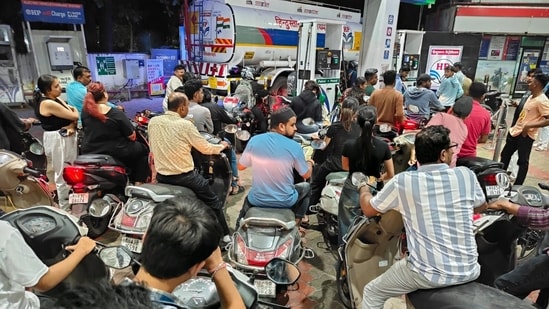
Excise duty on petrol,diesel cut: Check city-wise fuel prices today in Hyderabad, Delhi, Mumbai| India News
Fuel Prices Hold Steady Across India Hyderabad Leads with Highest Petrol Cost
In a landscape often marked by fluctuating global oil markets, the retail price of petrol in India’s major metropolitan areas has largely maintained a consistent trajectory recently. While daily micro-adjustments are common, the overarching trend indicates a period of stability, offering a predictable, if sometimes elevated, expenditure for commuters and businesses. Among the prominent cities, Hyderabad continues to record the nation’s highest petrol price, holding firm at approximately ₹107.50 per litre.
This steady pricing across key urban centres, as observed by Omni 360 News, comes at a time when consumers keenly watch for any relief in their daily expenses. Despite previous adjustments in excise duties at the central level, the on-ground retail figures reveal a market largely influenced by a complex interplay of international crude oil prices, state-specific taxes, and dealer commissions.
The Numbers Today A Snapshot
As of recent reports, the petrol prices in India’s major cities present a varied picture, yet one defined by consistency within each region.
In the nation’s capital, Delhi, petrol is available at around ₹94.72 per litre. Mumbai, the financial hub, sees petrol priced at roughly ₹104.21 per litre. Kolkata records a price of approximately ₹103.94, while Chennai stands at about ₹100.75 per litre. These figures highlight the significant difference in fuel costs across states, primarily driven by varying Value Added Tax (VAT) structures and other local levies. Hyderabad, with its price hovering around ₹107.50, remains the city with the most expensive petrol among these major urban centres.
Understanding the Price Tag A Simplified View for Everyone
For a 12th-standard student or any curious citizen, understanding how petrol is priced can seem like a puzzle. Imagine the journey of crude oil, the raw material, from oil wells far away to your vehicle’s tank.
First, there’s the basic cost of crude oil in the international market. This is like buying raw ingredients from a global wholesale market. This price constantly changes based on demand, supply, and global events.
Next, this crude oil is brought to refineries in India and processed into petrol. This process has its own costs. Then, the refined petrol is sold to oil marketing companies.
After this, the government adds its share. This comes in two main parts:
1. Central Excise Duty This is a tax levied by the central government. Think of it as a uniform tax applied across the country. When the government cuts excise duty, it typically aims to reduce the final price.
2. State Value Added Tax (VAT) Each state government levies its own tax, known as VAT. This is why petrol prices differ from state to state. Some states have higher VAT, making petrol more expensive in those regions. This is a significant factor in why Hyderabad’s petrol price is higher compared to Delhi.
Finally, a dealer commission is added, which is the earning for the petrol pump owner. Add all these components up: the basic cost, refining charges, central excise, state VAT, and dealer commission, and you get the final retail price you pay at the pump.
The recent stability, despite some past excise duty cuts, suggests that the current international crude oil prices have either remained steady or that any reductions were offset by other market dynamics, preventing a significant drop at the consumer level.
Impact on Daily Life The Domino Effect
Stable, yet elevated, fuel prices have a cascading effect on the average citizen’s budget. For those who rely on personal vehicles for daily commute, a higher price means a larger chunk of their monthly income goes towards transportation. This directly impacts household budgets, potentially leading to reduced spending in other areas.
Beyond personal transport, fuel costs directly influence the price of almost everything we buy. Goods need to be transported from farms to markets, from factories to shops. Trucks, trains, and other logistical vehicles run on fuel. When fuel prices are high, transportation costs increase, and businesses often pass these higher costs onto consumers through increased product prices. This phenomenon is commonly referred to as inflation.
Local businesses, especially those dependent on delivery services or field operations, feel the pinch acutely. From local grocery stores to plumbers and electricians, higher fuel costs mean increased operational expenses, which can sometimes translate into higher service charges for customers.
Why Regional Disparities Persist
The difference in petrol prices, such as Hyderabad’s comparatively higher rates, largely boils down to state-specific taxation policies. While the central excise duty is uniform, states have the autonomy to decide their VAT rates. States like Telangana, which Hyderabad is a part of, might levy a higher VAT on fuel compared to others. These state taxes are a crucial source of revenue for local governments, funding various public services and infrastructure projects. However, they also create noticeable price differences for consumers crossing state borders.
Looking Ahead Factors to Watch
The future trajectory of petrol prices in India will continue to be dictated by a mix of global and domestic factors. International crude oil prices, influenced by geopolitical tensions, supply-demand dynamics from major oil-producing nations, and global economic health, remain the primary external driver. Domestically, any further revisions in central excise duty or state VAT rates will directly impact retail prices. For now, consumers can anticipate continued stability unless significant shifts occur in these underlying economic and policy landscapes.
Key Takeaways
* Petrol prices in major Indian cities have remained largely stable recently.
* Hyderabad currently records the highest petrol price among major cities at approximately ₹107.50 per litre.
* Petrol prices are a sum of international crude oil cost, central excise duty, state VAT, and dealer commission.
* State VAT is the primary reason for price differences across various cities like Delhi, Mumbai, and Hyderabad.
* Stable yet high fuel prices impact household budgets and contribute to increased costs for goods and services.
* Future price movements depend on global crude oil trends and domestic tax policies.





