
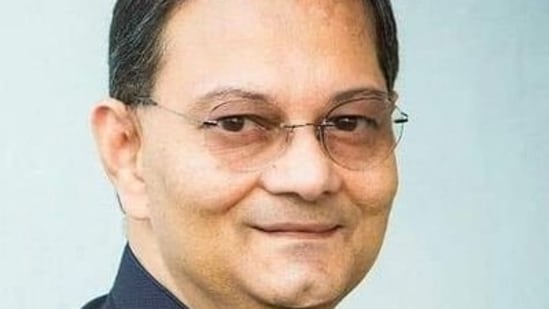
‘Joining BJP was a historic mistake’: Subhas Chandra Bose’s grandnephew calls for 'unity to counter divisive politics'| India News
Chandra Kumar Bose Emphasizes National Unity to Uphold India’s Constitution
In a significant appeal resonating across the nation’s political landscape, Chandra Kumar Bose, a grandnephew of Netaji Subhas Chandra Bose, has called for a broad-based unity to safeguard the fundamental constitutional framework of India. Addressing the INDIA alliance, various party workers, and the wider citizenry, Bose stressed the urgency of a collective effort to counter what he termed as “divisive politics” and protect the nation’s core democratic values. This impassioned plea, reported widely by regional news outlets and now detailed by Omni 360 News, highlights growing concerns among certain sections about the direction of national discourse.
Bose, who recently distanced himself from the Bharatiya Janata Party (BJP), described his previous association with the party as a “historic mistake.” His resignation from the BJP in September 2023 marked a notable shift in his political stance. At the time, Bose articulated his decision by citing a perceived failure of the party to implement the ideals of leaders like Netaji Subhas Chandra Bose, particularly concerning inclusive politics and the protection of constitutional rights. His recent statements underscore a consistent theme of upholding India’s secular and democratic fabric, a sentiment that aligns with his family’s legacy of national service and pluralism.
The crux of Bose’s message revolves around the imperative to preserve the Indian Constitution, a document that serves as the bedrock of the nation’s diverse society. For a 12th-grade student, understanding the “constitutional framework” means grasping the fundamental rules and principles that govern India. It encompasses ideas like secularism, ensuring that the state treats all religions equally and has no official religion; democracy, where people elect their representatives to make laws; justice, ensuring fairness for all citizens; liberty, guaranteeing freedoms like speech and expression; and equality, meaning everyone is treated the same under the law, regardless of their background. These principles are designed to protect every individual and ensure the harmonious functioning of a nation as diverse as India.
Bose’s call is not merely for political parties to unite, but for a broader societal engagement. He specifically urged the INDIA alliance, a coalition of opposition parties, along with other political entities like the Trinamool Congress (TMC) and the Left parties, to set aside differences and form a united front. Beyond political organizations, he extended his appeal to every citizen, emphasizing that the protection of constitutional values is a shared responsibility, not just that of elected leaders. This inclusive call suggests a deep-seated concern that the current political climate poses a substantial challenge to the foundational principles upon which modern India was built.
His statements reflect a growing apprehension about the rise of rhetoric that many perceive as divisive, potentially fragmenting society along religious or ideological lines. Bose’s emphasis on unity is a direct counter to such tendencies, advocating for a return to the inclusive nationalism championed by figures like Netaji, who envisioned an India where all communities coexist with mutual respect and equal rights. Local news reports from West Bengal, where Bose has a significant presence and historical ties, have extensively covered his journey from a BJP member to a vocal critic, often highlighting his consistent stance on Netaji’s inclusive ideology.
The leader’s plea resonates with a wider discourse prevalent in democratic societies globally, where the balance between national identity and constitutional safeguards is frequently debated. In India, a country renowned for its vast diversity, the Constitution acts as a crucial binder, holding together disparate cultures, languages, and religions. Any perceived threat to this document or its underlying principles triggers significant discussion among political commentators, academics, and concerned citizens alike. Bose’s intervention adds a historical weight to this ongoing conversation, given his lineage connected to one of India’s most revered freedom fighters.
The implications of such a call are far-reaching. It challenges political parties to look beyond immediate electoral gains and consider the long-term impact on the nation’s democratic institutions. For citizens, it serves as a reminder of their role in actively participating in safeguarding the democratic ethos. The protection of constitutional rights, including freedom of speech, equality before the law, and the right to practice one’s religion, hinges on continuous vigilance and collective action. When a prominent voice like Chandra Kumar Bose speaks out, it often sparks renewed debate and introspection within political circles and public forums.
Key Takeaways:
* Chandra Kumar Bose advocates for broad national unity to protect India’s constitutional framework.
* He describes his past BJP association as a “historic mistake” and urges the INDIA alliance, along with other parties and citizens, to unite against divisive politics.
* The call emphasizes safeguarding core constitutional values like secularism, democracy, justice, liberty, and equality.
* His message underscores a belief that protecting these foundational principles is a collective responsibility beyond political affiliations.
* This appeal reflects concerns about divisive rhetoric and seeks to uphold the inclusive vision of India’s founders.
In essence, Chandra Kumar Bose’s urgent appeal serves as a potent reminder of the fragility of democratic institutions and the constant need for vigilance. It is a clarion call for political entities and ordinary citizens alike to prioritize the enduring values enshrined in the Constitution over transient political rivalries, ensuring that India’s constitutional heart continues to beat strongly for generations to come.





