
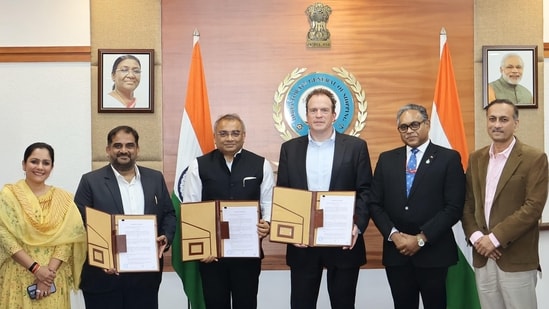
Adani Ports announces India's first Port of Refuge mechanism to boost maritime safety| India News
India Secures Maritime Safety Adani Ports Unveils First Port of Refuge
For decades, India’s vast coastline, bustling with maritime trade and vital for national security, carried a significant vulnerability. When a ship faced a crisis at sea – be it a fire, an engine failure, or a dangerous storm – finding a safe harbor, a designated ‘Port of Refuge,’ was a challenge. This long-standing gap in maritime emergency infrastructure posed risks to human lives, valuable cargo, and the delicate marine environment. Now, that void is being addressed in a landmark development.
Adani Ports and Special Economic Zone (APSEZ) recently announced the establishment of India’s very first Port of Refuge mechanism. This pivotal initiative, initially slated for its deep-draft port in Vadinar, Gujarat, marks a crucial step forward for India’s maritime safety and preparedness, aligning the nation with advanced global maritime standards.
Understanding a Port of Refuge
To grasp the importance of this announcement, it is essential to understand what a Port of Refuge truly is. Imagine a large cargo ship or an oil tanker far out at sea, suddenly engulfed in flames or suffering catastrophic engine failure. Such a vessel, unable to navigate or control its situation, becomes a major hazard. It could drift into shipping lanes, run aground, or even spill hazardous materials, leading to an environmental catastrophe.
A Port of Refuge is a specifically designated and equipped harbor where such distressed vessels can be brought safely. It offers not just shelter from severe weather, but also critical facilities for emergency repairs, cargo transfer, fire fighting, pollution control, and medical aid. The decision to grant entry to a distressed vessel is complex, involving assessments of the ship’s condition, the nature of its cargo, and the potential risks to the port and local environment. Globally, maritime nations often designate such ports under the International Maritime Organization’s (IMO) guidelines, especially those outlined in the Safety of Life at Sea (SOLAS) convention. Until now, India lacked a formal, dedicated mechanism, often relying on ad-hoc arrangements which could be slow and inefficient during critical emergencies.
The Vadinar Initiative A Beacon of Safety
Adani Ports’ move to establish this critical facility at Vadinar is not merely an operational upgrade; it is a strategic enhancement of India’s maritime resilience. Vadinar, already a significant port, will now be equipped with specialized personnel, state-of-the-art equipment, and dedicated protocols to manage complex maritime emergencies. This means that a ship in distress off the Indian coast will have a pre-determined, capable safe haven to turn to, significantly reducing response times and mitigating potential disasters.
This development underscores a proactive approach to maritime safety. Local environmental groups and fishing communities along the Gujarat coast, for instance, have often voiced concerns about potential oil spills or shipping accidents. The establishment of a Port of Refuge offers a layer of reassurance, knowing that mechanisms are in place to manage and contain such incidents effectively, protecting livelihoods and fragile ecosystems. Maritime experts have long advocated for such a system, pointing out that swift action is paramount in preventing minor incidents from escalating into major catastrophes.
Broadening India’s Maritime Horizons
The significance of this development extends beyond immediate emergency response. India is a major player in global trade, with its ports handling vast volumes of cargo. Enhancing maritime safety infrastructure directly contributes to the nation’s reputation as a responsible maritime power. It instills confidence in international shipping lines operating in Indian waters, knowing that robust safety nets are in place. For Omni 360 News, this signifies India’s commitment to global best practices in ocean governance and emergency preparedness.
Furthermore, this initiative strengthens India’s position in the international maritime community. By adhering to and implementing the spirit of conventions like SOLAS, India demonstrates its dedication to protecting not just its own interests but also contributing to the safety of global shipping lanes. As the facility becomes operational, it will provide invaluable experience and models for potentially expanding this mechanism to other strategic locations along India’s extensive coastline.
This move by Adani Ports is a testament to the evolving landscape of India’s maritime sector, shifting towards a future where safety, environmental protection, and efficient emergency response are paramount. It’s a development that will resonate across the shipping industry, coastal communities, and environmental conservation efforts for years to come.
Key Takeaways
* Adani Ports has announced India’s first dedicated Port of Refuge mechanism, addressing a critical gap in maritime emergency infrastructure.
* The initial facility will be located at Vadinar, Gujarat, equipped to handle distressed vessels facing emergencies.
* This initiative significantly enhances maritime safety, protects the marine environment, and safeguards lives and cargo.
* It aligns India with international maritime safety standards, particularly those outlined in the SOLAS convention.
* The Port of Refuge boosts India’s standing as a responsible maritime nation and offers reassurance to coastal communities and the global shipping industry.





