
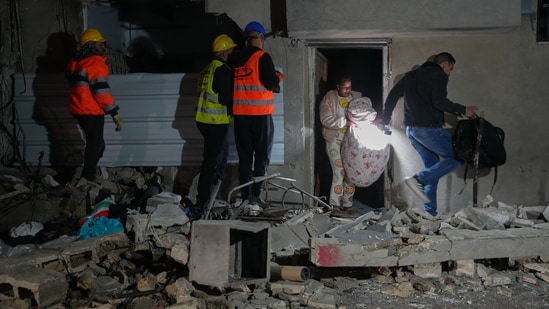
Israel says it faced first incoming missile from Yemen as war in Middle East intensifies| India News
Yemen’s Houthis Enter Middle East Conflict A Shifting Regional Balance
The recent launch of missiles and drones by Yemen’s Houthi movement towards Israeli territory marks a significant and concerning escalation in the ongoing Middle East conflict. For years, the Houthis, a powerful rebel group in Yemen, maintained an uneasy ceasefire with Saudi Arabia, largely staying out of the wider regional clashes. This latest action signals a dramatic shift, pulling a new and influential player into an already volatile situation. Understanding this development requires looking beyond the headlines and examining the complex web of regional power plays, as reported by various outlets and regional analysts, offering a comprehensive view for Omni 360 News readers.
For nearly a decade, Yemen has been caught in a brutal civil war, pitting the Houthis against an internationally recognized government backed by a Saudi-led coalition. This conflict has caused immense humanitarian suffering and reshaped the political landscape of the Arabian Peninsula. Despite the intense fighting, and the broader regional rivalry between Iran (seen as an ally of the Houthis) and Saudi Arabia, the Houthis had largely focused on their internal struggle and a negotiated peace process with Riyadh. This uneasy truce, while fragile, provided a buffer, preventing the Yemeni conflict from directly spilling over into other major regional flashpoints.
The Houthi Shift A New Frontline Emerges
The catalyst for the Houthis’ direct engagement with Israel appears to be the recent conflict erupting between Israel and Hamas. The Houthis have long expressed solidarity with the Palestinian cause, viewing Israel as an adversary. However, their physical distance from the core conflict zone meant their support was primarily rhetorical. That changed dramatically when Israeli defense systems intercepted incoming projectiles, confirmed to originate from Yemen. This was not merely a symbolic gesture; it represented a tangible, albeit geographically distant, military intervention.
This move by the Houthis can be interpreted through multiple lenses. Firstly, it’s a clear demonstration of their stated commitment to the Palestinian people, aligning themselves with regional groups opposing Israel. Secondly, it allows the Houthis to assert their growing military capabilities and regional influence, showcasing their ability to project power beyond Yemen’s borders. Thirdly, by opening a new, albeit distant, front, they potentially seek to relieve pressure on other groups in the region and complicate Israel’s military calculus. Some regional observers suggest it could also be a move to gain internal legitimacy and rally support within Yemen, presenting themselves as defenders of a broader Islamic cause.
Unpacking the Stakes for Regional Stability
The Houthis’ direct involvement carries significant risks for the entire Middle East. A key concern is the potential for the conflict to broaden further, drawing in more actors and destabilizing regions previously somewhat insulated. The Red Sea, a vital global shipping lane, lies between Yemen and Israel. Any sustained Houthi activity in this area could disrupt international trade and energy supplies, impacting global markets. Naval operations by international forces, including those from the United States, are already active in the region, creating a crowded and potentially dangerous environment.
Furthermore, this development complicates efforts to secure a lasting peace in Yemen. The Houthis’ focus has now expanded beyond their immediate internal struggle, potentially making them less amenable to compromises in domestic negotiations. Saudi Arabia, which had been pursuing de-escalation with the Houthis, now faces the complex challenge of their former adversary engaging a new regional opponent, potentially reigniting tensions in their own backyard.
For a 12th-grade student trying to grasp this, imagine a very complicated game of chess. The Houthis were playing their own game (the civil war in Yemen) and had a sort of agreement (ceasefire) with a big player (Saudi Arabia) to not bother each other too much. Now, a huge fight has broken out on another part of the board (Israel and Hamas). The Houthis have suddenly decided to join that big fight, even though they are quite far away. This action makes the entire chess game much more unpredictable and dangerous, potentially pulling in other players and affecting global trade routes like the Red Sea, which is like a highway for ships.
Key Takeaways for Omni 360 News Readers
* Shifting Alliances The Houthis’ missile launch signifies a departure from their previous focus on internal Yemeni conflict and an uneasy truce with Saudi Arabia.
* New Regional Actor This action brings a powerful, non-state actor into the direct conflict with Israel, adding another layer of complexity to the Middle East’s geopolitical landscape.
* Escalation Risk The move increases the potential for wider regional destabilization, affecting vital shipping lanes and potentially drawing in more international players.
* Palestinian Solidarity The Houthis frame their actions as solidarity with Palestinians, aligning with other groups opposing Israel in the region.
* Uncertain Future The long-term implications for both the Yemeni peace process and broader Middle East stability remain unclear, demanding careful monitoring.
As the Middle East continues to grapple with intense conflict, the Houthis’ decision to enter the fray serves as a stark reminder of the region’s interconnectedness and the potential for local disputes to quickly morph into wider international crises. The world watches closely as this new chapter unfolds, with the hope that avenues for de-escalation can still be found amidst the rising tides of conflict.





