
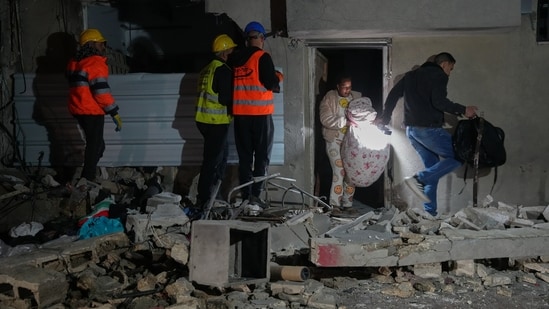
Israel says it faced first incoming missile from Yemen as war in Middle East intensifies| India News
The Red Sea Shift Houthis Enter Mideast Conflict
For years, the Houthi movement, officially known as Ansar Allah, maintained a complex and often uneasy ceasefire with Saudi Arabia. This arrangement, a fragile outcome of the grinding conflict in Yemen, largely kept the rebels focused on their internal struggle and cross-border skirmishes with the Saudi-led coalition. However, recent events unfolding in the Middle East have dramatically reshaped this delicate balance, pulling the Houthis onto a new and perilous stage. Omni 360 News delves into the motivations, implications, and the broader context of the Houthis’ decision to engage directly in the ongoing conflict.
Understanding the Houthis A Force Forged in Conflict
To grasp the significance of their latest actions, one must first understand the Houthis themselves. Originating from Yemen’s northern Sa’ada province, the Houthis are a Zaydi Shia group that rose to prominence in the early 2000s, vehemently opposing what they viewed as government corruption and Saudi and American influence in Yemen. Their rallying cry, “Death to America, Death to Israel, a Curse upon the Jews, Victory to Islam,” clearly articulates their foundational ideology and anti-Western, anti-Zionist stance.
The Yemeni civil war, which escalated in 2014, saw the Houthis seize control of the capital, Sana’a, and large swathes of northern Yemen. This conflict drew in a Saudi-led military coalition, which intervened to restore the internationally recognized government. For nearly a decade, the Houthis have been locked in this brutal internal and regional struggle, developing sophisticated military capabilities, including drones and ballistic missiles, often attributed to Iranian support.
The Uneasy Ceasefire A Strategic Pause
The ceasefire with Saudi Arabia, largely brokered through UN efforts, began to take hold around April 2022. It wasn’t a formal peace treaty but rather a series of de-escalatory steps and understandings that dramatically reduced cross-border attacks from Yemen into Saudi Arabia and Saudi airstrikes on Yemen. This uneasy truce provided a much-needed respite for millions of Yemenis and allowed the Houthis to consolidate their control in areas they governed.
Local reports from Sana’a and other Houthi-controlled territories often highlighted that while the fighting with Saudi Arabia had diminished, the underlying ideological convictions of the movement remained unchanged. Their rhetoric against Israel and the United States continued unabated, even as practical military engagement was largely focused on internal Yemeni dynamics. The ceasefire was a strategic pause, not a shift in fundamental beliefs or long-term regional aspirations. It allowed the Houthis to divert resources and attention, albeit temporarily, from the immediate threat of Saudi bombardments, potentially strengthening their internal position and allowing for other forms of regional influence to be cultivated.
The Pivot Toward the Red Sea Why Now?
The eruption of hostilities between Israel and Hamas in early October created a fresh impetus for the Houthis to demonstrate their commitment to their stated ideology. From their perspective, the plight of Palestinians is a central tenet of their political and religious identity. Various local news outlets in the Middle East, including those sympathetic to the Houthis, swiftly reported their condemnation of Israeli actions and calls for solidarity with Gaza.
Initially, the Houthis launched long-range drones and missiles directly towards Israel. While these attempts were largely intercepted by Israeli defenses or fell short, they served as a clear signal of intent. The real game-changer came with their decision to target commercial shipping in the Red Sea, particularly vessels they deemed linked to Israel, or those transiting to Israeli ports. This move was announced by Houthi leaders and quickly corroborated by numerous independent maritime security reports and shipping industry bulletins. The strategy was clear: to exert economic pressure on Israel and its allies by disrupting one of the world’s most vital maritime trade routes.
Escalation and Global Repercussions
The Houthi attacks on Red Sea shipping have had immediate and far-reaching consequences. Major shipping companies, facing increased risks and skyrocketing insurance premiums, began rerouting vessels around Africa’s Cape of Good Hope. This longer journey adds weeks to transit times, significantly increases fuel costs, and creates bottlenecks in global supply chains.
Local media in coastal nations like Djibouti and Egypt began reporting on the decreased traffic through the Suez Canal and the resulting economic impact. The international community swiftly condemned these actions, recognizing the threat to global commerce and maritime security. In response, a multinational naval task force, Operation Prosperity Guardian, was established to protect shipping in the Red Sea. The situation has spiraled, with the US and UK launching retaliatory strikes against Houthi military sites in Yemen, further escalating tensions in an already volatile region.
Beyond Gaza The Strategic Chessboard
The Houthis’ entry into the Red Sea conflict is more than just an act of solidarity. It represents a complex play on the regional chessboard. It elevates their profile as a significant non-state actor with the capability to influence international affairs, beyond the confines of Yemen. It also aligns them more closely with the “Axis of Resistance,” a loose coalition of Iran-backed groups in the Middle East, further cementing their strategic relationship with Tehran.
For Saudi Arabia, the Houthi actions present a dilemma. While the Red Sea attacks don’t directly target Saudi territory, the wider regional instability could jeopardize their own economic ambitions and security interests. The uneasy ceasefire, though not directly violated, is certainly strained by the Houthis’ new proactive stance in the broader Middle Eastern conflict.
Key Takeaways:
* The Houthis, previously engaged in a fragile ceasefire with Saudi Arabia, have dramatically shifted their focus to the wider Middle East conflict.
* Their deep-seated anti-Israel ideology and solidarity with Palestinians are the primary drivers for their direct military actions.
* Targets include both direct missile/drone launches towards Israel and attacks on commercial shipping in the Red Sea, aiming to exert economic pressure.
* These actions have severely disrupted global trade, forcing major shipping companies to reroute vessels and increasing international tensions.
* The Houthis’ move enhances their regional standing and reinforces their alignment with Iran and other “Axis of Resistance” groups, complicating the delicate balance in the region.





