
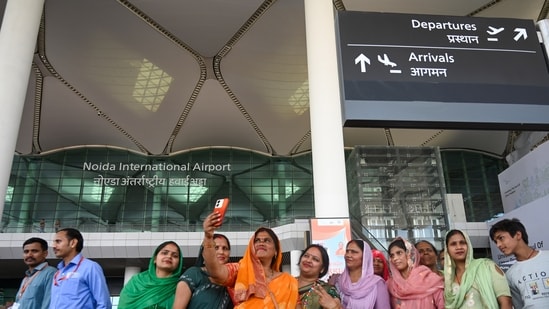
Commercial flights at Noida airport to begin in 60 days, says aviation minister Ram Mohan Naidu| India News
Jewar Airport Operations Hinge on Crucial Security Program Approval
The anticipation is palpable across Uttar Pradesh and the broader National Capital Region as the Noida International Airport, often known as Jewar Airport, edges closer to its operational launch. Hopes are high, particularly after recent statements from Union Aviation Minister Ram Mohan Naidu, suggesting commercial flights could commence within a brisk 60 days. Yet, for all the rapid construction and strategic planning, one critical document remains the final gateway: the Airport Security Program (ASP), which must be issued by the Bureau of Civil Aviation Security (BCAS).
For anyone wondering what an Airport Security Program is, imagine a highly detailed, comprehensive rulebook for keeping an entire airport safe and secure. It is not merely a checklist; it’s a living document that outlines every single security procedure, method, and response plan for the airport’s operations. Think of it as the blueprint for safety. It dictates how baggage is screened, how passengers are checked, who can access restricted areas, and what steps are taken in an emergency, among countless other protocols. For a massive facility like the upcoming Jewar Airport, this program covers everything from perimeter security to cyber threats. It ensures that everyone, from airline staff to baggage handlers and the security personnel themselves, knows exactly what to do to maintain an impregnable shield against any potential threat.
The task of overseeing and ultimately approving this vital document falls squarely on the shoulders of the Bureau of Civil Aviation Security. BCAS is India’s principal regulatory authority for civil aviation security, acting as the nation’s watchdog for air travel safety. Their mandate is clear: to lay down standards and measures with regard to security of civil flights at international and domestic airports in India. They are the guardians of the skies, ensuring that every airport and airline operating within India adheres to the highest possible security standards, often in line with global best practices set by bodies like the International Civil Aviation Organization (ICAO). Their rigorous approval process ensures that no stone is left unturned when it comes to passenger safety and national security. It’s an assurance that when you step onto a plane, every possible precaution has been taken.
The construction of Noida International Airport, a greenfield project being developed in phases, has been progressing at a remarkable pace. With reports indicating that roughly 75% of the initial phase is complete, the physical infrastructure is quickly taking shape. This first phase is designed to handle an impressive 12 million passengers annually, primarily focusing on domestic operations before expanding to international routes. However, even with runways ready and terminals gleaming, the gates for commercial traffic cannot officially open until BCAS gives its final security blessing through the ASP. This isn’t just a bureaucratic hurdle; it’s a fundamental requirement reflecting a commitment to ensuring every flight operates within a secure environment.
The importance of the ASP cannot be overstated. In an era where global security concerns are paramount, a well-defined and rigorously implemented security program is the cornerstone of any modern airport. It builds trust among passengers, ensures the safety of airline and airport staff, and protects the nation’s critical infrastructure. Without the BCAS-approved ASP, the airport simply cannot commence commercial operations, regardless of how ready its buildings and air traffic control systems might be. This ensures that the Jewar Airport, once operational, will not only offer world-class facilities but also uphold the highest benchmarks in aviation security.
From the perspective of Omni 360 News, the launch of Jewar Airport carries immense significance for the regional economy and connectivity. It promises to alleviate pressure on the Indira Gandhi International Airport in Delhi, offering a new, state-of-the-art alternative for travelers in Western Uttar Pradesh, Delhi, and Haryana. The project is expected to create thousands of direct and indirect jobs, spurring growth in tourism, hospitality, and allied sectors. Local businesses are already anticipating a boom, with increased demand for services and goods. However, none of these benefits can materialize without the final security clearance, underscoring the critical role of BCAS in unlocking the airport’s full potential.
The 60-day timeframe mentioned by Minister Naidu sets a clear target, but it is implicitly tied to the diligent work of the BCAS in reviewing and validating the airport’s security preparedness. The rigorous process involves detailed inspections, audits of security protocols, verification of equipment, and training assessments for personnel. It’s a comprehensive examination to ensure the Airport Security Program is not just a document on paper, but a robust and actionable plan that can be effectively implemented from day one.
Key Takeaways:
* Commercial flights at Noida International Airport (Jewar) await a crucial document: the Airport Security Program (ASP).
* The ASP is a detailed blueprint for all airport security procedures, methods, and emergency response plans.
* BCAS, India’s top civil aviation security regulator, must issue this program before operations can begin.
* Union Aviation Minister Ram Mohan Naidu indicated flights could start within 60 days, contingent on this approval.
* The ASP ensures the airport meets stringent national and international security standards for passenger safety.
* The delay is a standard, non-negotiable step to guarantee security, not a setback in construction.
* Once approved, the airport is poised to significantly boost regional economy and connectivity.
In conclusion, while the countdown to commercial flights at Jewar Airport has begun with renewed optimism, the emphasis remains firmly on security. The issuance of the Airport Security Program by BCAS is not just another formality; it is the ultimate stamp of approval that assures the traveling public and the nation that this new gateway to the sky will operate safely and securely. It’s a testament to the fact that when it comes to aviation, security always takes precedence.





